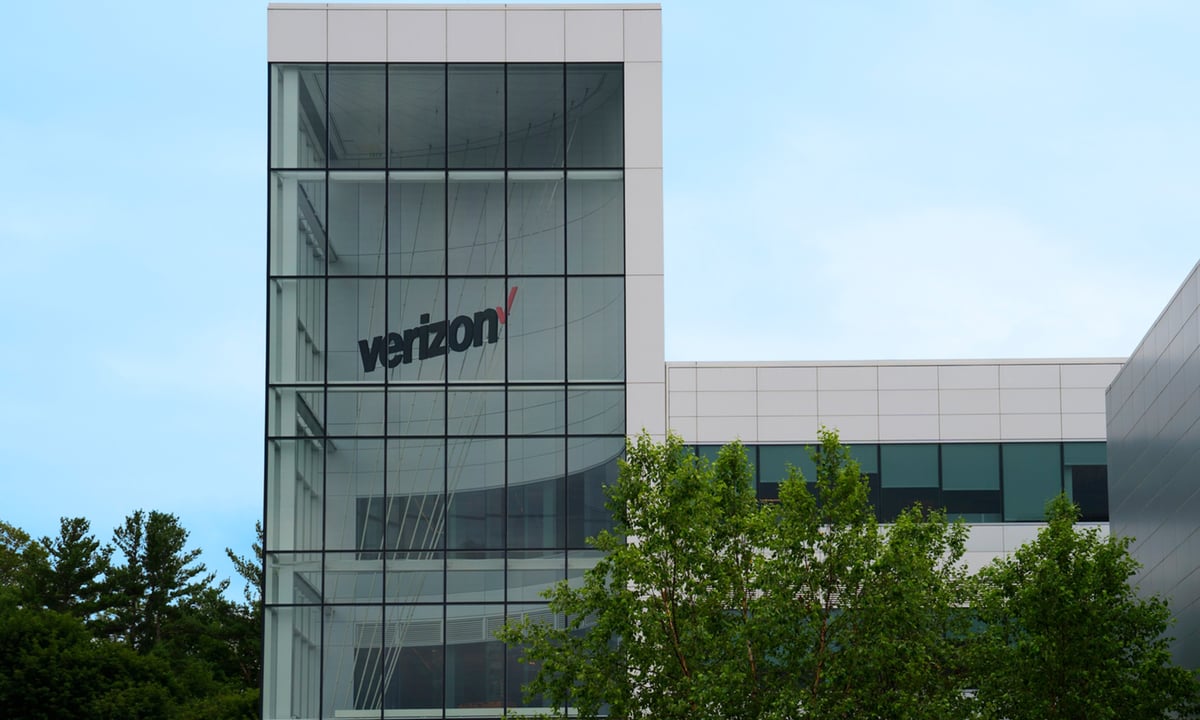
Verizon has signed a more than $1 billion(約1600億円) dark fiber supply agreement with Google to connect its AI data centers, with CEO Dan Schulman signaling additional multibillion-dollar deals could be announced by year-end. The new infrastructure revenue stream matters for dividend investors because it gives Verizon's slow-growing connectivity business a fresh growth driver, while the company's free cash flow guidance and payout ratio suggest room to grow the stock's 6.3% dividend if management delivers on its promises.
Summaries like this, in your inbox every morning.
Sign up free →What happened
Verizon CEO Dan Schulman announced on the Q2 earnings call (July 24) that the company has signed an agreement worth more than $1 billion(約1600億円) to supply dark fiber (dedicated fiber-optic cable) to Google for connecting data centers. Schulman said Verizon expects to announce additional deals by year-end that could be worth multiple billions of dollars in revenue over several years.
Why it matters
The deal marks a new revenue stream for Verizon's connectivity business, which grew only 2.6% year over year in Q2. Dark fiber demand is coming from companies building out data centers for AI, and this infrastructure revenue represents what management calls a "fundamental reshaping" of Verizon's growth trajectory. The company's payout ratio remains healthy — dividends consumed less than 60% of free cash flow in the first half of 2026 — leaving room to grow the 6.3% dividend if Schulman delivers the promised deals.
What to watch
Verizon raised its full-year guidance for the second consecutive quarter, now calling for free cash flow growth of 9% to 10%. The company reported second-quarter adjusted EBITDA of $13.7 billion(約2.2兆円), up 7.2% year over year and the highest ever reported, and guided for mobility and broadband service revenue growth to approach 3% in Q3 and about 4% in Q4.
Verizon reported second-quarter results on Friday, July 24, and while the earnings themselves were solid, the most significant announcement came during the earnings call: CEO Dan Schulman disclosed that the company has signed an agreement worth more than $1 billion(約1600億円) to supply dark fiber to Google. Dark fiber is fiber-optic cable that a customer leases and lights up with its own equipment, providing dedicated capacity between facilities. Google will use the infrastructure to connect its data centers.
The timing reflects surging demand from the companies with the deepest pockets in the market — those building out data centers for artificial intelligence. Schulman told analysts that the Google deal is only the beginning. He said Verizon expects to announce additional deals by year-end that, taken together, could be worth multiple billions of dollars in revenue over the next several years, and he framed the company's low-latency fiber network as exactly the kind of asset AI data centers need. In the company's earnings release, Schulman stated: "Our core connectivity business is gaining momentum, and with the emergence of AI infrastructure revenue, we are fundamentally reshaping Verizon's growth trajectory."
For context, Verizon generated $34.3 billion(約5.5兆円) in total revenue in the second quarter alone, so the more-than-$1-billion fiber agreement spread over several years is modest in absolute terms. However, it addresses a structural weakness: Verizon's connectivity segment grew revenue only 2.6% year over year to $7.2 billion(約1.2兆円) in the quarter, despite operating income jumping 37%. A multibillion-dollar pipeline of long-duration fiber contracts would inject growth into a historically slow-moving business segment.
The dividend math strengthened as well. Free cash flow for the first half of 2026 came in at $10.2 billion(約1.6兆円), up 16% from $8.8 billion(約1.4兆円) a year earlier. Dividends paid over the same six months totaled $5.9 billion(約9400億円), consuming less than 60% of free cash flow and leaving billions for debt reduction and buybacks. Management raised its full-year outlook for the second consecutive quarter, now calling for free cash flow growth of 9% to 10% and adjusted earnings per share between $4.99 and $5.04 (growth of 6% to 7%). Second-quarter adjusted EBITDA reached $13.7 billion(約2.2兆円), up 7.2% year over year and the highest the company has ever reported. Mobility and broadband service revenue grew 2.8% year over year in Q2, with management guiding for growth to approach 3% in Q3 and about 4% in Q4 — an acceleration. Verizon delivered 184,000 total postpaid phone net additions and achieved its best consumer second-quarter postpaid phone result in five years, along with more than 550,000 total mobility and broadband additions. Total revenue fell 0.7% year over year, dragged down by a nearly 20% drop in equipment revenue as upgrade volumes declined, though adjusted earnings per share rose 6.6%.
Verizon's dark fiber deal with Google arrives at a pivotal moment for the telecom's dividend story. For years, the investment case rested on cost discipline and a slow-growing connectivity business; the company's connectivity segment grew revenue only 2.6% year over year in Q2, though operating income jumped 37%, suggesting operational leverage. Now, however, management is explicitly tying the company's future to AI infrastructure demand, with CEO Schulman framing the Google agreement as "the start" and signaling a multibillion-dollar pipeline of fiber contracts by year-end.
The financial trajectory supports this shift. Free cash flow grew 16% in the first half of 2026, and management raised its full-year outlook for the second consecutive quarter, now guiding for 9% to 10% free cash flow growth and 6% to 7% adjusted earnings-per-share growth. The payout ratio — dividends consuming less than 60% of free cash flow — already leaves cushion for dividend growth, and mobility and broadband service revenue is accelerating (management expects growth to approach 3% in Q3 and about 4% in Q4, versus 2.8% in Q2). These dynamics suggest the conversation for income investors may shift from merely covering the 6.3% dividend to growing it, contingent on Schulman delivering the promised infrastructure deals.
AI-summarized, only the topics you pick — one digest a day via Email, Slack, or Discord.
Free · takes 30 seconds · unsubscribe anytime
No comments yet. Be the first to share your thoughts!
Log in to join the discussion


Get curated AI news from 200+ sources delivered daily to your inbox. Free to use.
Get Started FreeFree · takes 30 seconds · unsubscribe anytime
