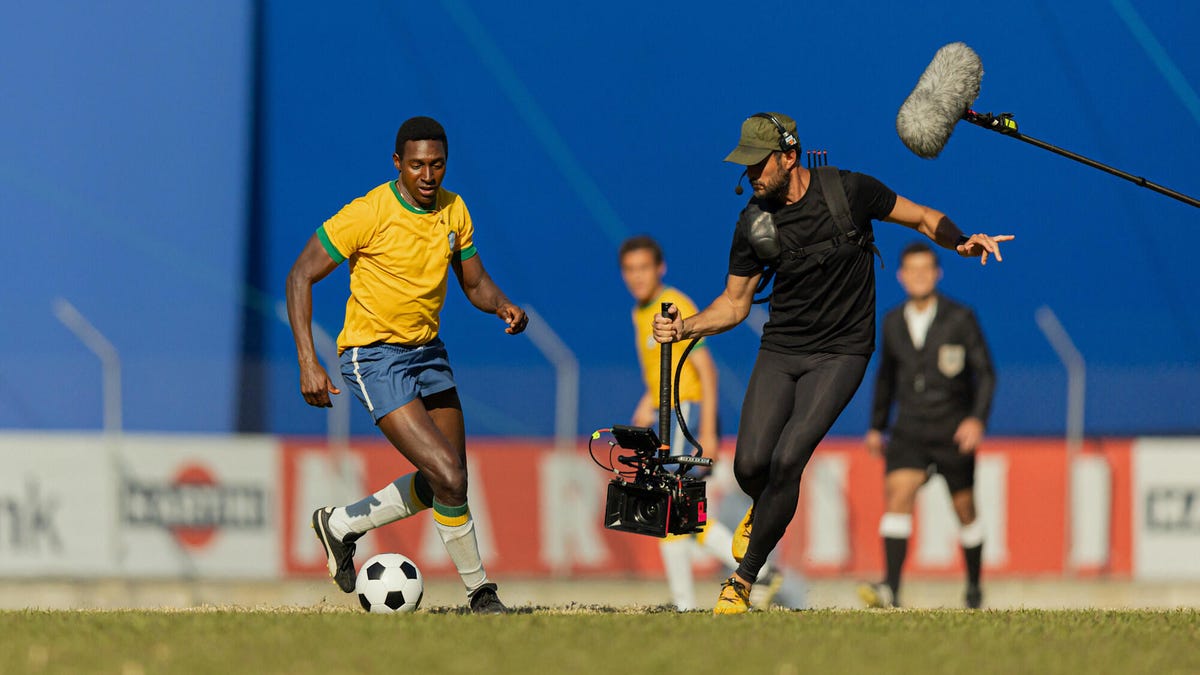
Netflix revealed in its second-quarter earnings report that generative AI was used in roughly 300 programs this year, primarily for production and postproduction work. Co-CEO Ted Sarandos framed the technology as enabling shots and sequences that productions could not otherwise afford or complete on schedule. The disclosure underscores the streaming giant's broader push into AI-assisted production, even as Hollywood continues to grapple with labor and copyright concerns stemming from the technology's rapid adoption.
Summaries like this, in your inbox every morning.
Sign up free →What happened
Netflix disclosed in its second-quarter earnings report that generative AI was used in roughly 300 of its programs this year, mostly across production and especially postproduction. Co-CEO Ted Sarandos said the technology is used to speed up work, cut costs, and make shots that would otherwise be impossible—productions that creators "wouldn't have been able to afford them, they wouldn't have been able to do them in the time frames that they're working on." Titles using AI include the sports thriller Glory and the docuseries The American Experiment.
Why it matters
Netflix is using AI as a tool to help creators build "complicated shots and sequences," framing it as a creative assist rather than replacement. However, this move reflects broader tension in Hollywood: writers, actors, and unions have pushed back over labor replacement fears and copyright concerns since 2023 strikes, while other studios and major figures like Martin Scorsese have embraced AI adoption. Netflix's approach—behind-the-scenes technical work rather than fully AI-generated performers—is considered by production experts to be the most important application in entertainment, helping directors focus on the big picture.
What to watch
In March, Netflix acquired InterPositive, the Ben Affleck-founded company, to equip filmmakers with AI tools throughout the production process. The company is increasingly open about adopting AI across content discovery, advertising, and animation production.
Netflix announced in its second-quarter earnings report, published Thursday, that generative AI was used in the production of roughly 300 programs this year, marking a significant expansion from the company's initial experiments with AI-assisted production that it disclosed last year. The bulk of this AI use occurred across production and especially postproduction work.
Co-CEO Ted Sarandos framed the technology as a means to accelerate production timelines, reduce costs, and enable creative sequences that would otherwise remain out of reach. "In many of the cases, productions would have left out those key shots because they just wouldn't have been able to afford them, they wouldn't have been able to do them in the time frames that they're working on," Sarandos said. "Those sequences are saved by the availability and access to these gen AI tools." He emphasized that creators are using AI to build "complicated shots and sequences," positioning it as a tool that amplifies human creativity rather than replaces it. Sarandos acknowledged that great films depend on human artists and that AI simply gives "creators better tools to bring their visions to life."
Examples of titles that incorporated AI include Glory, a sports thriller set in India, and the docuseries The American Experiment. In March, Netflix made a strategic acquisition of InterPositive, the production company founded by actor Ben Affleck, which the company said would equip filmmakers with AI tools throughout the production process. Netflix has also expanded AI deployment across content discovery and advertising, as well as animation production.
The disclosure comes against a backdrop of significant industry tension. In 2023, Hollywood experienced convulsive labor strikes involving writers, actors, and other creative workers, driven by concerns about AI replacing creative work and copyright infringement. Since then, studios, artists, and unions have mounted pushback against rapid AI adoption. High-profile controversies have included backlash against AI-generated performers like Tilly Norwood over labor replacement fears and unauthorized use of human performances, as well as protests after Hasbro asked child voice actors on the animated series Peppa Pig to sign over rights for AI use of their voices. However, some figures in the industry, including filmmaker Martin Scorsese, have embraced AI tools. According to A.K. Pradeep, CEO of SensoriAI, which has worked on AI production for television in India, Netflix's behind-the-scenes approach represents "the most important application in entertainment." Pradeep noted that while such work may lack glamour, "shows win or fall based on production, camera work, sound and good direction," and that AI can free directors from routine technical decisions—such as camera focus, framing, and analysis of ratings data—to concentrate on the broader creative vision.
Netflix's disclosure of AI use in 300 programs reflects the streaming giant's accelerating adoption of generative AI across its operations. The company has been increasingly transparent about deploying the technology not only in content discovery and advertising but also directly in creative production—a shift that began with experimental use last year and has now become mainstream across the year. This trajectory is part of a broader industry movement in which major studios and distributors are advancing AI-assisted projects, even as significant labor and creative pushback persists.
The framing by co-CEO Ted Sarandos is instructive: AI is presented as enabling shots and creative sequences that budget or time constraints would otherwise exclude entirely, rather than as a wholesale replacement for human creative labor. This positions AI as a tool that expands creative possibility within existing constraints, a narrative that contrasts with union and artist fears about job displacement. The company's March acquisition of InterPositive further signals a strategic commitment to embedding AI tools throughout the filmmaking process, from pre-production through completion.
However, Netflix's expansion into AI production occurs within a context of unresolved industry tensions. Hollywood labor strikes in 2023 highlighted concerns about AI replacing creative work and infringing copyrights; subsequent backlash against AI-generated performers and unauthorized voice synthesis for shows like Peppa Pig demonstrates that the line between creative assist and labor replacement remains contested. Netflix's behind-the-scenes deployment may insulate the company from the most visible conflicts, but it does not resolve the underlying question of where the entertainment industry will ultimately draw its boundaries around AI use.
AI-summarized, only the topics you pick — one digest a day via Email, Slack, or Discord.
Free · takes 30 seconds · unsubscribe anytime
No comments yet. Be the first to share your thoughts!
Log in to join the discussion

Get curated AI news from 200+ sources delivered daily to your inbox. Free to use.
Get Started FreeFree · takes 30 seconds · unsubscribe anytime
1 minute a day. The AI essentials.
200+ sources · Email / LINE / Slack
