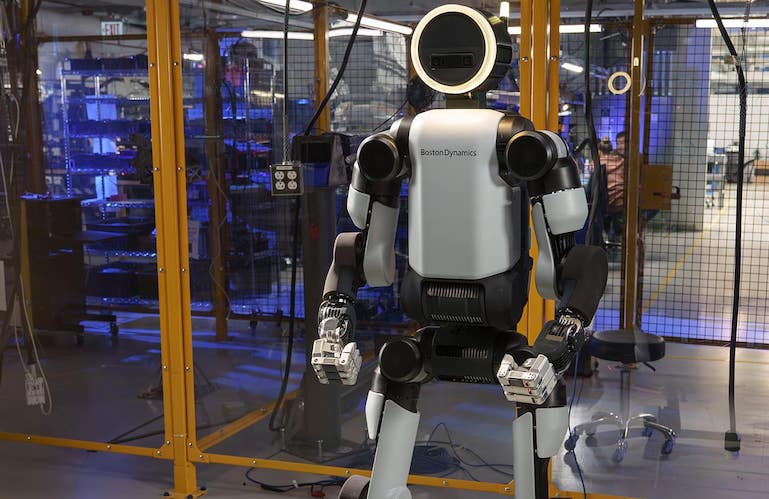
What happened
Boston Dynamics' Atlas, now all-electric and running on NVIDIA chips, autonomously sorts roof racks at Hyundai's plant—a task roboticists would have called insane five or six years ago.
Why it matters
The robot learned the task from human demonstrations rather than hand-written code, suggesting factory work can be taught rather than programmed.
Summaries like this, in your inbox every morning.
Boston Dynamics' Atlas represents a shift in how humanoid robots are built. In 2021, Atlas was a bulky, hydraulic machine that relied on algorithms written by engineers and could only run and jump. The next-generation Atlas has a sleek, all-electric body and runs on NVIDIA chips, making it intelligent enough to autonomously perform complex tasks. This transition mirrors a broader change in robotics programming: more emphasis is placed on demonstrations and machine learning than on manual coding.
The development process relies heavily on human guidance. Machine learning specialists use virtual reality headsets to teleoperate the robot, generating data that trains its AI models. Engineers also trained over 4,000 digital Atlases in simulation for six hours, adding challenges like slippery floors and stiff joints. This approach means that once one robot is trained, all copies can share the new skills, potentially accelerating deployment across factories.
Hyundai's 88% stake in Boston Dynamics positions the automaker at the center of this shift. The company's plant already uses more than 1,000 robots alongside nearly 1,500 humans, and Atlas is now doing real work there. Atlas still can't handle simple daily tasks like getting dressed, but Goldman Sachs predicts the humanoid robot market will reach $38 billion within a decade—a sign that the technology is moving from lab demonstrations to commercial consideration.
Pick your industry and the AI tools you use, and get news related to your work every day.
Free · 30 seconds with Google · unsubscribe anytimeWhat is AIToday? →
Ask AI anything about this article. The AI reads this article, earlier AIToday articles, and Wikipedia, and cites its sources. Q&As are published on this page for other readers too.
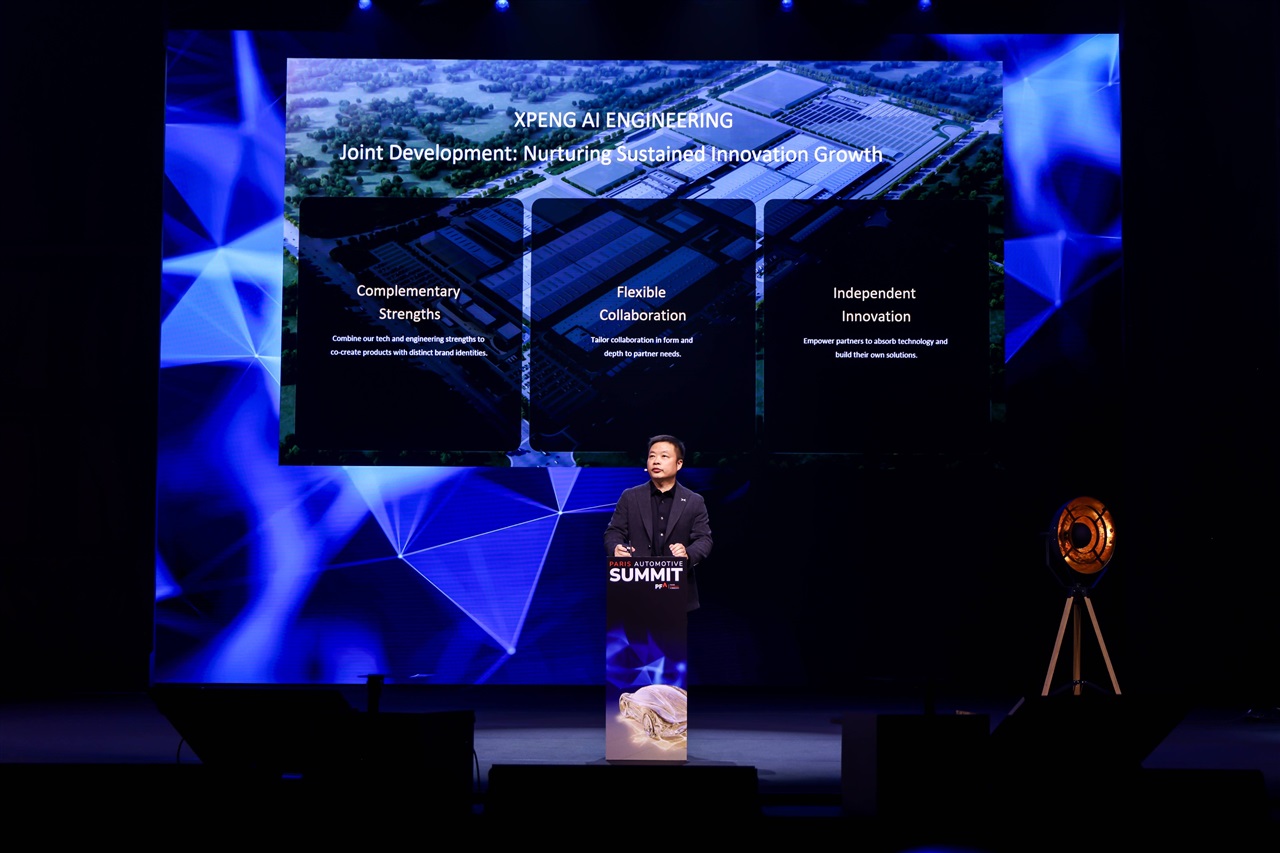
XPeng appeared at the Paris Automotive Summit, presenting not only automotive expertise but a broader technolo…
AIBotics completed its acquisition of NovaCore Labs' operating assets from PlayJamaica Limited, gaining 10 ser…

In an internal test, Google DeepMind robotics researchers instructed Gemini 4 Argon to watch a video of a huma…
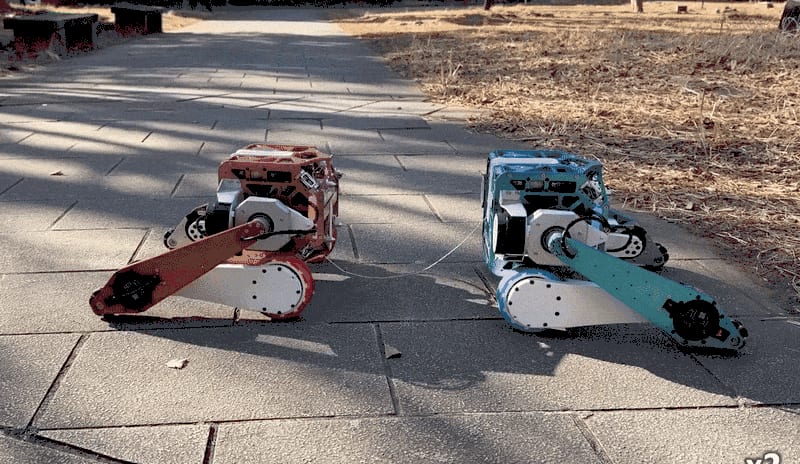
Amulya Vishwanath, who spent seven years leading product marketing for Nvidia's robotics platforms, says robot…
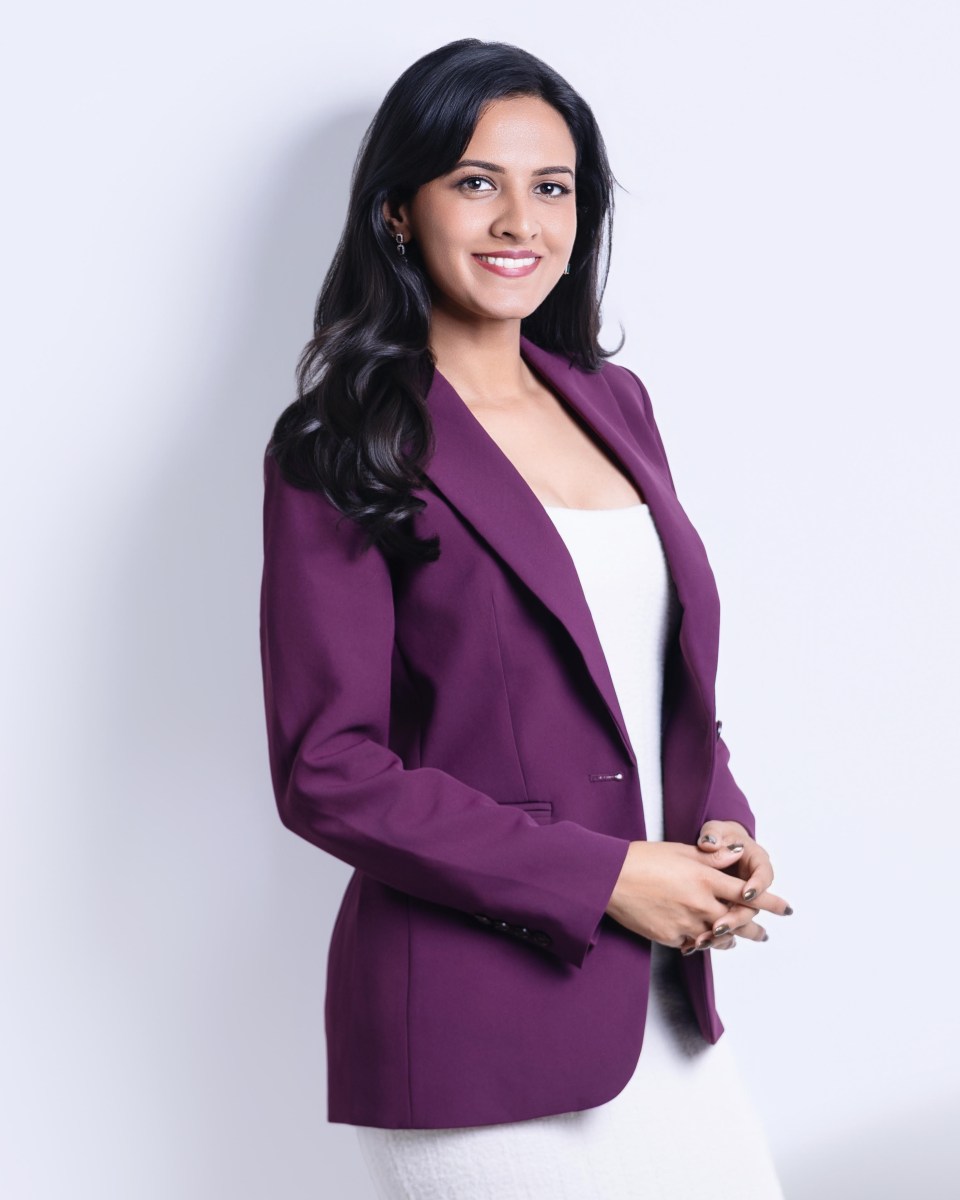
Claire interviewed Rika Antonova of the University of Cambridge on the Robot Talk podcast about using AI to de…
An essay argues that after language models spread through cognitive work like writing and accounting, AI is no…


