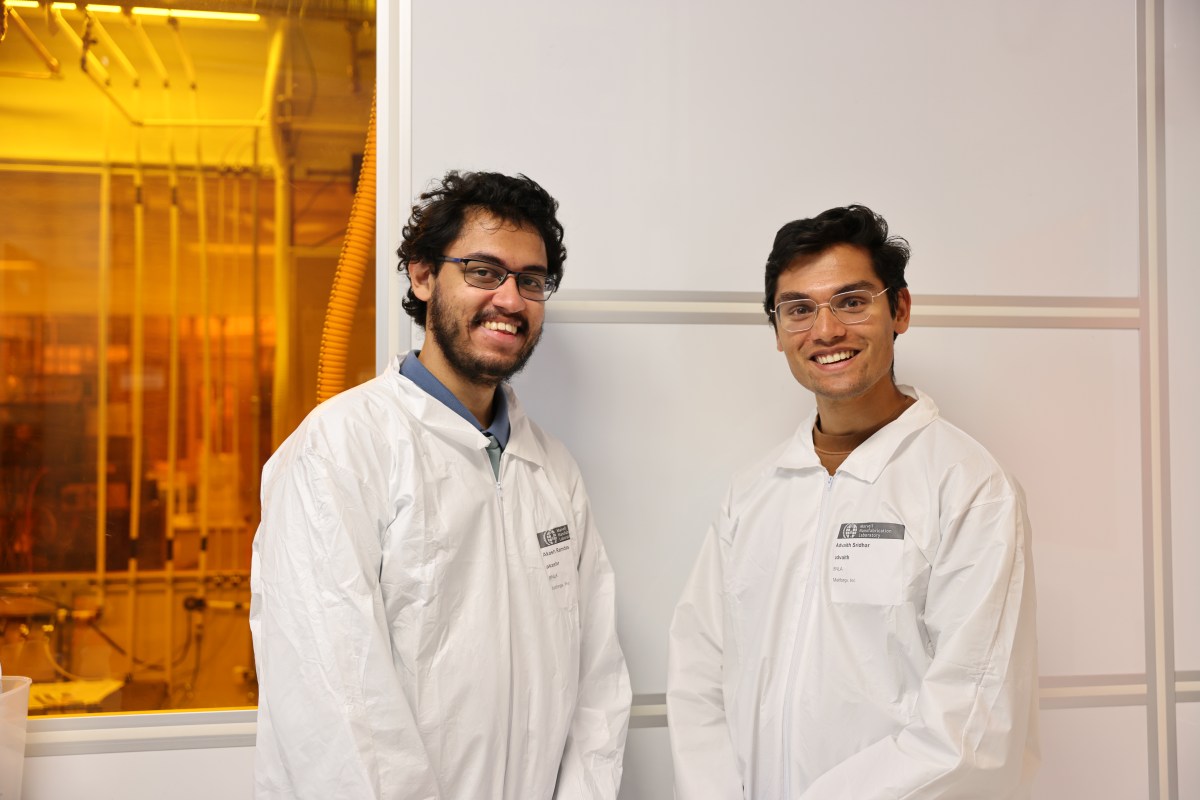
Discovered Materials, a Y Combinator startup, has raised $9 million to use AI agents for discovering semiconductor materials that run cooler and more efficiently.
The company's founders—one with a Stanford PhD in materials science, the other experienced in AI agents—created a pipeline that generates thousands of material candidates daily and validates them with physics simulations.
While AI has not yet delivered commercially deployed materials at scale, Discovered Materials is betting that deep domain expertise combined with rapid experimentation will unlock designs chipmakers can license.
What happened
Discovered Materials closed a $9 million seed round from Lightspeed India Partners after Y Combinator, backed also by Peak XV Partners and angels Paul Graham, Gokul Rajaram, and Thariq Shihipar. The startup uses AI agents powered by Anthropic models to generate candidate materials, then validates them with custom physics simulations to find thermal-efficient semiconductor materials.
Why it matters
AI chips generate excessive heat, driving up data center power consumption and cooling costs. Discovered Materials aims to solve this by automating material discovery—founders claim their pipeline can test thousands of candidate materials daily (versus perhaps 20 per day during manual research), potentially unlocking designs that major chipmakers could license and deploy.
What to watch
The company released hundreds of new material examples and a "Material Discovery Bench" today to benchmark frontier models. Founders expect to have patentable materials ready within a year, though they acknowledge the real constraint is manufacturing and lab validation—not finding candidates—and that wet-lab synthesis cannot be rushed.
Discovered Materials, founded by Advaith Sridhar and Akash Ramdas, is tackling one of the most pressing hardware challenges in AI: the heat generated by chips running AI workloads. Data centers consume enormous amounts of electricity partly because of the cooling systems required to manage this thermal load. Rather than solving the problem through traditional engineering, the startup is using AI agents to discover new materials that could enable more efficient integrated circuits.
The company's approach centers on a custom software pipeline. It uses Anthropic models in a harness to generate potential material leads, then employs foundational physics models that Sridhar and Ramdas trained in-house to run simulations verifying whether candidate materials have practical merit. Sridhar highlighted the speed gain: during his doctorate, Ramdas was able to make roughly 20 educated guesses per day. By deploying AI agents running continuously on the cloud, the team can now test thousands of candidates daily, exploring research directions the founders provide.
The startup today released examples of hundreds of new materials alongside a benchmarking tool called "Material Discovery Bench," designed to track how frontier models tackle this challenge. Discovered Materials has reportedly already found several materials matching the properties of existing semiconductors used by major chipmakers, though the founders have not shared specifics, likely for competitive reasons. The company closed a $9 million seed round from Lightspeed India Partners after graduating from Y Combinator, with additional backing from Peak XV Partners and angels including Paul Graham, Gokul Rajaram, and Thariq Shihipar.
A central challenge is the engineering trade-off: a material that reduces heat or improves dissipation might be too difficult or expensive to manufacture into a functional chip, or its electrical properties may suffer. Lightspeed partner Hemant Mohapatra, who led the round, described this as "a bit of playing whack-a-mole with atomic structures." For a material to be truly useful in the real world, all of its properties—thermal, electrical, manufacturability—must converge. The founders plan to patent either the use of promising materials in GPUs or the manufacturing processes required to produce chips from them, licensing these designs to chipmakers. Sridhar hopes to have patentable materials ready within a year.
However, the path from discovery to commercial deployment remains uncertain. While AI-discovered molecules like Insilico Medicine's Renterosib have reached Phase II clinical trials, and MatNex and Panasonic have identified promising candidates, none have been deployed at commercial scale. Mohapatra cautioned that as AI models improve, predicting novel materials will likely become commoditized, and the real bottleneck is not finding candidates but "filtering them correctly and synthesizing them." Sridhar acknowledged this friction, noting that "a lot of this will involve actually going into wet labs and like making things as well. And this is the process that cannot be sped up." Discovered Materials' edge may ultimately depend not on its AI agent technology—which rivals are adopting—but on the founders' deep domain expertise and their ability to rapidly validate and manufacture prototypes in-house.
Discovered Materials enters a growing field of AI-driven material discovery, where companies like MatNex, SandboxAQ, and CuspAI are already working on similar challenges. What sets this startup apart, according to Lightspeed's Mohapatra, is founder Akash Ramdas' deep domain expertise in materials science from Stanford and the team's ability to rapidly validate candidates in a lab—a capability they claim to have already demonstrated with several new materials.
The problem the startup is tackling is real and urgent: AI chips generate intense heat, forcing data centers to invest heavily in cooling systems. By automating the search for thermally efficient semiconductor materials, Discovered Materials could unlock designs that chipmakers could license at scale. However, the path to commercial impact remains unproven. While Insilico Medicine's Renterosib made it into Phase II clinical trials as an AI-discovered drug, and MatNex and Panasonic have found promising material candidates, none have been commercially deployed at scale yet. Mohapatra's observation that filtering and synthesis, not candidate discovery, are the real bottleneck suggests that Discovered Materials' competitive edge may lie less in finding materials and more in its ability to validate and commercialize them—a process that still requires hands-on lab work.
AI-summarized, only the topics you pick — one digest a day via Email, Slack, or Discord.
Free · takes 30 seconds · unsubscribe anytime
Ask AI anything about this article. Q&As are published on this page for other readers too.

The AI news that matters, in one minute each morning.
Sign up free
