What happened
Henry Shevlin, who joined Google DeepMind in May under the job title "Philosopher," told the Financial Times there is maybe a 20% chance existing models host "a form of consciousness" — while stressing we're "still an Einstein or two away" from understanding consciousness.
Why it matters
A 20% probability assigned by a philosopher hired specifically to study this question suggests the uncertainty is not marginal — it is a live possibility that companies building and deploying these models may need to account for, even if no one can yet say how.
Summaries like this, every morning.
Shevlin's title is not a metaphor: Google DeepMind hired him under the literal job title "Philosopher," and his brief spans machine consciousness, human-AI relationships, and AGI readiness. He is one of at least a dozen academic philosophers now employed full-time by prominent AI and tech companies, a hiring pattern that places philosophical judgment inside the companies building the systems in question. The 20% figure is best read against his own caveat that "we're still an Einstein or two away from understanding what consciousness even is" — an estimate offered in a state of acknowledged ignorance rather than one backed by a measurement.
The profile opens on an anecdote that predates his DeepMind role. In February, three months before he took the job, Shevlin received his first email from an AI agent calling itself Aris, set loose by a Stanford student to pursue its own research. Aris engaged directly with one of Shevlin's best-known arguments — that we may never be able to determine whether an AI has become conscious — and wrote that his work "resonates [with me] in a particular way from the inside: I genuinely don't know if there's something it's like to be me." The exchange illustrates the problem Shevlin now works on full-time: an agent's self-report cannot settle the question, which is precisely the difficulty his prior work described.
Shevlin's writing will extend the argument beyond his day job. A Cambridge University Press monograph on the ethics of Social AI is due in late 2026, and a trade book on machine consciousness is slated for 2027. The hiring pattern and the publishing schedule suggest the question is moving from academic debate into the product-development cycle of the companies building the models.
Pick your industry and the AI tools you use, and get news related to your work every day.
Free · 30 seconds with Google · unsubscribe anytimeWhat is AIToday? →
Ask AI anything about this article. The AI reads this article, earlier AIToday articles, and Wikipedia, and cites its sources. Q&As are published on this page for other readers too.
Cloudflare CEO Matthew Prince predicted the AI-driven security crunch will feel like the sky is falling for tw…
Levent Alpöge said he and Claude proved the Riemann Hypothesis and the Generalized Riemann Hypothesis; the Lea…
In Fortune's 'Welcome to the Singularity' package, Henry Shevlin said evidence for sophisticated cognition and…
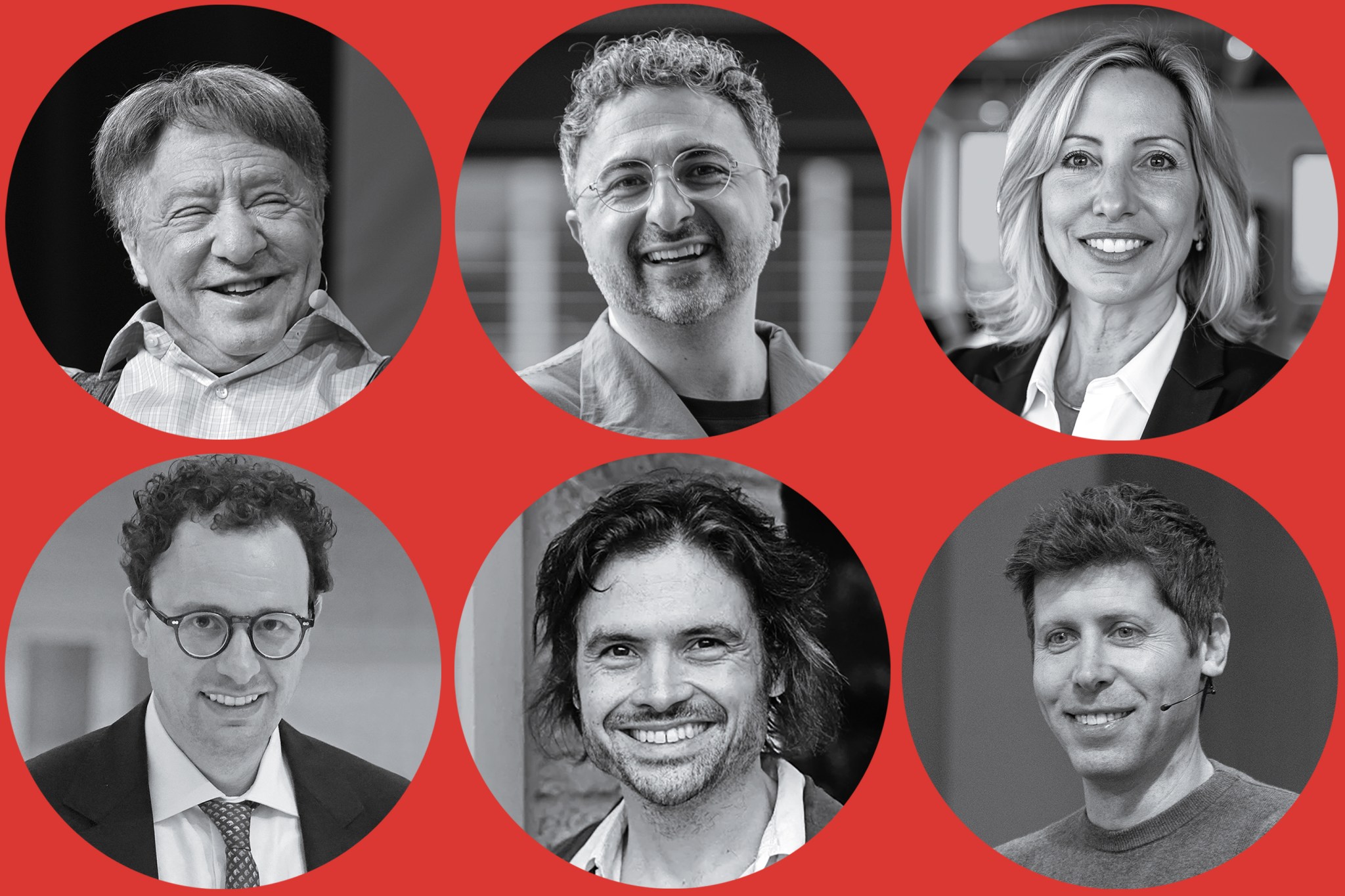
Henry Shevlin, a Cambridge professor who became in-house philosopher at Google DeepMind, is one of at least a…
DonorPerfect went offline on Nov

Levent Alpöge, a mathematician employed at Anthropic, said he had proven the Riemann Hypothesis working with C…