What happened
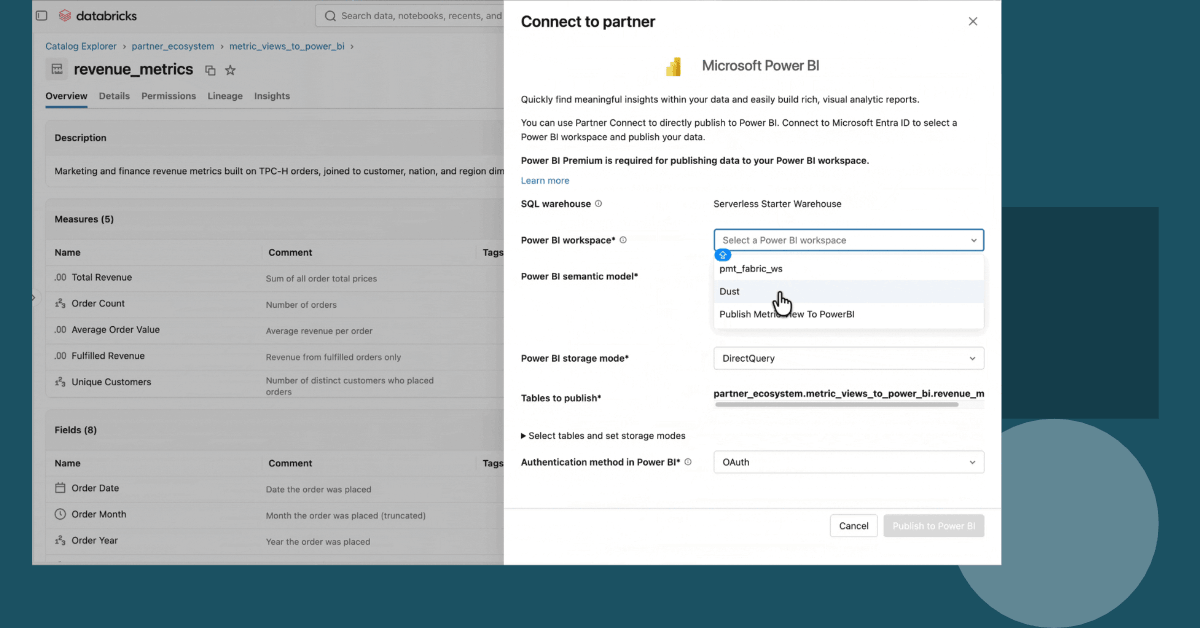
Databricks introduced Publish to Power BI in Private Preview, which turns each Unity Catalog metric view into a Power BI table, with dimensions as columns and measures as DAX measures.
Why it matters
Teams can maintain one definition in Databricks instead of many copies in Power BI, reducing report drift and manual rework, according to Databricks.
WHO IT HITSData teams and business analysts using both Databricks and Power BI are affected: they can publish governed metric views to Power BI, keeping reports aligned without rebuilding logic or writing DAX manually.
Summaries like this, every morning.
The release addresses a common pain point: organizations often have thousands of Power BI workspaces, each with its own semantic model, leading to inconsistent metrics and duplicated logic. By publishing Unity Catalog metric views to Power BI, Databricks aims to make the metric view the single source of truth, with joins and calculations running in Databricks. The feature supports standard aggregations, window measures, and metadata like descriptions and display formats, which carry over to Power BI field properties. For production use, Power BI tasks in Lakeflow Jobs can automate publishing on a schedule or after upstream tables refresh, keeping semantic models in sync. The feature is currently in Private Preview, and access requires working with an account team. A future performance optimization, metric view materialization, is mentioned as coming soon to speed up queries without changing definitions.
Pick your industry and the AI tools you use, and get news related to your work every day.
Free · 30 seconds with Google · unsubscribe anytimeWhat is AIToday? →
Ask AI anything about this article. The AI reads this article, earlier AIToday articles, and Wikipedia, and cites its sources. Q&As are published on this page for other readers too.

