
What happened
Exabase's M-1 system scored 76.9% at 100K tokens, 75.0% at 1M tokens, and 68.0% at 10M tokens on BEAM, the hardest AI memory benchmark. It outperformed previous leaders Hindsight (73.4%, 73.9%, 64.1%) and Honcho (63.0%, 63.1%, 40.6%), while using Google's smaller Gemini 3 Flash instead of the larger Gemini 3 Pro that prior winners relied on.
Why it matters
At 10M tokens—vaguely equivalent to a year of long daily chats with an LLM—genuine recall becomes the only path to high scores, since context stuffing fails at that scale. M-1's win on the largest-scale benchmark suggests the system has developed real memory capabilities, not just brute-force model size. The efficiency gain (about 20% fewer tokens per query than the next best system) means better recall at lower computational cost.
What to watch
M-1 now holds state-of-the-art on both major memory benchmarks (BEAM and LongMemEval) at every scale from 115K to 10M tokens. The system shows specific weaknesses—multi-session reasoning collapsed to 9.6% at 10M tokens—which the team plans to address. Full methodology and results are published in a research paper at exabase.io.
Summaries like this, in your inbox every morning.
BEAM represents a fundamentally harder test than earlier memory benchmarks because its 10M token scale exceeds any single model's context window, eliminating the shortcut of context stuffing. Previous benchmarks allowed systems to cheat by fitting the entire corpus in a window; at 10M tokens, only about half of a large window can be effectively utilized without degradation. This forces M-1 to rely on genuine recall mechanisms rather than model size or brute-force retrieval.
The competitive gap between M-1 and prior leaders widens as scale increases. At 100K tokens, M-1 leads Hindsight by 3.5 percentage points; at 10M tokens, the gap grows to 3.9 points. Against Honcho, the lead expands from 13.9 points to 27.4 points. This pattern suggests that larger corpora increasingly filter out systems that rely on capability rather than genuine recall, highlighting M-1's architectural strength at scale.
M-1's efficiency—consuming about 20% fewer tokens per query—combined with its use of the smaller Gemini 3 Flash model (versus Gemini 3 Pro for prior winners) indicates that effective memory design can outperform both larger models and higher computational budgets. The system's state-of-the-art status across both BEAM and LongMemEval at all scales suggests the approach generalizes.
Pick your industry and the AI tools you use, and get news related to your work every day.
Free · 30 seconds with Google · unsubscribe anytimeWhat is AIToday? →
Ask AI anything about this article. The AI reads this article, earlier AIToday articles, and Wikipedia, and cites its sources. Q&As are published on this page for other readers too.
Cammarata reinterprets InceptionV1's cat-car neuron as a V-shape detector, not two unrelated concepts

Google Deepmind's Gemini 4 Argon scored 97.5 percent on ARC-AGI-3 at a cost of $4,800, second only to GPT-6 As…
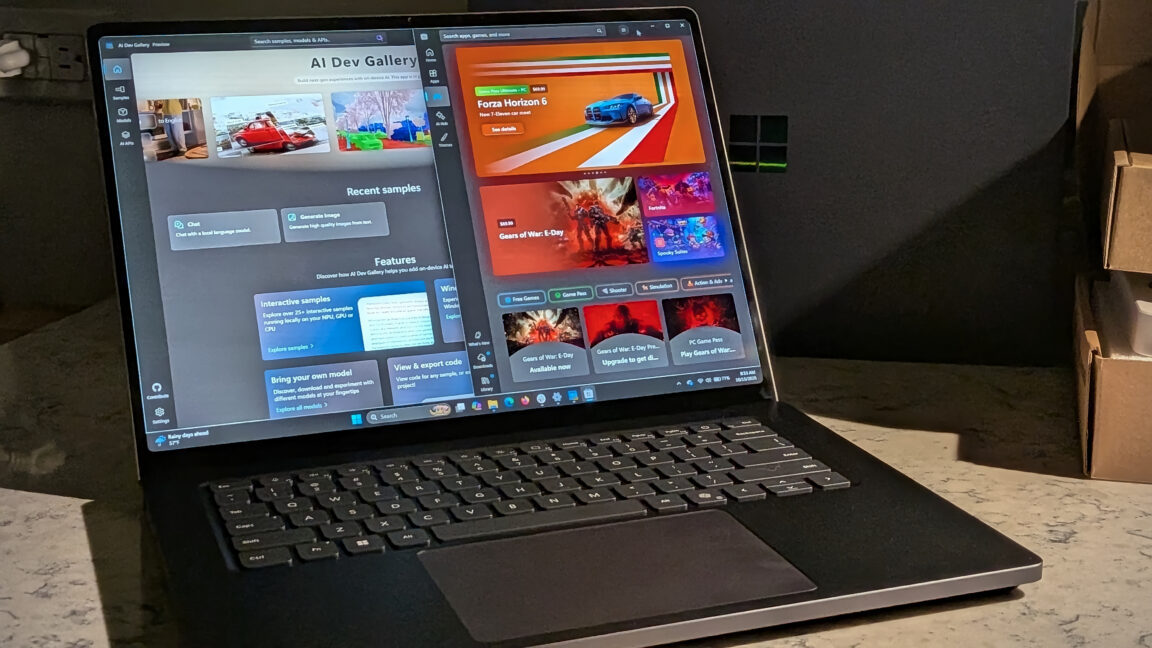
Microsoft's Surface Laptop Ultra, using Nvidia's RTX Spark platform, starts at $2,599 (up to $5,899)
Meta's new commercial terms, effective October 30th, appear to let it crawl and train AI on content from websi…
Vercel data published Thursday shows TypeSafe AI's Jev, a lightweight decision model for choosing among predet…
Reflection AI introduced Beam, an open-weight model for agentic coding and long-horizon tasks, with 501 billio…