What happened
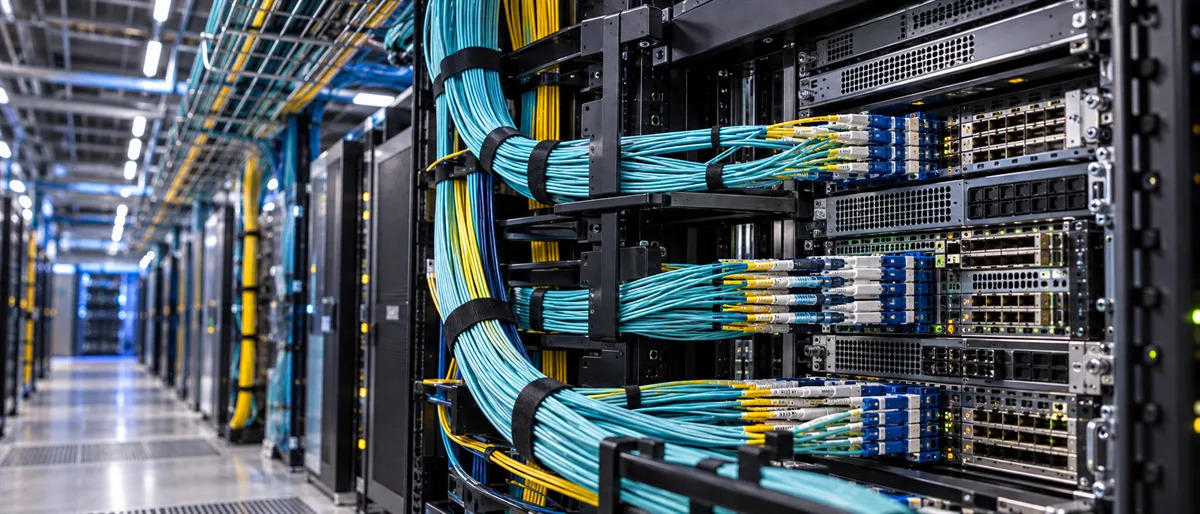
Corning and AT&T finalized a multi-year fiber supply deal worth more than $3 billion. It follows AT&T's multi-billion-dollar fiber contract with Verizon and a $6 billion agreement Corning signed with Meta Platforms for data center optics.
Why it matters
These supply agreements create a multi-year locked backlog, turning uncertain sector demand into visible forward revenue. They suggest capital is moving toward the physical network layer that AI and cloud computing depend on.
What to watch
Corning trades at a price-to-earnings ratio near 72 amid heavy insider selling and a planned $2 billion stock offering, raising valuation and dilution concerns. AT&T, funding a costly network expansion, offers a lower valuation and a 4.46% dividend yield.
WHO IT HITSThis lands on telecom and data-center network planners who must secure fiber capacity years ahead, and on infrastructure investors weighing Corning's premium valuation against AT&T's dividend-backed expansion spending.
Summaries like this, in your inbox every morning.
The AI investment cycle has mostly poured money into semiconductors, pushing chip valuations to historic premiums. But processing power alone cannot move the huge volumes of data that AI and cloud services generate, so the optical communications supply chain is emerging as the next phase of spending.
Corning sits in that chain as a key supplier for telecom network expansion and hyperscaler data centers. The AT&T deal, following a multi-billion-dollar fiber contract with Verizon and a $6 billion agreement with Meta Platforms for data center optics, shows major technology and telecom players competing for optical fiber. According to the article, these agreements create a multi-year backlog that turns uncertain demand into visible future revenue, and Corning has consolidated the physical supply chain.
The stakes may hinge on how investors weigh Corning's valuation near a price-to-earnings ratio of 72 against heavy insider selling and a planned $2 billion stock offering, which raise dilution concerns. AT&T, by contrast, is funding a costly network expansion yet offers a 4.46% dividend yield — a contrast likely to shape how infrastructure investors judge the two sides of the same deal.
Pick your industry and the AI tools you use, and get news related to your work every day.
Free · 30 seconds with Google · unsubscribe anytimeWhat is AIToday? →
Ask AI anything about this article. The AI reads this article, earlier AIToday articles, and Wikipedia, and cites its sources. Q&As are published on this page for other readers too.
In Q2, billionaires or their funds sold six 'Magnificent Seven' AI stocks

Nvidia was rising early Friday, even as the wider chip sector kept falling, Barron's reported

ElevenLabs completed a $300 million employee tender at a $22 billion valuation, and co-founder Mati Staniszews…

On October 15, OpenAI announced the Rosalind Academic Plan, giving approved US university labs free access to…

Neostellar Capital principal Evan Schlossman said CoreWeave's $103.7 billion in remaining performance obligati…

Supermicro Computer appointed Mark Long as chief financial officer, bringing an experienced technology finance…


