AIToday

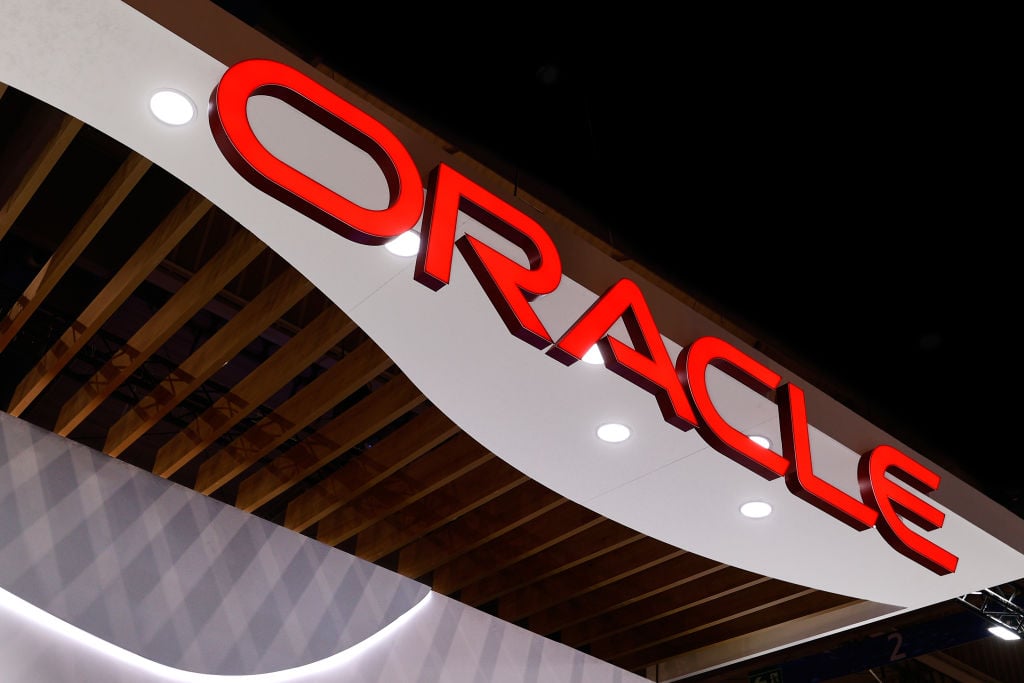
Oracle hits 52-week low as S&P cuts credit rating over $90B–95B AI spending

Yahoo Finance AI21h ago
Oracle hits 52-week low as S&P cuts credit rating over $90B–95B AI spending

Key takeaway

Oracle's stock fell to a 52-week low and its credit rating was cut to one notch above junk status as S&P cited the company's massive $90–95 billion projected capital spending on AI infrastructure. Although Oracle's fundamentals remain strong—cloud infrastructure revenue grew 93% year-over-year and the backlog reached $638 billion(約100兆円)—the company faces negative free cash flow and heavy reliance on OpenAI for roughly half its contracted revenue, raising questions about whether market fear has outpaced the underlying facts.

Summaries like this, in your inbox every morning.

Sign up free →

3 Key Points

  • What happened

    Oracle's stock touched a fresh 52-week low of $121.50 on Friday, trading about 63% below its high of $345.72. On July 9, S&P Global Ratings downgraded Oracle's credit rating from BBB to BBB−, one notch above junk status, citing the enormous cost of its AI infrastructure build-out.

  • Why it matters

    Oracle spent $55.7 billion(約8.9兆円) on capital expenditures in fiscal 2026 and posted free cash flow of negative $23.7 billion(約3.8兆円) for the year. S&P projects fiscal 2027 capex will reach $90 billion(約14兆円) to $95 billion(約15兆円), with the free cash flow deficit widening to about $42 billion(約6.7兆円). Roughly half of Oracle's $638 billion(約100兆円) in remaining performance obligations comes from a single customer—OpenAI—creating significant concentration risk if that customer struggles to fund its commitments.

  • What to watch

    Management guided for fiscal 2027 revenue of about $90 billion(約14兆円) (34% growth) and non-GAAP earnings per share of $8.05. The company plans a $20 billion(約3.2兆円) equity issuance later this calendar year. The stock currently trades at roughly 16 times guided adjusted earnings—a multiple typically seen in slow-growing legacy software companies, not one guiding 34% revenue growth.

In Depth

Oracle's stock touched a fresh 52-week low of $121.50 on Friday, down about 63% from its high of $345.72, as the market reassesses the company's sprawling artificial intelligence infrastructure bet. The decline accelerated on July 9, when S&P Global Ratings cut Oracle's credit rating from BBB to BBB−, leaving the company one notch above junk status. S&P's concern was direct: the enormous cost of the AI infrastructure build-out Oracle has signed up for.

The numbers justify the agency's worry. In fiscal 2026 (the year ended May 31, 2026), Oracle spent $55.7 billion(約8.9兆円) on capital expenditures while generating $32 billion(約5.1兆円) in operating cash flow—up 54% year-over-year but still exhausted by the spending, leaving free cash flow at negative $23.7 billion(約3.8兆円). S&P expects the gap to widen sharply: the agency projects Oracle's fiscal 2027 capital expenditures will reach $90 billion(約14兆円) to $95 billion(約15兆円), with the free cash flow deficit widening to about $42 billion(約6.7兆円). Oracle already carried nearly $130 billion(約21兆円) in borrowings at the end of fiscal 2026. To plug the gap, the company issued $5 billion(約8000億円) of mandatory convertible preferred stock in February and plans another $20 billion(約3.2兆円) equity issuance later in the calendar year.

One risk stands out above the rest: concentration. S&P noted that roughly half of Oracle's $638 billion(約100兆円) in remaining performance obligations—contracted revenue signed but not yet delivered—comes from a single customer: OpenAI. If the ChatGPT maker ever struggles to fund its commitments, Oracle could be left holding data centers built for demand that never arrives. This dependency shapes all the company's guidance. Management expects revenue to climb about 34% this fiscal year to $90 billion(約14兆円), but guided for non-GAAP adjusted earnings per share of $8.05—about 18% growth once one-time investment gains are stripped. Earnings growth lags revenue growth because depreciation and interest are climbing alongside the build-out.

Yet Oracle's fundamentals remain strong. In fiscal 2026, revenue rose 17% year-over-year to $67.4 billion(約11兆円), and growth accelerated over the year, with fiscal fourth-quarter revenue climbing 21%. The company's cloud infrastructure business—the part actually selling AI computing capacity—grew 93% year-over-year in fiscal Q4 to $5.8 billion(約9300億円). Full-year net income under generally accepted accounting principles (GAAP) rose 37% to $17.1 billion(約2.7兆円). The backlog is extraordinary: remaining performance obligations ended the year at $638 billion(約100兆円), up 363% year-over-year and up $85 billion(約14兆円) from the prior quarter alone. Notably, about $75 billion(約12兆円) of the recent large AI contracts involve customers prepaying for graphics processing units or supplying the chips themselves—an arrangement that shifts some of the build-out's cost off Oracle's books.

On valuation, Oracle's stock trades at roughly 22 times earnings and about 16 times the adjusted earnings management guided to for fiscal 2027. That multiple is unusual: it typically attaches to slow-growing legacy software companies, not a business guiding 34% revenue growth. The market appears to be pricing in substantial downside risk—negative free cash flow, a credit rating one notch above junk, and concentration on a single unprofitable customer. But if the backlog converts anywhere near schedule, and if the company's heaviest spending phase is approaching completion, earnings growth could reaccelerate, potentially justifying a higher multiple once cash flow stabilizes.

Context & Analysis

Oracle faces a genuine liquidity squeeze driven by its decision to front-load massive capital expenditures for AI infrastructure. The company spent $55.7 billion(約8.9兆円) on capex in fiscal 2026 against $32 billion(約5.1兆円) in operating cash flow, and S&P's projection of $90–95 billion spending in fiscal 2027 signals that the company is in the heaviest phase of its build-out. The credit downgrade reflects real financial strain: Oracle carries nearly $130 billion(約21兆円) in borrowings and now plans a $20 billion(約3.2兆円) equity issuance, which will dilute existing shareholders. The single-customer concentration risk is particularly sharp—with roughly half of the $638 billion(約100兆円) backlog tied to OpenAI, Oracle's ability to convert those contracts into sustainable cash flow depends partly on factors outside its control, including OpenAI's own funding stability and profitability trajectory.

Yet the stock's valuation—trading at roughly 16 times guided adjusted earnings for fiscal 2027—may be pricing in outcomes more pessimistic than the current facts support. Oracle's demand fundamentals remain robust: cloud infrastructure revenue accelerated to 21% growth in fiscal Q4, and the backlog expanded 363% year-over-year to $638 billion(約100兆円). The company is guiding for 34% revenue growth in fiscal 2027, a pace typically reserved for high-growth companies, not legacy software peers. If that backlog converts anywhere close to schedule and the heaviest capex phase approaches completion, earnings growth could reaccelerate once the balance-sheet strain eases. The critical near-term indicators will be whether free cash flow deterioration slows ahead of schedule and whether OpenAI's funding commitments continue to materialize quarter after quarter.

FAQ

Why did S&P cut Oracle's credit rating?
S&P downgraded Oracle from BBB to BBB− citing the enormous cost of Oracle's AI infrastructure build-out. The agency is concerned about Oracle's negative free cash flow of negative $23.7 billion(約3.8兆円) in fiscal 2026 and projections that fiscal 2027 capex will reach $90 billion(約14兆円) to $95 billion(約15兆円) with a free cash flow deficit widening to about $42 billion(約6.7兆円).
What is Oracle's biggest risk from its AI commitments?
Roughly half of Oracle's $638 billion(約100兆円) in remaining performance obligations comes from a single customer: OpenAI. If OpenAI ever struggles to fund its commitments, Oracle could be left holding data centers built for demand that never arrives.
Is Oracle's underlying business actually strong?
Yes. Oracle's fiscal 2026 revenue rose 17% year-over-year to $67.4 billion(約11兆円), and its cloud infrastructure business—which sells AI computing capacity—grew 93% year-over-year in fiscal Q4 to $5.8 billion(約9300億円). Management guided for 34% revenue growth in fiscal 2027, reaching about $90 billion(約14兆円).

Get AI news like this every morning

AI-summarized, only the topics you pick — one digest a day via Email, Slack, or Discord.

Free · takes 30 seconds · unsubscribe anytime

Discussion

No discussion yet for this article

Stay ahead with AI news

Get curated AI news from 200+ sources delivered daily to your inbox. Free to use.

Get Started Free

Free · takes 30 seconds · unsubscribe anytime

1 minute a day. The AI essentials.

200+ sources · Email / LINE / Slack

Get it free →