What happened
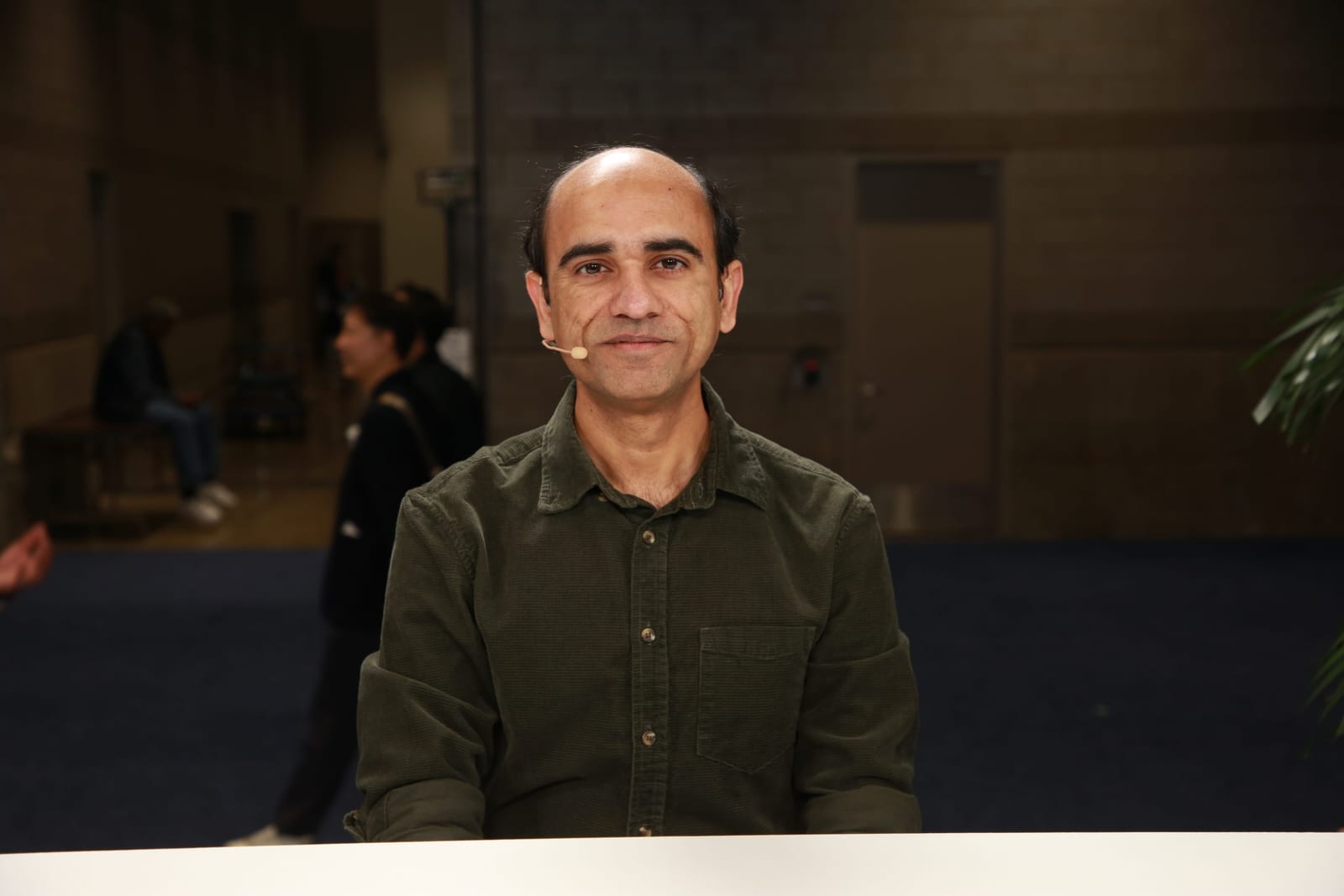
D-Matrix's Satyam Srivastava said Raptor, its second-generation chip due next year, stacks 3D DRAM under the logic die, claiming 10x the bandwidth and 10x the energy efficiency of HBM.
Why it matters
If those gains hold, memory bandwidth could stop being the bottleneck that leaves AI inference hardware idle, making each chip far more productive.
What to watch
Raptor is slated to arrive next year, following the Pavehawk test chip now proving out the 3D DRAM stacking.
WHO IT HITSAI infrastructure teams designing inference servers may gain a new memory tier to evaluate, though the performance claims are D-Matrix's own and the chip is not yet available.
Summaries like this, every morning.
D-Matrix's approach with Raptor is the latest step in a methodical chip roadmap. The company first proved die-to-die connectivity with Jayhawk, then validated digital in-memory computing with Jayhawk II. Those efforts fed into the Corsair accelerator, which combined both technologies and entered full production earlier this year. Now, the Pavehawk test chip is proving out 3D DRAM stacked underneath the logic die, serving as the core technology for Raptor.
According to Satyam Srivastava, stacking keeps the distributed memory architecture intact but moves memory cells onto a separate layer rather than consuming logic die area. This short data path never crosses an interposer, placing 3D DRAM in a new tier between SRAM and high-bandwidth memory. The company's claim of 10 times higher energy efficiency and 10 times higher bandwidth compared to HBM is central to its pitch for inference workloads.
Beyond the chip itself, D-Matrix has adopted Nvidia's NVLink Fusion rackscale infrastructure to connect its accelerators to Nvidia's AI factories. Srivastava said this unlocks participation in an established ecosystem and access to a hardened MGX rack design. The partnership points toward heterogeneous computing, where software orchestrates GPUs, CPUs and accelerators such as Raptor as one system, with the cluster as the unit of computing.
Pick your industry and the AI tools you use, and get news related to your work every day.
Free · 30 seconds with Google · unsubscribe anytimeWhat is AIToday? →
Ask AI anything about this article. The AI reads this article, earlier AIToday articles, and Wikipedia, and cites its sources. Q&As are published on this page for other readers too.

