What happened
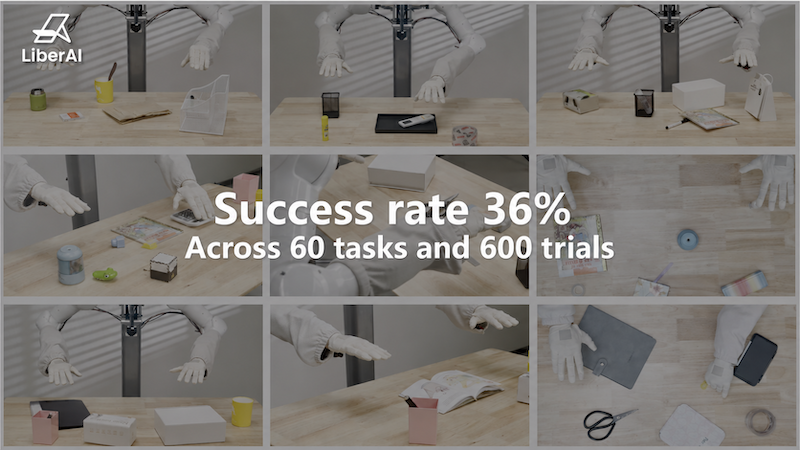
LiberAI is launching Liber-0, a World Action Model pretrained on more than 2.2 million hours of human experience, and says it achieved a 36 percent success rate across a 60-task zero-shot evaluation.
Why it matters
The approach aims to turn widely available human video and glove-recorded hand motions into generalizable robot manipulation skills, potentially reducing how much robot-specific demonstration data is needed to teach new behaviors.
WHO IT HITSRobotics developers and physical AI researchers building general-purpose robot policies stand to benefit if human-sourced data proves a scalable substitute for expensive robot demonstrations. Companies collecting manipulation data may find glove-based collection lowers the hardware barrier.
Summaries like this, every morning.
LiberAI, founded in December 2025, is positioning Liber-0 within the emerging generation of foundation models for robotics, though it specifically calls its system a World Action Model. The company's central bet is that human experience, which exists on an enormous scale compared with robot-collected demonstrations, can serve as the primary training resource for general-purpose robot manipulation.
The technical challenge is bridging what LiberAI describes as three gaps: a visual gap between human recordings and robot cameras, an action-supervision gap where hand positions inferred from ordinary video can be incomplete, and an embodiment gap between human and robot bodies. Its response combines large-scale human video, robot demonstrations, and instrumented-glove recordings that capture hand poses and trajectories alongside first-person and wrist-mounted camera views. Because glove-based collection does not require a robot at every location, LiberAI sees it as a potentially more scalable source of physical AI training data.
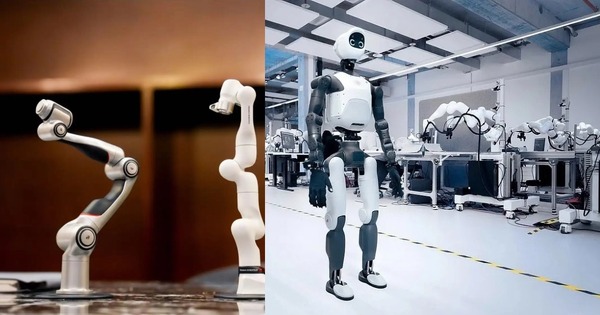
LiberAI has also designed its LEO robot with dexterous hands, articulated wrists, and an adjustable waist to reduce unnecessary differences between human and robot movement. The company says it is exploring tactile and force sensing as future dimensions for its data gloves, noting that contact and force can produce very different results even when two movements look identical. Its longer-term objective is for accumulated human experience to produce increasingly general physical capabilities, reducing the robot-specific demonstration data needed to teach new behaviors.
Pick your industry and the AI tools you use, and get news related to your work every day.
Free · 30 seconds with Google · unsubscribe anytimeWhat is AIToday? →
Ask AI anything about this article. The AI reads this article, earlier AIToday articles, and Wikipedia, and cites its sources. Q&As are published on this page for other readers too.
Xentron and Holon System began a partnership linking Xentron's physical AI data platform NEXUS with Holon's ma…

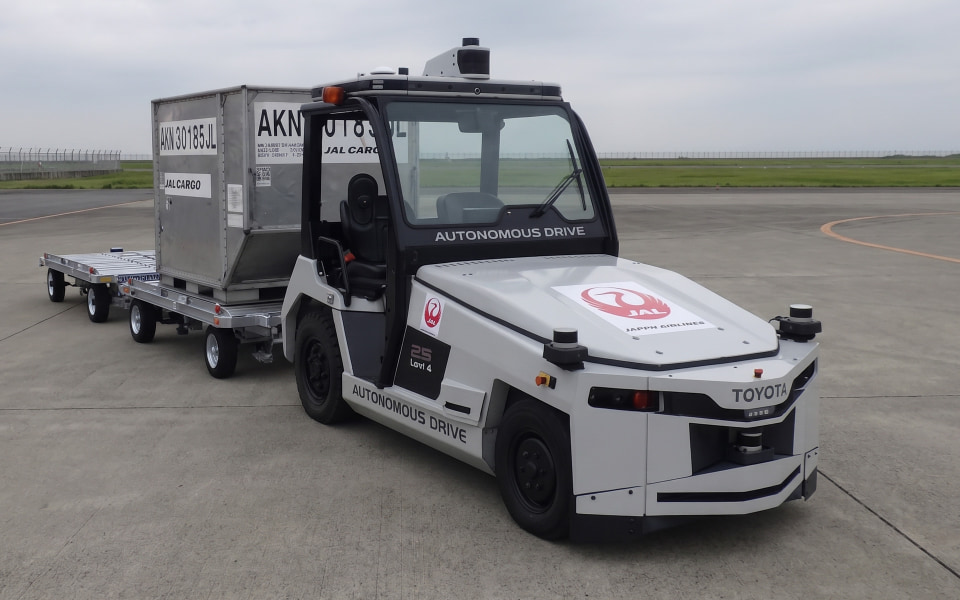
JAL and Toyota Industries expanded the driving route for autonomous towing tractors at Haneda Airport, widenin…
TDK announced it will invest 100 billion yen to establish a mass-production base for magnetic sensors for phys…

Ogata said physical AI should be defined narrowly as using generative AI to move robots, and that this approac…
MiraiBit (ミライビット) signed domestic sales agency contracts with Agile Robots and Franka Robotics to handle robot…
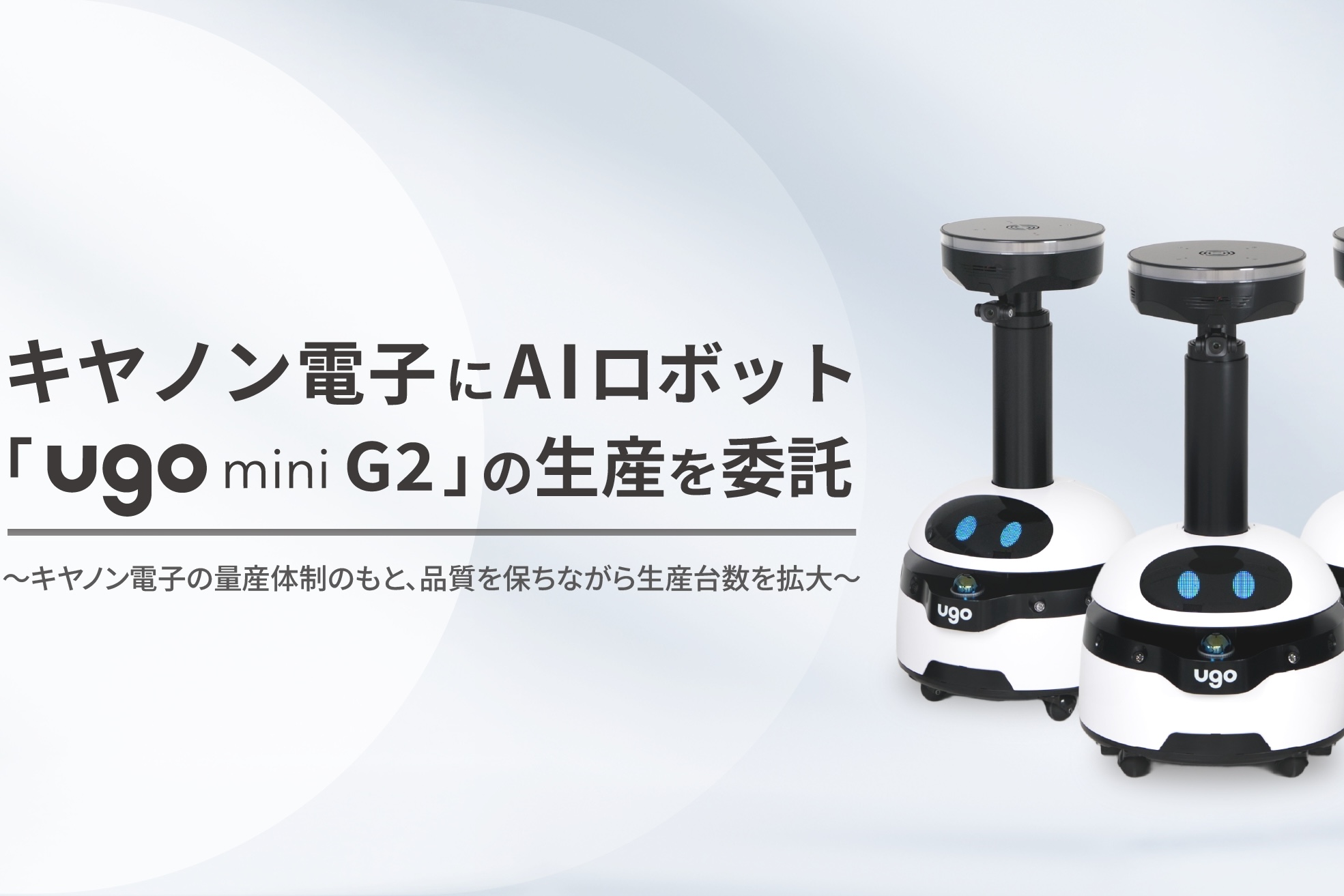
ugo said production of its ugo mini G2 inspection AI robot is now handled by Canon Electronics, with manufactu…