
Study analyzes signal propagation in transformers using averaged partial Jacobian norm (APJN) to measure gradient amplification across layers
Theory extends to bidirectional attention and permutation-symmetric token configurations by deriving recurrence relations for activation statistics
Pre-LayerNorm architectures show power-law APJN growth, while tanh-like nonlinearities exhibit stretched-exponential growth indicating subcritical behavior
Findings apply to Dynamic Tanh (DyT) and Dynamic erf (Derf) transformers, explaining why these normalization-free designs achieve better training stability
Predictions match empirical measurements in deep vision transformers, bridging theoretical understanding and practical deep network behavior
Ask the AI about this article →
For example, today's edition would include:
AI-summarized, only the topics you pick — one digest a day via Email, Slack, or Discord.
Free · takes 30 seconds · unsubscribe anytimeWhat is AIToday? →
Ask AI anything about this article. Q&As are published on this page for other readers too.
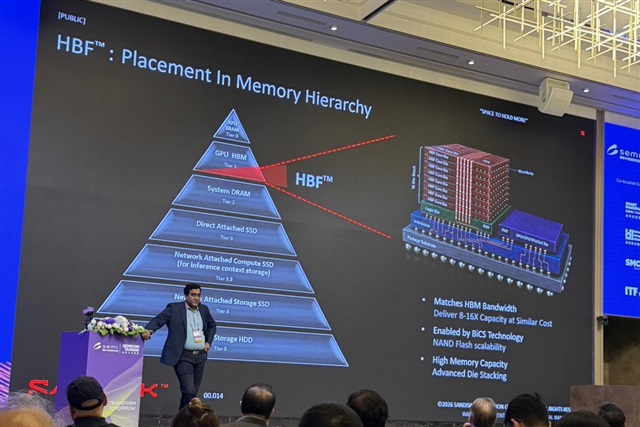
Sandisk says its NAND-based High Bandwidth Flash (HBF) technology can match HBM bandwidth while providing eigh…
World Labs unveiled Atlas, an omni-model trained on text, images, video, and 3D data that anchors every input…

Saudi Arabia's LEAP tech conference opened with $15 billion in planned technology investments

Nvidia invested $3.5 billion in MediaTek, a Taiwanese chipmaker, to help customers build custom AI chips that…

Semafor and Riddance AI uncovered a network of about a dozen YouTube channels using real actors with AI-genera…

At a recent ICRA panel, robotics researchers discussed how to handle the overwhelming number of publications