What happened
Murata Manufacturing said it developed an AI-driven R&D platform that links its experimental data with multiple AI agents, estimating a 22.5× cut in work time from planning through data analysis to report writing.
Why it matters
Researchers at different sites could reuse each other's data more easily, and the agents handle code generation, data visualization, and report drafting so staff can focus on reviewing results, Murata says.
What to watch
The 22.5× figure is Murata's own estimate under a simulated workflow, not installed performance. Watch the roughly 10-minute test covering data reading, chart creation, and report writing.
WHO IT HITSR&D teams in electronic component manufacturing, especially materials researchers who manage experimental data across different themes and sites, would see faster data reuse and report workflows if the platform works as estimated.
Summaries like this, in your inbox every morning.
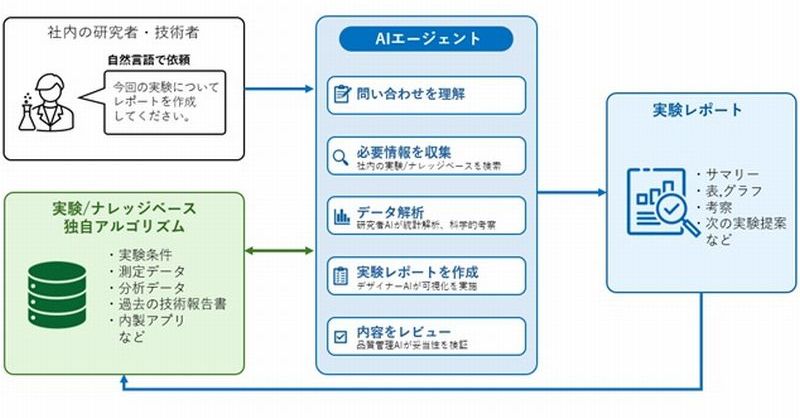
Murata's materials development work generates varied experimental data — material compositions, process conditions, evaluation results, and analysis values — often managed in different formats depending on the theme or site. That fragmentation meant researchers spent time locating and reusing data that already existed inside the company. The new platform is Murata's attempt to break those silos by connecting its existing data bases and knowledge base to multiple AI agents, so that engineering knowledge accumulated over time can be reused beyond team and organizational boundaries.
The workflow the company describes has researchers specify the purpose and data needed on a browser screen. AI agents then take over a chain of tasks: referencing and analyzing experimental data, generating and running analysis code, visualizing data, drafting considerations, and writing reports. Murata says the final judgment stays with the researcher, who confirms the content — a division of labour where the agents handle the legwork and the human reviews the output.
How much of this becomes routine practice likely hinges on whether the agents can reliably handle data across different formats and sites, and on how researchers trust and adopt the results. Murata's own tests offer some signals — an about-10-minute run through data reading, chart creation, and report writing, and the 22.5× estimate for the full planning-to-report workflow — but those are internal measurements under a simulated scenario, so the real question is whether the same gains hold in day-to-day projects.
Pick your industry and the AI tools you use, and get news related to your work every day.
Free · 30 seconds with Google · unsubscribe anytimeWhat is AIToday? →
Ask AI anything about this article. The AI reads this article, earlier AIToday articles, and Wikipedia, and cites its sources. Q&As are published on this page for other readers too.
Chunghwa Telecom president Rong-shy Lin said the shift from conversational AI to autonomous AI agents is resha…

CoreWeave fell 5% in premarket trading Friday and was on track to finish the week down 15%, after rebounding f…

Apple and Meta said they would jointly release a new open-weight AI model designed to run on high-end Macs, ai…

Investors put $38.5 billion into Asian startups in Q3, per Crunchbase data

A writer and entrepreneur opened his daily to-do list and found 156 items, and concluded that an AI assistant…

A longtime Anthropic investor told Fortune he expects shares priced around $1.8 trillion, below the company's…


