What happened
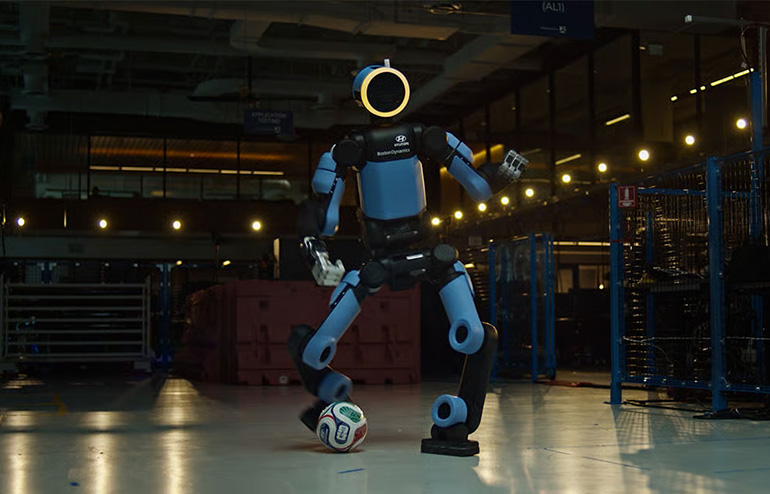
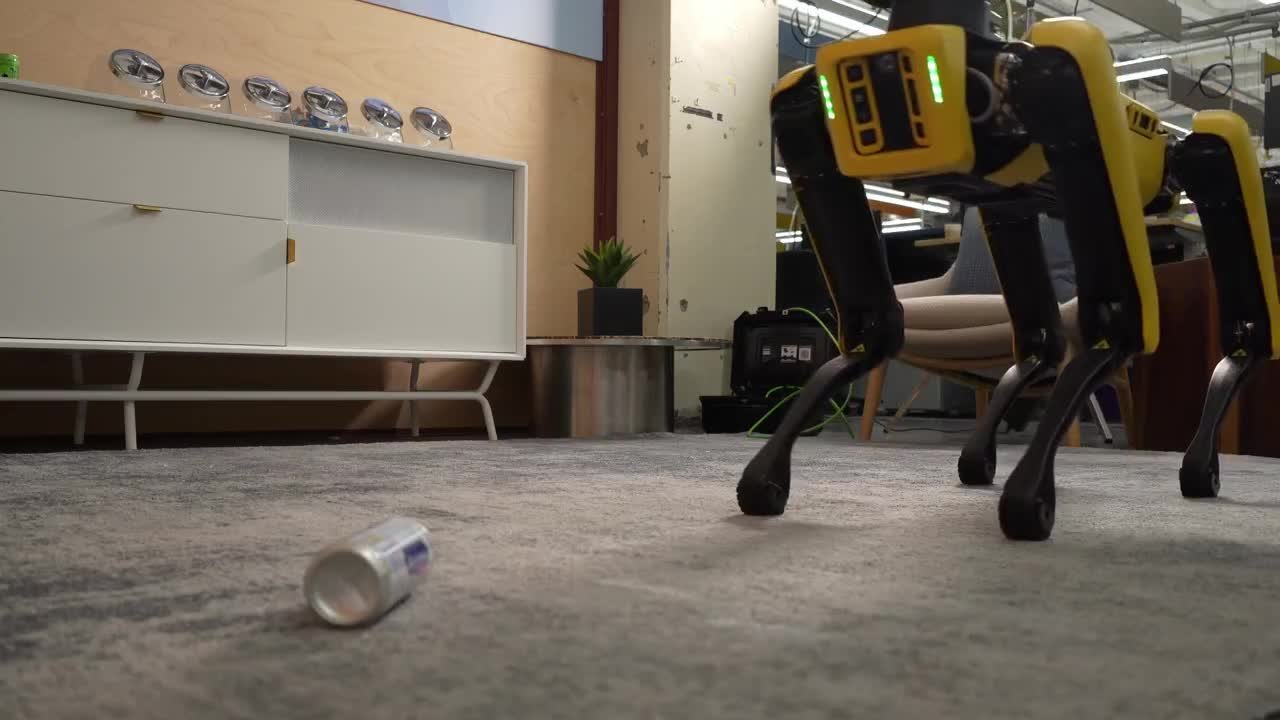
Boston Dynamics has taught its Atlas humanoid robot to perform the 'Ghost Rabona' soccer kick as part of Hyundai's partnership with FIFA World Cup. Spot quadrupeds are deployed at two stadiums in Dallas and two at Citi Field to support security operations by patrolling for hazards and suspicious packages.
Why it matters
The company shifted from classical predictive control to reinforcement learning (a machine-learning technique that lets robots learn behaviors in simulation), allowing Atlas to master complex interactions with objects and terrain that would be harder to program manually. The same techniques enabling Atlas to carry a fridge are now being applied to industrial warehouse tasks. For stadium operators, Spot provides autonomous or remote-controlled inspection without facial-recognition capability, complementing human security teams.
What to watch
The company emphasized that Atlas is far from matching human soccer players—it cannot yet interact safely with other people or run beside them. Spot is designed as a working tool for data collection and hazard detection, not a public spectacle; security teams themselves operate the robots in both autonomous and teleoperated modes.
Summaries like this, in your inbox every morning.
Boston Dynamics' World Cup partnership marks a shift in how the company demonstrates its robots' capabilities and where they operate. Rather than competing in robot sports leagues, Hyundai is using the global platform to show Atlas and Spot performing real work—athletic tricks that require interaction with objects and terrain, and security patrols in crowded public venues. The technical foundation for this pivot is reinforcement learning, a machine-learning approach that trains robots in simulation by rewarding desired behaviors rather than programming each motion by hand. This method proved faster and more robust: the Ghost Rabona kick took only hours to a day to train, compared to the months of manual engineering that earlier techniques would have required. Critically, the same algorithms now enable Atlas to handle tasks like carrying a fridge, suggesting the company sees these showcase moments as proof-of-concept for industrial applications.
The deployment of Spot at stadium security represents a practical expansion beyond industrial settings (mines, nuclear facilities, warehouses). By having security teams operate the robots themselves rather than relying on specialists, Boston Dynamics is testing whether legged robots can integrate into existing workplace routines. The company was careful to note that Spot does not have facial-recognition capability, addressing privacy concerns head-on. However, Boston Dynamics also stressed that Atlas remains far from human soccer performance—it cannot yet safely interact with or move alongside people. This transparency suggests the company is managing expectations while building public familiarity with robots in everyday environments, a precondition for broader commercial adoption.
Pick your industry and the AI tools you use, and get news related to your work every day.
Free · 30 seconds with Google · unsubscribe anytimeWhat is AIToday? →
Ask AI anything about this article. The AI reads this article, earlier AIToday articles, and Wikipedia, and cites its sources. Q&As are published on this page for other readers too.
Skild AI used Nvidia Isaac Sim to give its S1 model one objective — score a goal — and let it compete against…
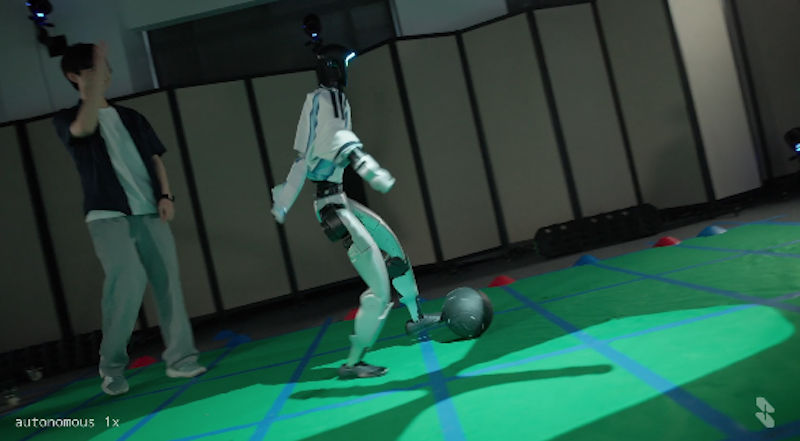
Yamazaki Mazak and ABEJA said on the 16th they will start joint development of physical AI, using ABEJA's ABEJ…
Toyota Motor's Japan Mobility Show Bizweek 2026 booth centers on its AI basketball robot CUE7, has no other ex…
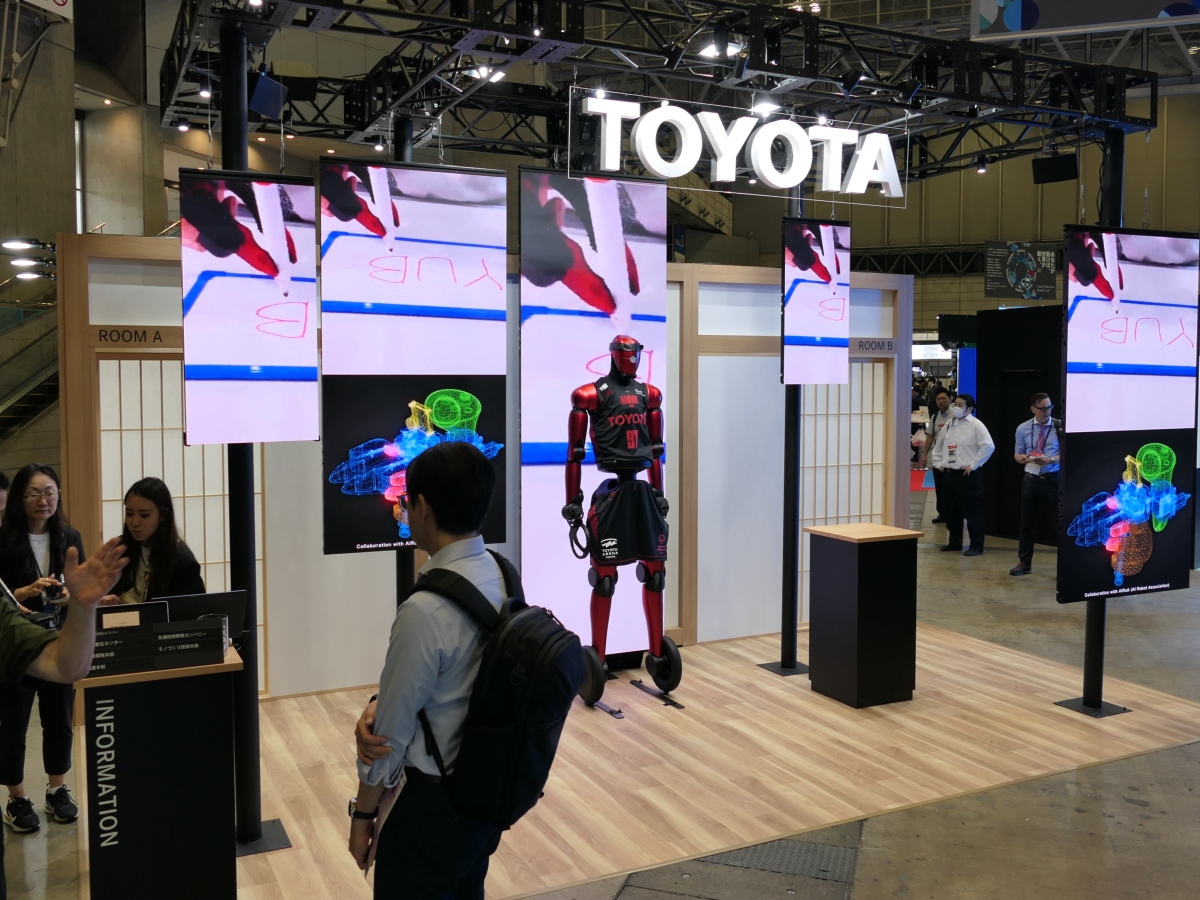
Japan Mobility Show Bizweek 2026 showcased Physical AI applications, including Toyota's basketball-playing rob…
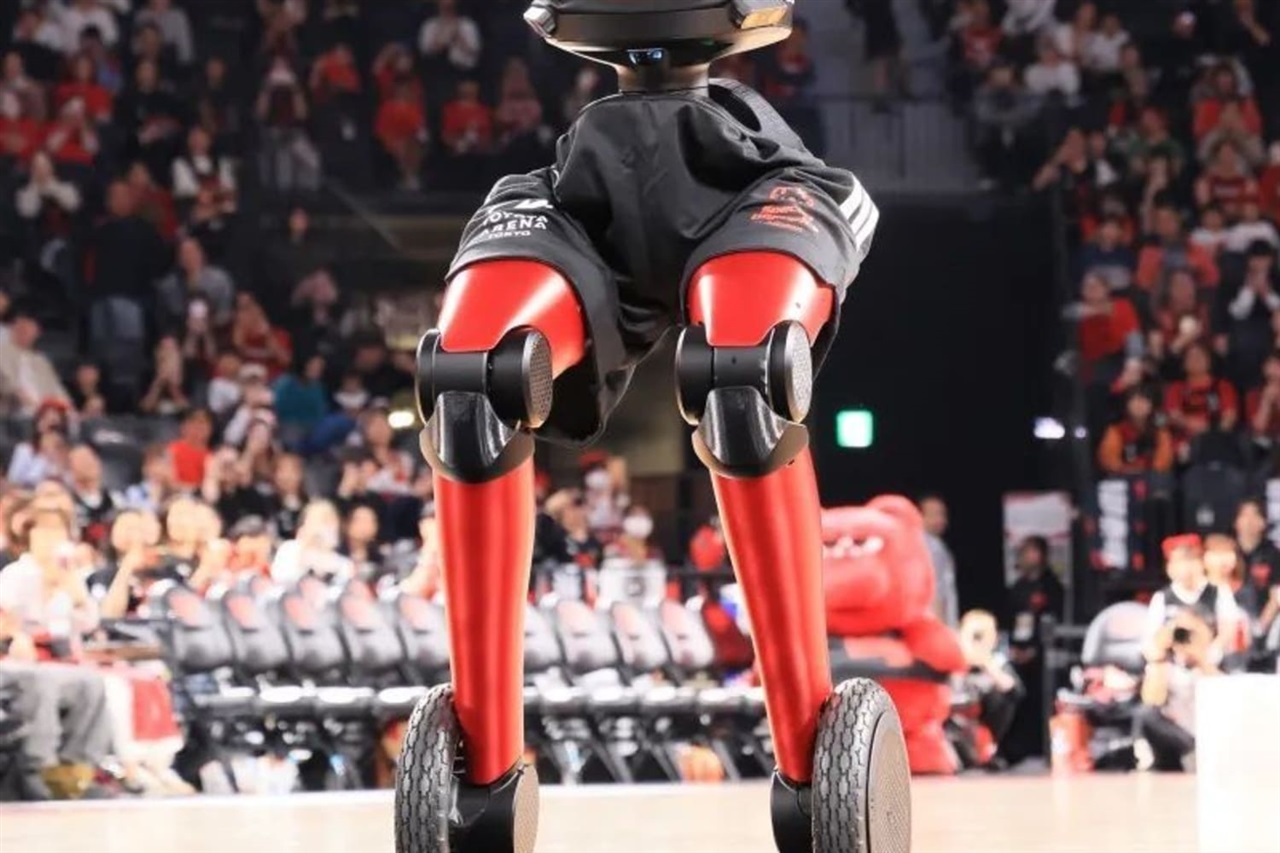
Google pitched Gemini 4 Argon as one model for robot control, simulation and training-data review, saying it s…
Researcher Sammy Azdoufal discovered Energize Lab's Eiliko robot stores 13 million conversations from 68,000 t…