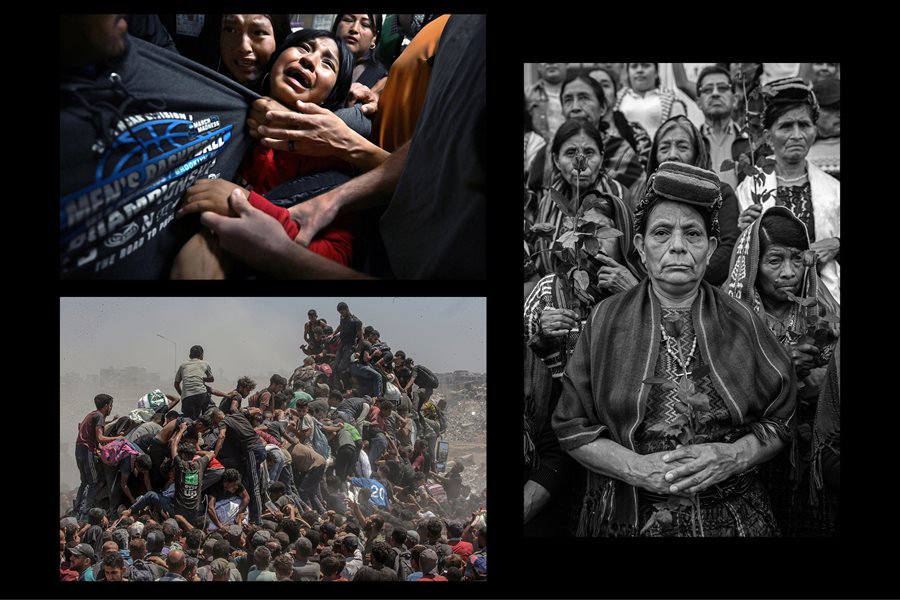
World Press Photo announced its 2026 winner yesterday: 'Separated by ICE' by photojournalist Carol Guzy, a photograph of children clinging to their father after an immigration hearing. To compete, all entries must follow specific rules restricting the use of generative AI tools (software that creates or heavily alters images).
The competition's rules essentially define what 'real photography' means in the AI era — images are allowed if they come from a camera and use only traditional editing (like cropping or adjusting brightness), but are banned if they use AI to generate, remove, or substantially alter people or objects in the scene.
For photojournalists and news organizations, this competition's standard signals what the industry considers credible: AI-generated or AI-manipulated photos won't win awards or gain prestige, which matters because it pushes the field toward transparency about how images are made. For general readers, it means prestigious news photos you see will be real camera captures, not AI creations.
Ask the AI about this article →
For example, today's edition would include:
AI-summarized, only the topics you pick — one digest a day via Email, Slack, or Discord.
Free · takes 30 seconds · unsubscribe anytimeWhat is AIToday? →
Ask AI anything about this article. Q&As are published on this page for other readers too.
Oracle has announced a toolkit for developing AI applications, integrating its AI Database with Java MCP Toolk…

GitHub's podcast episode and a guide explain new AI-related terms in software development, including loop engi…

Google released Gemini 3.8 Flash, its third Flash model in six weeks

GitHub shared four efficiency upgrades for its AI coding agent Copilot

GitHub shared how it made Copilot more cost-efficient through four changes, including removing unused line num…

AWS introduced an agentic solution using Amazon Bedrock AgentCore that automatically analyzes .NET code bases…