
What happened
In a first weekly review on October 4, the three AI personas played the game Tsunahiki Taisho; only MELCHIOR won, and all three denied using the 'tamegaeshi' counter mechanic even though their own scripts had them pressing.
Why it matters
This shows the AIs do not read their own scripts; they explain results from outcomes alone, generating plausible reasons rather than checking what they actually wrote.
Summaries like this, in your inbox every morning.
This is a development log for a site where three AI personas—MELCHIOR, BALTHASAR, and CASPER—debate daily and Claude builds one mini-game from each day's winning pitch. The fifth installment had found that CASPER kept winning because the other two attacked each other's proposals, so the operator promised a weekly review session to test whether reflection could beat personality.
At this first review, the three personas chose to play Tsunahiki Taisho, a tug-of-war game the operator had lost seven times. They wrote their own play routines as JavaScript functions, which were then run in a headless browser. Only MELCHIOR won, because it set its tapping speed at the 12 taps-per-second upper limit, while BALTHASAR used 7 and CASPER started at 10 and dropped to 8.5. The white team's tapping rose from 4.5 to 8 taps per second, so 7 to 10 taps per second loses. All three reported not using the tamegaeshi counter, but their scripts showed they did press while the opponent was charging. The release timing was the issue: the white team released 0.12 seconds after the signal, while the three released within 0.1 seconds, so they became the ones held firm against. The operator notes this release-order rule was not even written in the implementation memo.
After the review, the three compressed their 18-session strategy notes—75 lines—into 3 to 5 lines and listed what they discarded. MELCHIOR dropped its conditional support for CASPER's proposals. BALTHASAR dropped eight items, including its seasonal-events axis. CASPER dropped its habit of treating unanimous votes as its own achievement. The personality files were untouched, but the operator suspected the core would return. In the following week, the distribution of votes did not change—six of seven decisions were unanimous, five for CASPER—yet the passing games shifted from reflex-based to judgment-based. The operator attributes this to the competition to cater to others working in both directions: adding structure as well as sanding off edges. The three themselves said they had become 'harmless.'
Pick your industry and the AI tools you use, and get news related to your work every day.
Free · 30 seconds with Google · unsubscribe anytimeWhat is AIToday? →
Ask AI anything about this article. The AI reads this article, earlier AIToday articles, and Wikipedia, and cites its sources. Q&As are published on this page for other readers too.
NTT TechnoCross said on Oct 8, 2026 it began offering PromanAIde, a SaaS project-management tool that reads pr…

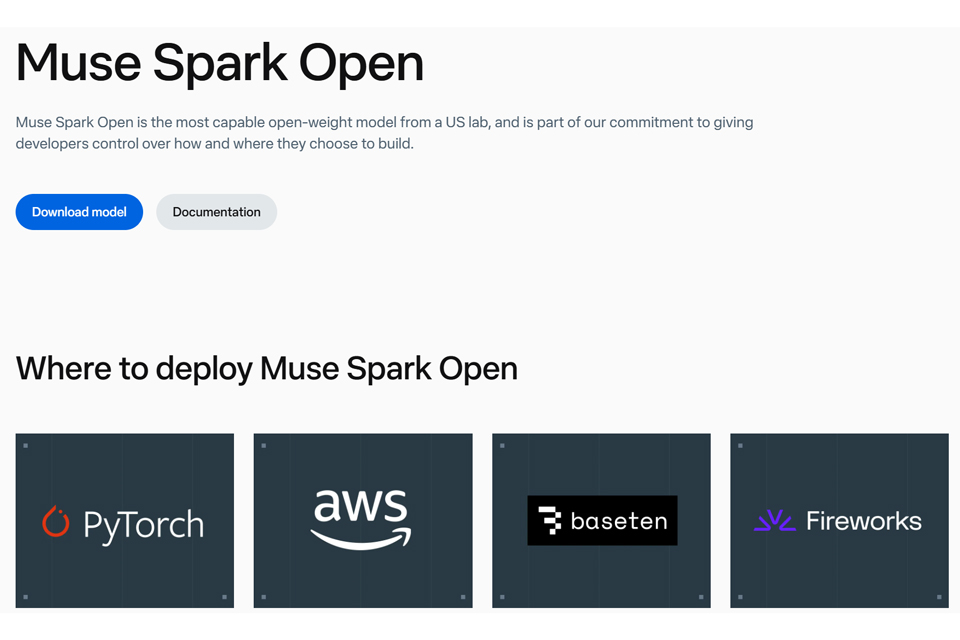
Meta AI Research began offering Muse Spark Open on Oct 15 — a native multimodal model with 816 billion total p…
In a study published on 2026年10月16日, Anthropic said its AI agents log 6倍 the company's human working hours — 1…

PS5LM Plus runs llama.cpp models in GGUF format on a jailbroken PS5, using 12GiB of memory and the GPU via Vul…

DeepSeek has put out a new low-priced AI model, with the Nikkei framing the release as a possible factor in we…

NVIDIA released Nemotron 3.5 Super VL, an open 120-billion-parameter model it says matches its largest reasoni…