What happened
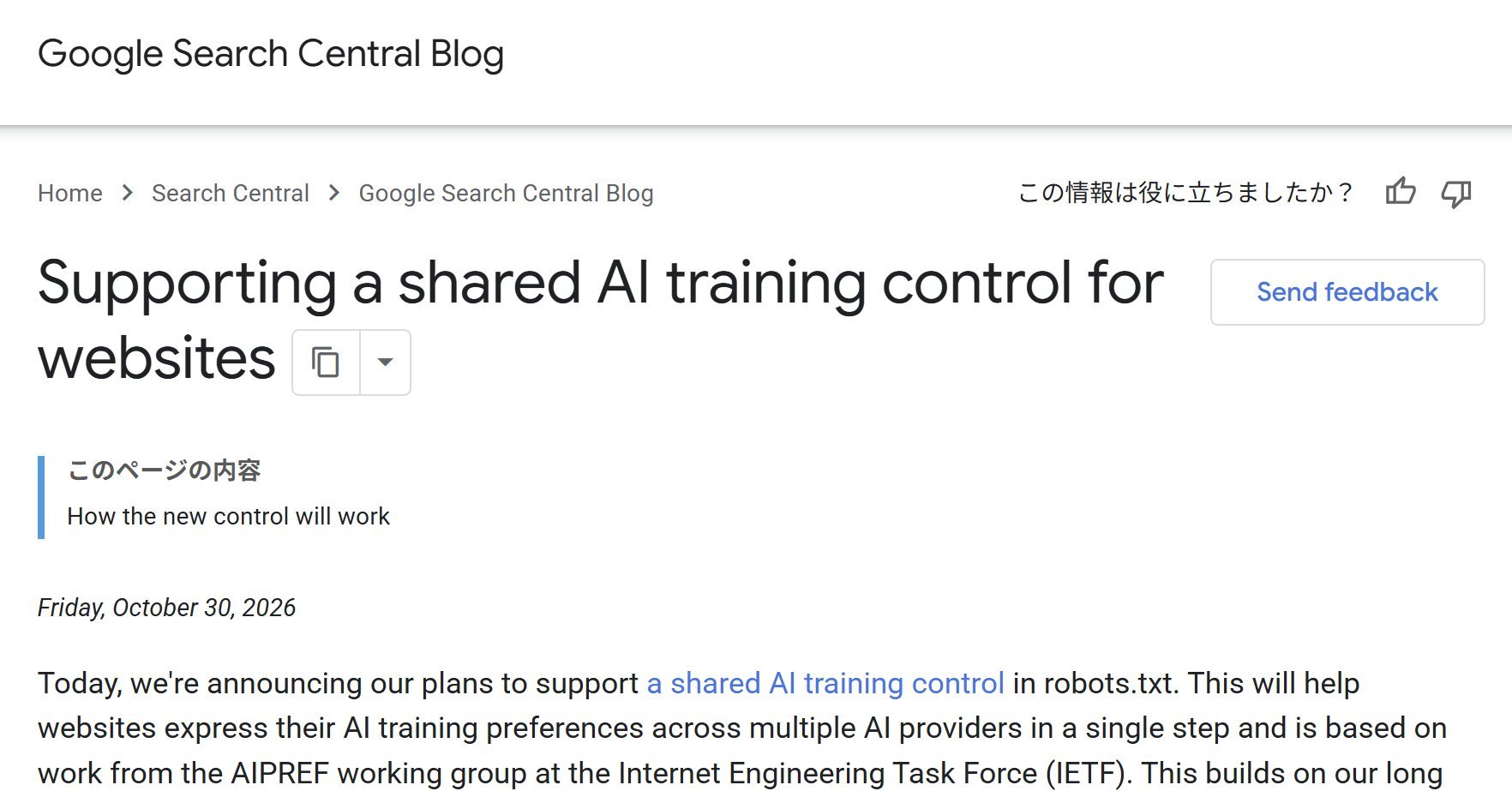
On October 30, OpenAI, Google and Microsoft each said they will honor a shared robots.txt token, __usage_ai-training, proposed in an IETF draft by Anthropic's Kevin Kelly. Disallow under the token means no AI training, Allow means yes.
Why it matters
Sites have had to write separate rules for each AI crawler; one common token would let them opt out of AI training across all supporting companies at once. The draft is personal and has no formal IETF status yet.
What to watch
Google targets support in 2027, Microsoft will read and apply the settings from February 1, 2027, and asks sites using NoArchive or NoCache to migrate by March 1, 2027.
WHO IT HITSWebsite operators, publishers and their legal or SEO teams gain a single robots.txt line for AI training opt-outs, though each company's separate crawler controls still govern crawling. AI companies' crawler teams would need to honor a token that is not yet an IETF standard.
Summaries like this, every morning.
Until now, a site that wanted to keep its pages out of AI training had to identify each company's crawler and write a separate rule for it. The draft from Anthropic's Kevin Kelly, published as an Internet-Draft with the IETF, replaces that with one policy token, __usage_ai-training, placed under User-Agent in robots.txt. Because it introduces no new directives or grammar, existing parsers should keep working, and sites that never add the token are read as expressing no particular preference.
The companies are moving on different schedules. OpenAI aims to support the signal within the next few months and says it will publish details at implementation, while Google is aiming for 2027 and will treat a common-signal refusal as also covering Google-Extended unless a site explicitly opts in. Microsoft will start reading and applying the settings from February 1, 2027, and adds page-level meta tag and HTTP header controls that take priority over robots.txt, including a DisallowExtended option that still allows use in Copilot and Microsoft 365 but blocks grounding through Web IQ and Microsoft Foundry APIs.
The draft is filed in a personal capacity and has no formal standing in the IETF process yet, so the commitments are voluntary. The backdrop is a run of publisher lawsuits over AI use of web content, alongside earlier controls such as Cloudflare's July release of crawler management by search, agent and training purpose, and Google's June announcement of a Search Console toggle to opt out of AI search features.
Pick your industry and the AI tools you use, and get news related to your work every day.
Free · 30 seconds with Google · unsubscribe anytimeWhat is AIToday? →
Ask AI anything about this article. The AI reads this article, earlier AIToday articles, and Wikipedia, and cites its sources. Q&As are published on this page for other readers too.
Amazon disclosed on its third-quarter earnings call that Bedrock now offers Moonshot's Kimi K3 and Z.ai's GLM…

Simon Willison released datasette-llm 0.1a9, which now picks up the default model used by LLM, so Datasette Ag…
OpenAI shipped Python SDK 3.42.0 on October 31, 2026, adding "agent context compaction settings," "agent sessi…

Judge Debra M. Brown ruled the NAACP's Clean Air Act claims against xAI can proceed, rejecting xAI's arguments…

Morgan Stanley published an analysis arguing that AI agents—software that can plan and book trips on a user's…

At JIMTOF2026, FANUC showed a Physical AI CNC concept where LLMs access CNC data and change settings through a…