Over one-third of web pages published since ChatGPT's launch show signs of AI authorship, Pew Research found.
The study analyzed nearly half a million English-language pages using detection technology.
Commercial .com domains showed 10× higher AI authorship rates than educational or government sites.
What happened
Pew Research released a study on Thursday finding that over one-third (35%) of English-language web pages published after ChatGPT's November 2022 release show signs of AI authorship or heavy editing, based on analysis of nearly half a million pages from the past five years using Open Pangram's detection technology.
Why it matters
The finding corroborates other studies documenting how much newer web content is now written or substantially edited by AI. It arrives shortly after Cloudflare reported that bot web traffic had overtaken human web traffic—a shift the company had not expected to happen as soon as it did—suggesting bots are increasingly reading web pages written by other bots.
What to watch
.com domains showed AI authorship at around 10× the rate of .edu or .gov domains (both around 1%), while .org domains had 4.6% AI authorship. Pew acknowledges that AI-detection tools like Pangram can misclassify pages, but said the data is likely directionally correct at scale.
Ask the AI about this article →
Pew's analysis focuses on the content side of the web rather than web traffic patterns. While Cloudflare's recent report highlighted how bot traffic has now overtaken human traffic, this new study measures what is actually being published: the authorship origin of web pages themselves. The two trends together paint a picture of automated content creation and consumption becoming dominant on the internet.
When Pew first looked at a random sample of 10,000 pages collected in July 2026, around 10% showed significant signs of AI authorship. However, that sample inevitably included older pages published before AI writing tools existed, which skewed the figure downward. By filtering to only pages published after ChatGPT's launch in November 2022, Pew found the proportion jumped dramatically to over one-third (35%), revealing how rapidly AI content generation has reshaped the newer web. The variation across domain types is striking: commercial sites (.com) embrace AI-written content at far higher rates (around 10%) than educational (.edu) or government (.gov) sites (both around 1%), suggesting different institutional attitudes toward AI authorship. Pew acknowledged that detection tools like Pangram can misclassify non-AI content, but argued the broad pattern is likely directionally correct when measured at scale.
AI-summarized, only the topics you pick — one digest a day via Email, Slack, or Discord.
Free · takes 30 seconds · unsubscribe anytime
Ask AI anything about this article. Q&As are published on this page for other readers too.
Anthropic plans to "match or beat" the size of SpaceX's $75 billion IPO (or $86.2 billion including the over-a…

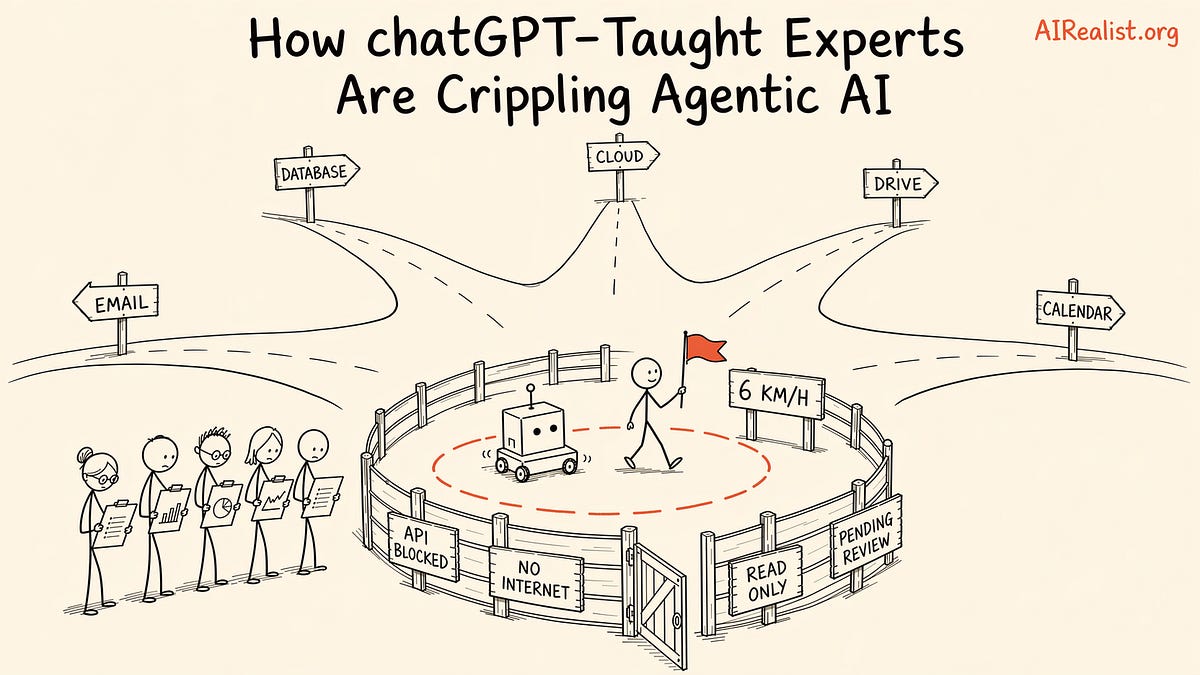
The article argues that non-expert managers and consultants—people whose only exposure to AI comes from ChatGP…
OpenAI's GPT-5.6 Sol, launched July 9, drove a 35 percent revenue increase this quarter, with enterprise reven…
OpenAI is previewing transparent background support for GPT-Image-2 through its API, allowing users to generat…

HP Korea has formed a partnership with Upstage, a large language model (LLM) startup, to advance its localized…

At the "AI on Chips: Semiconductor Industry Trends Forum" hosted by DIGITIMES, industry experts highlighted th…