What happened
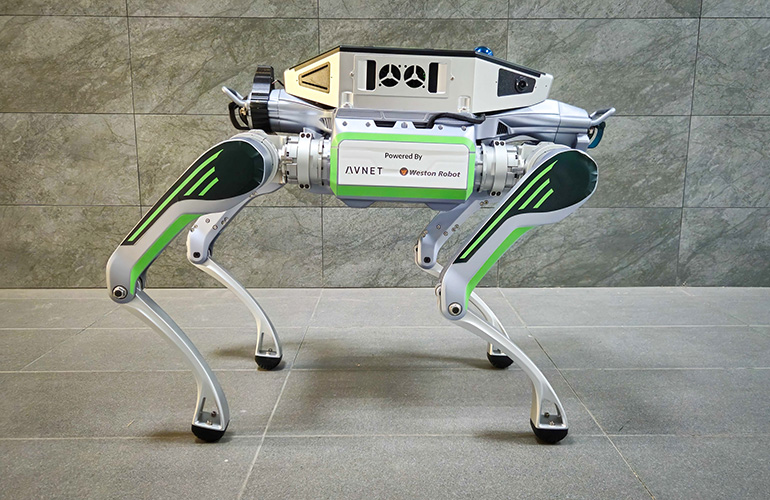
Tech distributor Avnet and robotics integrator Weston Robot have created an autonomous inspection platform powered by quadruped robots equipped with Avnet's computing backpack. The system runs on AMD Ryzen AI Embedded processors and delivers up to 50 TOPS of AI performance, enabling onboard AI inference, thermal and visual analytics, 3D lidar mapping, and operation in GPS-denied environments.
Why it matters
The platform processes inspection data at the edge rather than in the cloud, enabling low-latency decision-making and operation even where cloud connectivity is limited. Organizations can detect operational issues earlier, reduce inspection costs, and improve operational continuity by automating what are currently manual, resource-intensive inspection processes.
What to watch
When paired with Weston's fleet management software, the robot can patrol and inspect a defined facility path, stopping to investigate inspection sites using onboard cameras and sensors. New inspection tasks can be trained and deployed directly to the robot, enabling capabilities beyond the standard Unitree quadruped robot.
Summaries like this, in your inbox every morning.
The partnership represents a convergence of three technical trends: robotics hardware (quadrupeds), edge AI computing (onboard inference), and factory automation. Avnet's role is to supply the computing architecture that transforms a standard quadruped robot into an autonomous inspection system capable of running AI models locally. By processing data at the edge—on the device itself rather than in a remote cloud—the platform overcomes a critical operational challenge: factories often lack reliable or fast cloud connectivity, and sending video streams to the cloud introduces latency that delays decision-making. The combination of Avnet's 50 TOPS compute capacity with Weston Robot's fleet management software and domain expertise creates a system flexible enough to handle multiple inspection tasks. The ability to train and deploy new inspection models directly to the robot without hardware changes is what distinguishes this from deploying a fixed quadruped; it shifts inspection from a pre-programmed task to an adaptive one.
For industrial organizations, the business case rests on automation of manual work. Today, facility inspections rely on human operators moving through environments to spot problems—a slow, reactive process. By deploying robots that continuously patrol and investigate, organizations can detect anomalies earlier, reduce the labor cost of routine inspection, and improve safety by having machines enter hazardous environments. The platform's support for thermal imaging, 3D lidar mapping, and operation in GPS-denied spaces (underground facilities, buildings with poor satellite signal) broadens the range of industrial settings where deployment is practical.
Pick your industry and the AI tools you use, and get news related to your work every day.
Free · 30 seconds with Google · unsubscribe anytimeWhat is AIToday? →
Ask AI anything about this article. The AI reads this article, earlier AIToday articles, and Wikipedia, and cites its sources. Q&As are published on this page for other readers too.
The Motley Fool argues Amazon is the AI company of the two, since AWS was just 21% of first-half 2026 revenue…

Hewlett Packard Enterprise stock is down 5% at $55.87

Vercel data published Thursday shows TypeSafe AI's Jev, a lightweight decision model for choosing among predet…

Chunghwa Telecom president Rong-shy Lin said the shift from conversational AI to autonomous AI agents is resha…
CoreWeave fell 5% in premarket trading Friday and was on track to finish the week down 15%, after rebounding f…

Apple and Meta said they would jointly release a new open-weight AI model designed to run on high-end Macs, ai…