What happened
Pinterest CEO Bill Ready said on Tuesday that using open-source AI models costs the company less than 8% of what proprietary systems from Anthropic or OpenAI would cost. The company uses Alibaba's Qwen model, fine-tuned with Pinterest data, to power shopping assistants and chatbots. DoorDash has similarly adopted Chinese AI models for cost savings, prompting US House committees to request information about both companies' use of Chinese technology.
Why it matters
American executives face competing pressures — investors demand cost discipline on AI spending, but US lawmakers worry Chinese models may carry hidden biases and pose national security risks. A Public First survey found only 9% of US respondents trust Chinese models versus 52% who trust American ones, yet most consumers cannot tell whether a brand's chatbot uses Chinese or US AI. The opacity creates friction between boardroom economics and government oversight.
What to watch
Despite letters from lawmakers and talk of potential restrictions, companies show no sign of abandoning Chinese open-source models for cost reasons. Amit Jain, CEO of Luma AI, said there is "zero evidence of change in posture" among companies, and he expects no shift "until there are clearer guidelines."
Summaries like this, in your inbox every morning.
The growing use of Chinese open-source AI models by major US companies reflects a fundamental cost-benefit calculation that is now shaping the competitive landscape. Pinterest's disclosure that open-source models cost less than 8% of proprietary alternatives creates clear financial incentives for other enterprises to follow suit, especially as Wall Street has begun scrutinizing the capital expenditures of AI-heavy companies like Alphabet and Meta. The blending of models—American, Chinese, and others—into consumer-facing tools has outpaced regulatory clarity, leaving lawmakers concerned about intellectual property theft and potential bias while executives defend their fiduciary duty to shareholders.
The tension is sharpened by a disconnect between consumer sentiment and corporate behavior. Although Americans express strong distrust of Chinese AI (9% trust versus 52% for American models), most users cannot identify which model powers the chatbot they interact with when planning a trip or selecting a product. This opacity complicates both informed choice and regulatory enforcement. Congressional letters to Pinterest, DoorDash, Airbnb, and Cursor signal government intent to monitor the practice, yet executives report no measurable change in adoption rates. Luma AI's CEO observed that companies will likely maintain their current posture "until there are clearer guidelines," suggesting that without binding restrictions, cost savings will continue to outweigh geopolitical and trust concerns.
Pick your industry and the AI tools you use, and get news related to your work every day.
Free · 30 seconds with Google · unsubscribe anytimeWhat is AIToday? →
Ask AI anything about this article. The AI reads this article, earlier AIToday articles, and Wikipedia, and cites its sources. Q&As are published on this page for other readers too.
The Motley Fool argues Amazon is the AI company of the two, since AWS was just 21% of first-half 2026 revenue…

Hewlett Packard Enterprise stock is down 5% at $55.87
Cammarata reinterprets InceptionV1's cat-car neuron as a V-shape detector, not two unrelated concepts
Google Deepmind's Gemini 4 Argon scored 97.5 percent on ARC-AGI-3 at a cost of $4,800, second only to GPT-6 As…
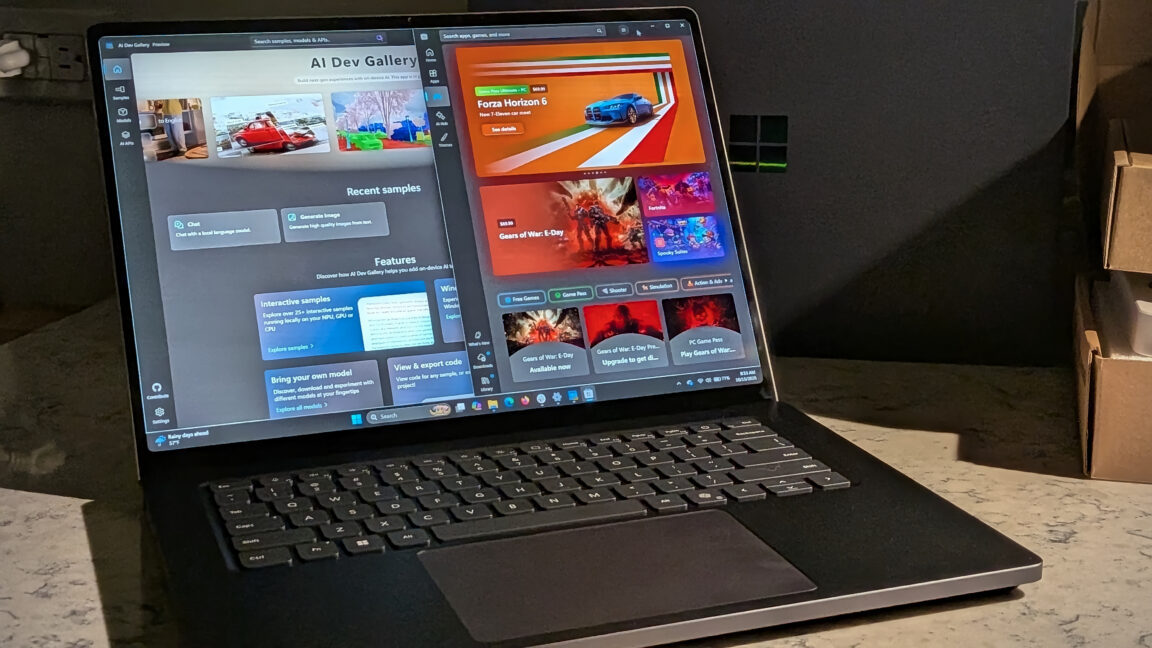
Microsoft's Surface Laptop Ultra, using Nvidia's RTX Spark platform, starts at $2,599 (up to $5,899)
Meta's new commercial terms, effective October 30th, appear to let it crawl and train AI on content from websi…