What happened
Google partnered with the U.K. government, aviation industry, and research institutions on Operation Blue Skies, a 30-month trial to use AI and satellite imagery to identify contrail-forming regions in the Shanwick airspace and guide air traffic controllers to steer flights around them. Between 1% and 5% of approximately 10,000 flights in the corridor during two four-month operational periods will be redirected.
Why it matters
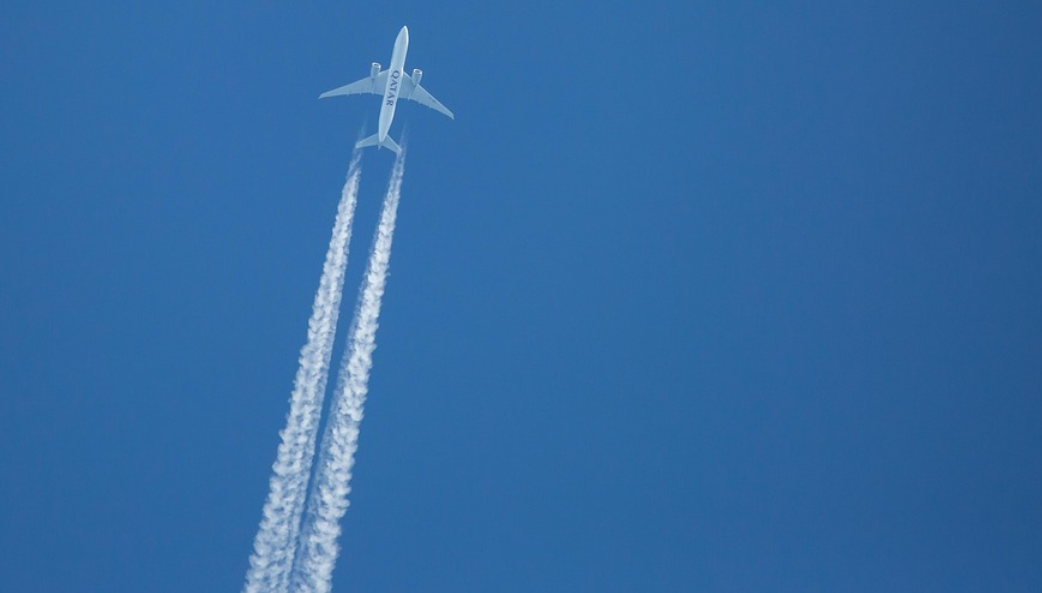
Contrails account for around a third of the aviation industry's total climate impact by trapping heat in the atmosphere. The Shanwick airspace alone is responsible for around 5% of all global contrail warming, so demonstrating a practical method to reduce contrails here could provide a blueprint for managing airspace globally and lowering aviation's environmental footprint.
What to watch
The trial will run for 30 months total and is expected to cost £5 million (about $6.76 million), with the U.K. Department of Transport contributing £2.65 million and Google's U.K. subsidiary providing £1.4 million in AI research, engineering time, and computing resources. Independent researchers from Imperial College London and the University of Cambridge will verify the climate impact.
Summaries like this, in your inbox every morning.
Contrails represent a significant but often overlooked source of aviation's climate warming. The body notes that contrails account for around a third of the aviation industry's total climate impact by trapping heat as they expand into cloud layers in cold, humid conditions. The Shanwick airspace in the eastern North Atlantic is a strategic focus area because it is responsible for around 5% of all global contrail warming, making it a high-impact test zone for intervention.
Operation Blue Skies leverages AI to solve a logistical challenge: rather than reducing contrails through fuel changes or engine modifications, the trial proposes minor, targeted flight-path deviations that avoid the atmospheric regions where contrails are most likely to form. Google's technical lead Paul Hodgson noted that redirecting just 1% to 5% of 10,000 flights should be sufficient to demonstrate whether the approach leads to significant contrail reduction. The involvement of the Met Office for weather forecasting, Contrails.org for trial design and data analysis, and independent researchers from Imperial College London and the University of Cambridge suggests a rigorous, multi-stakeholder approach to validation.
The cost structure—£5 million (about $6.76 million) total, with Google contributing £1.4 million in research and resources on a pro-bono basis and the U.K. Department of Transport funding £2.65 million—indicates government-industry collaboration on a climate challenge. If the trial succeeds, Hodgson indicated it could provide a practical, scalable blueprint for other airspaces to reduce aviation's climate impact.
Pick your industry and the AI tools you use, and get news related to your work every day.
Free · 30 seconds with Google · unsubscribe anytimeWhat is AIToday? →
Ask AI anything about this article. The AI reads this article, earlier AIToday articles, and Wikipedia, and cites its sources. Q&As are published on this page for other readers too.

