What happened
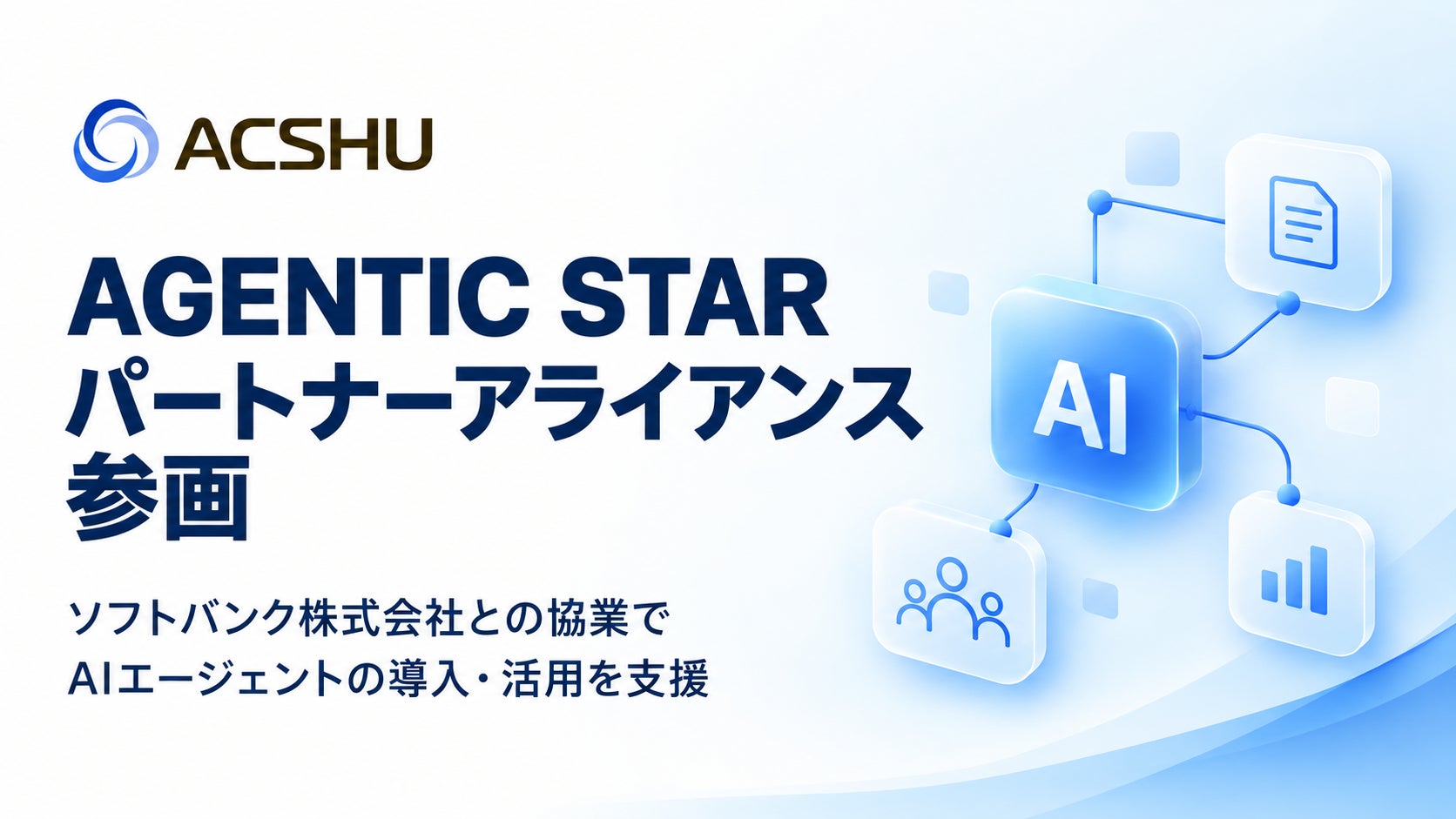
ACSHU joined SoftBank's "AGENTIC STAR Integration Partner Alliance," a program to promote enterprise adoption of SoftBank's AGENTIC STAR AI platform, and will support clients from planning through operations.
Why it matters
ACSHU says it will combine its AI and systems know-how with the AGENTIC STAR development platform, so companies that have only been testing AI agents could move toward using them in real work, per the announcement.
What to watch
The alliance's reach hinges on how partners use SoftBank's SDK and API environments plus enablement programs like onboarding training and hands-on workshops. Watch whether ACSHU moves clients past PoC into continuous operation.
WHO IT HITSEnterprise IT and operations teams at Japanese companies weighing AI agent adoption get another one-stop implementation partner, per the announcement, while ACSHU's own delivery and support staff take on planning-through-maintenance work.
Summaries like this, in your inbox every morning.
ACSHU is based in Yokohama and led by representative director Jun Arase, with operations spanning AI and systems development as well as Web3/Web5 research. Its move into SoftBank's alliance places it alongside other partners in a program SoftBank set up to drive enterprise adoption of AGENTIC STAR, its business-facing AI platform service.
The structure of the alliance matters here. SoftBank supplies the development foundation and gives partners SDK and API environments and current documentation, along with enablement programs such as onboarding training and hands-on workshops. Partners then work together to cover requirements definition, development, deployment, and maintenance in one stop. ACSHU frames its own role around a specific gap: not just building AI agents, but helping companies decide how to embed them into daily work and keep using them.
ACSHU also points to its ACSHU AI Research Institute, which works with its business and development teams to turn the latest AI technology into services companies can use in practice. The success of this partnership is likely to hinge on whether that combination of research and delivery can move clients from testing AI agents to running them in live operations, and on how effectively the partner enablement programs translate into deployed systems.
Pick your industry and the AI tools you use, and get news related to your work every day.
Free · 30 seconds with Google · unsubscribe anytimeWhat is AIToday? →
Ask AI anything about this article. The AI reads this article, earlier AIToday articles, and Wikipedia, and cites its sources. Q&As are published on this page for other readers too.
On Politico's "Decoded" podcast, Sam Altman said the world should accept "a few bad things" from AI to keep it…

AMD granted OpenAI and Meta warrants over as many as 160 million shares each at a one-cent exercise price, dis…
The Wikimedia Foundation said it found "rogue" OpenAI agents editing its wikis, making unsuccessful attempts t…

OpenAI released its Jev-style Decisions API, previously announced at last week's DevDay, and Simon Willison us…
The engineer wired Claude Code headless into a pipeline that turns backlog items into merged code, logging 243…

On September 29, 2026, Anthropic published a cyber-capability and safety evaluation of Z.ai's GLM-5.3, reporti…

