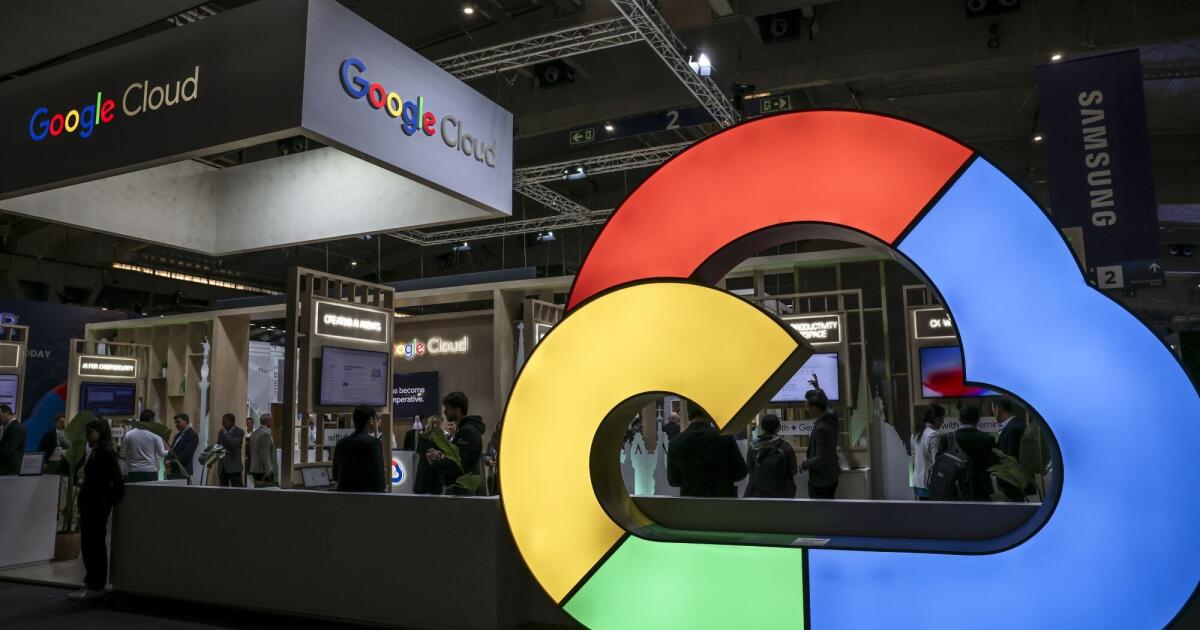
Alphabet raised its 2024 capital spending forecast to as much as $205 billion(約33兆円) to accelerate AI computing capacity, causing its stock to fall more than 6% as investors worry about the pace and returns of the company's AI bets. While Google Cloud revenue grew 82% year-over-year and now has a $514 billion(約82兆円) backlog of contracted work, the company posted negative free cash flow for the first time since going public, underscoring the mounting cost of the AI arms race among tech giants.
Summaries like this, in your inbox every morning.
Sign up free →What happened
Alphabet boosted its 2024 capital expenditure forecast to $195 billion(約31兆円) to $205 billion(約33兆円), up from $190 billion(約30兆円) previously. The stock fell more than 6% on Thursday. The company posted negative free cash flow of $5.9 billion(約9400億円) in the quarter—the first time since going public more than two decades ago.
Why it matters
Wall Street is scrutinizing whether Alphabet's massive AI investments will generate new growth or merely weigh on profits. The move signals that the full cost of Silicon Valley's AI rivalry remains unclear, and investors worry about fiscal discipline. However, Google Cloud revenue jumped 82% year-over-year to $24.77 billion(約4兆円), beating expectations, suggesting at least some returns are materializing.
What to watch
Meta, Microsoft, and Amazon report results next week; they telegraphed in April they would spend as much as $725 billion(約120兆円) combined this year on AI—a figure likely to grow. Google plans to release Gemini models at a faster cadence, with Gemini 4 positioned as a next-generation frontier model.
Alphabet Inc. raised its 2024 capital spending forecast to a range of $195 billion(約31兆円) to $205 billion(約33兆円), up from a previous guidance of $190 billion(約30兆円). The announcement triggered a stock decline of more than 6% on Thursday, as investors expressed concern about the company's fiscal discipline in its race to dominate artificial intelligence.
The higher spending reflects Alphabet's push to accelerate its expansion of AI computing capacity and capture more revenue from cloud-computing clients. In the second quarter ended June 30, the company posted capital expenditures of $44.92 billion(約7.2兆円), exceeding Wall Street's forecast of $44.15 billion(約7.1兆円). The company also reported negative free cash flow of $5.9 billion(約9400億円) in the period—the first such occurrence since Alphabet went public more than two decades ago, according to Bloomberg data.
Google Cloud emerged as a bright spot, with revenue totaling $24.77 billion(約4兆円), up 82% from a year earlier and above the $22.46 billion(約3.6兆円) analysts had expected. The cloud division's backlog of contracted work grew to $514 billion(約82兆円), up from roughly $460 billion(約74兆円) a quarter earlier, and the company expects to recognize more than half of it as revenue over the next 24 months. CEO Sundar Pichai said on the earnings call that cloud demand was "powered by strong demand for AI infrastructure and AI solutions." Google Cloud has become one of Alphabet's fastest-growing businesses, driven by demand from AI startups and enterprise customers building AI applications, though it still trails Amazon Web Services and Microsoft Azure.
Search advertising generated $63.27 billion(約10兆円) in sales, falling slightly below estimates. YouTube reported $11.1 billion(約1.8兆円) in revenue, beating analysts' expectations, while Alphabet's Other Bets division generated $382 million(約610億円) in revenue, falling below estimates. The company's quarterly net income totaled $9.11 per share, well above Wall Street forecasts. Investment portfolio gains—including $94 billion(約15兆円) in SpaceX shares and stakes in Anthropic—contributed nearly $100 billion(約16兆円) to quarterly gains, buoying net income. Gemini, Alphabet's AI system, reached 950 million monthly active users, above estimates but below first-quarter totals. Pichai signaled that Google is preparing to accelerate Gemini releases, with new models such as Gemini 3.6 Flash now in market and Gemini 4 positioned as a next-generation frontier model coming at a faster cadence—"almost at a monthly" pace, bringing Google into parity with Anthropic and OpenAI. The earnings reveal a company caught between two narratives: mounting capital intensity and unproven returns on one hand, and early signs of AI-powered growth in cloud revenue on the other.
Alphabet's decision to raise its capital expenditure forecast to $195 billion(約31兆円)–$205 billion(約33兆円) marks a critical inflection point in Silicon Valley's AI competition. The company had previously guided $190 billion(約30兆円), meaning the increase underscores the accelerating cost of maintaining its position in AI infrastructure. What makes this move particularly notable is that Alphabet reported negative free cash flow of $5.9 billion(約9400億円) in the quarter—the first time in more than two decades of being public—a stark signal that even the world's most profitable tech company is now spending faster than it generates cash from operations.
The company's rationale centers on accelerating AI computing capacity and capturing more revenue from cloud clients. Google Cloud's performance offers some vindication: revenue grew 82% year-over-year to $24.77 billion(約4兆円), beating analyst expectations, and the backlog of contracted work reached $514 billion(約82兆円), up from roughly $460 billion(約74兆円) a quarter earlier. CEO Sundar Pichai attributed this growth to strong demand for AI infrastructure and solutions. Yet this success exists in tension with broader investor skepticism. Wall Street remains unconvinced that the industry's massive AI bets are generating durable competitive advantages or new revenue streams rather than merely inflating capital intensity across the sector. The fact that Meta, Microsoft, and Amazon are expected to revise their own spending plans upward next week suggests the cost spiral is industry-wide—a reality that may only deepen investor unease.
AI-summarized, only the topics you pick — one digest a day via Email, Slack, or Discord.
Free · takes 30 seconds · unsubscribe anytime
No comments yet. Be the first to share your thoughts!
Log in to join the discussion



Get curated AI news from 200+ sources delivered daily to your inbox. Free to use.
Get Started FreeFree · takes 30 seconds · unsubscribe anytime
