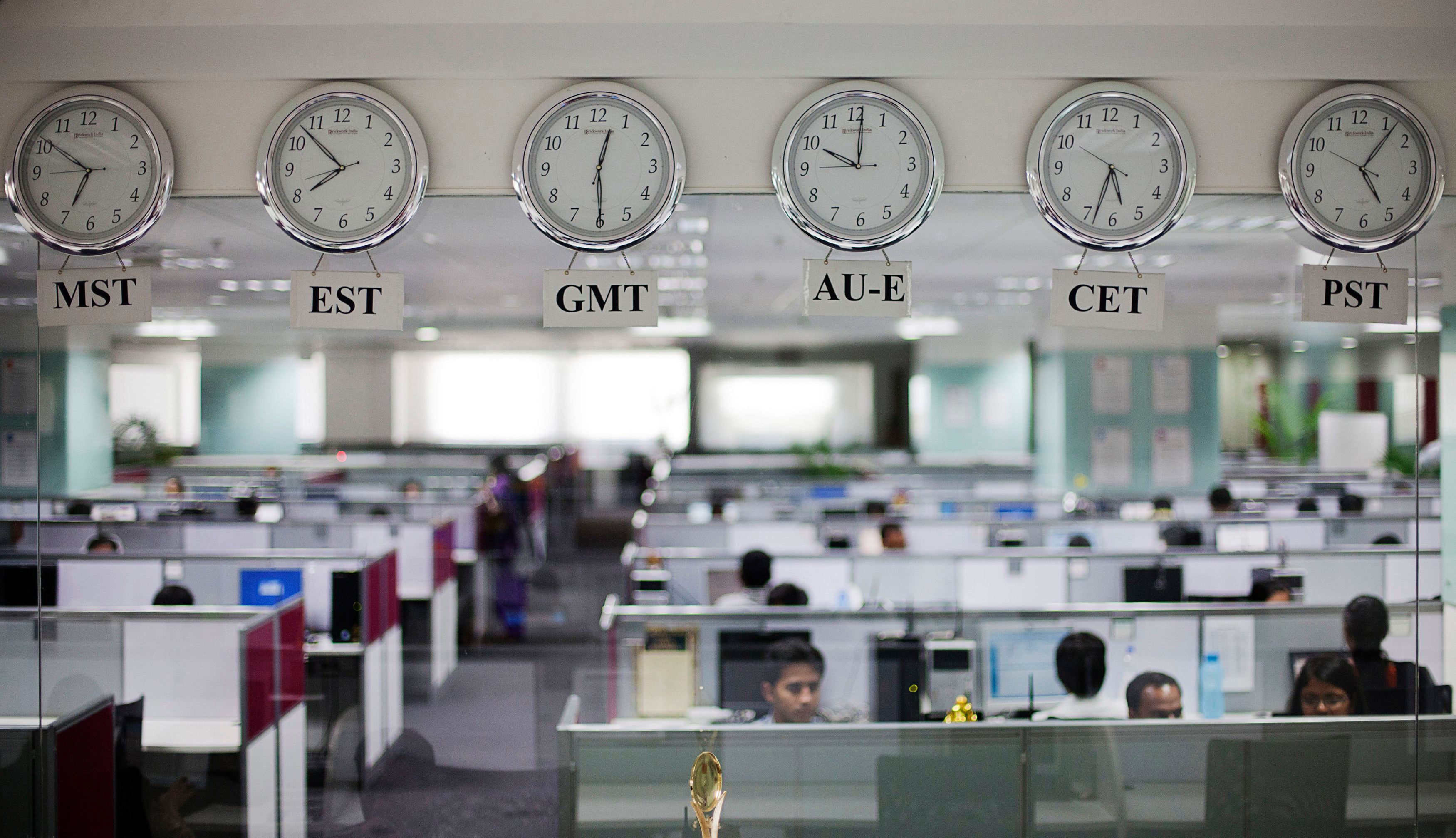
India's IT sector, a pillar of the country's economic growth, is cutting staff by up to 6% this year as artificial intelligence disrupts traditional software services.
The sector's stock index has fallen 18% in 2026, reflecting investor concerns, even as Prime Minister Modi has played down the impact.
The disruption mirrors broader AI-driven workforce shifts globally, including NEC's move to staff new operations with AI agents.
What happened
India's largest IT employers have reduced headcount by as much as 6% this year, according to the Financial Times. The country's IT stock index has dropped 18% in 2026. One IT worker described the displacement: "The tool that we gave our sweat, blood and bones to — it threw us out."
Why it matters
India's IT sector is a key driver of economic growth and middle-class expansion, making this downsizing significant for the country's labor market and development strategy. Prime Minister Narendra Modi has downplayed job displacement concerns, but the sharp stock decline signals investor anxiety about the sector's near-term prospects.
What to watch
New Delhi is pivoting toward manufacturing consumer electronics as it lags in building frontier AI. Separately, Japanese IT giant NEC is opening a new department staffed solely by AI agents, signaling how some companies are restructuring around AI rather than traditional workforce models.
India's world-leading IT sector is undergoing a significant contraction driven by artificial intelligence automation. According to the Financial Times, several large employers have cut headcount by as much as 6% in 2026 alone. The human cost is captured in testimony from affected workers: one IT professional said, "The tool that we gave our sweat, blood and bones to — it threw us out," illustrating the perceived betrayal as AI systems replace the skilled labor that built the Indian IT industry. The market has reacted sharply: India's IT stock index has fallen 18% in 2026, signaling investor concerns about the sector's viability and growth prospects. The disruption carries broader implications for India's economy. The IT sector has been one of the key drivers of Indian economic growth and middle-class expansion since liberalization in the 1990s. Yet Prime Minister Narendra Modi has chosen to downplay job displacement concerns, suggesting the government is managing expectations rather than proposing direct interventions. Instead, New Delhi is pivoting its strategy. Recognizing that India lags in building frontier AI—the technology now disrupting its own IT sector—the government is shifting focus toward manufacturing consumer electronics as a new economic anchor. This represents a strategic retreat from software services toward hardware production, a shift that signals acceptance that the AI-driven transformation is irreversible. The upheaval is not confined to India. Japanese IT giant NEC is opening a new department staffed entirely by AI agents, demonstrating that the transition to AI-driven operations is a global phenomenon cutting across geographies and company sizes. For India, the challenge is acute: the sector that lifted hundreds of millions into the middle class is now shedding workers faster than it can retrain or redeploy them.
India's IT sector has long been a cornerstone of the country's post-independence economic strategy and a primary engine of middle-class job creation. The current downsizing signals a structural shift: as artificial intelligence automates routine software development and IT services work, the competitive advantage that made Indian IT companies globally dominant—cost-effective technical labor at scale—is eroding. The 18% stock decline in 2026 reflects not just present layoffs but investor expectations that the disruption will deepen. Prime Minister Modi's downplaying of job displacement concerns contrasts sharply with the market's assessment, suggesting a gap between political messaging and economic reality. In response, New Delhi is redirecting its strategy toward consumer electronics manufacturing, effectively acknowledging that the frontier of AI development (where India currently lags) is where future economic value will concentrate. This mirrors a global pattern: even established tech powers like NEC are abandoning traditional workforce models in favor of AI-agent staffing, indicating that the AI disruption is industry-wide, not unique to India.
AI-summarized, only the topics you pick — one digest a day via Email, Slack, or Discord.
Free · takes 30 seconds · unsubscribe anytime
Ask AI anything about this article. Q&As are published on this page for other readers too.
GE Vernova reported second-quarter 2026 revenue of $11.1 billion (up 22% year-over-year) and orders that more…

Dell Technologies reported AI-optimized server revenue of $16.13 billion, up 757% year over year, with managem…

SanDisk reported Q4 2026 earnings on Aug

Marvell Technology is pivoting its business strategy to concentrate on AI networking semiconductors for data c…
Eli Lilly and Company has committed to roll out Veeva Vault CRM across its global operations, adopting Veeva's…

Visa, the global payments network, is positioning itself to profit from AI-driven commerce by securing its rol…

The AI news that matters, in one minute each morning.
Sign up free