What happened
Observing 50 poses across five categories, the author built 48 English specification units and tested them on two body types, yielding 110 successes, 65 partial successes, and 1 failure out of 176 images.
Why it matters
The results suggest skeleton-level phrasing reproduces reliably across body types, but the AI tends to even out asymmetries and largely cannot render a body part explicitly described as lifted off the ground.
Summaries like this, every morning.
The project started from a practical gap: pose collections hand over the shape but not the words needed to reproduce that shape in a generative model. Rather than write numeric angles, the author described support points, pelvis tilt, spine shape and weight axis in plain body-structure language, after early trials showed numbers had little effect on the output. The vocabulary is assembled modularly, stacking pelvis tilt, twist and foot placement on top of a support-shape base.
Testing was done on plain mannequin dolls in two body types, a chibi build and an adult-proportioned build, then compared against the observation notes. The category breakdown in the body shows the method is uneven by pose family: kneeling held up best, while lying and sitting hovered near half success. Only one composite pose, lying face-up with both knees open and crossed, failed outright and collapsed into a side-lying pose.
The findings point to two recurring weak spots the author documents. The model reads the presence of a shape but not its degree, so tilt and curl come out shallow or moderate. And left-right leg asymmetry tends to be resolved into an even stance, which matters for anyone specifying contrapposto or one-leg-off-a-chair poses. The body also notes that a model's habitual drift, such as heels lifting in a deep squat, can be pre-empted by specifying the toe-stand explicitly.
Pick your industry and the AI tools you use, and get news related to your work every day.
Free · 30 seconds with Google · unsubscribe anytimeWhat is AIToday? →
Ask AI anything about this article. The AI reads this article, earlier AIToday articles, and Wikipedia, and cites its sources. Q&As are published on this page for other readers too.
NVIDIA published Nemotron-Labs-Image-30B-A3B, an open-weight image model that uses an autoregressive architect…

After finding information that the two tools could not be used together, a developer named Neon submitted fix…

A Zenn guide breaks comic and webtoon image translation into three stages — bubble segmentation with reading-o…

The New York Times emailed freelance photographers warning them against updating to Photoshop 2027, saying its…

HitPaw Edimakor now includes Seedream 5.5, a ByteDance Seed team image model that supports multi-step edits to…

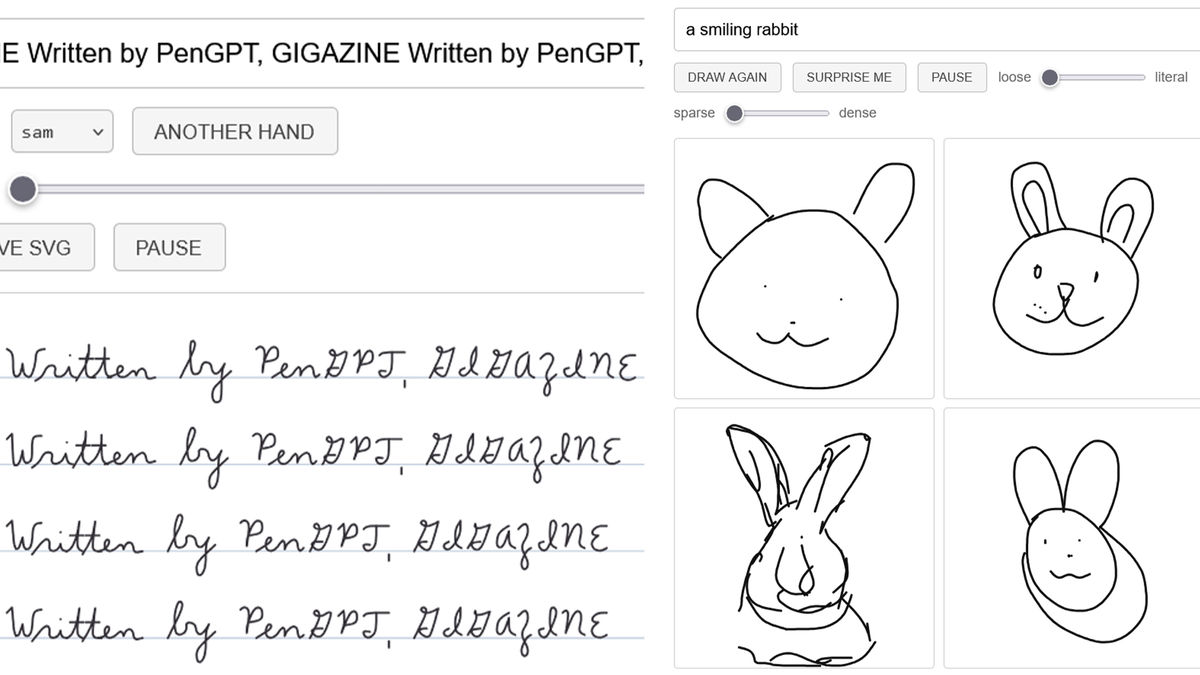
Sam Greydanus released PenGPT, a small transformer trained on handwriting from 1,255 writers covering 495,590…