What happened
Amazon reported second-quarter net sales up 20%, with AWS cloud revenue rising 37% year over year to $42 billion for the quarter. The company raised its 2026 capex forecast from $200 billion to $220 billion and spent $173 billion on property and equipment in the fiscal year ended June 30, up from $107.65 billion the prior year. Its stock rose nearly 10% in after-hours trading.
Why it matters
Unlike typical companies facing investor pressure to cut costs, Amazon is being rewarded for aggressive infrastructure investment because AWS revenue growth shows demand is justifying the supply build-out. CEO Andy Jassy noted that AWS and Amazon Bedrock can succeed without owning a frontier AI model, since no single model will dominate. This contrasts sharply with Meta, which saw its stock fall 8% after earnings this week despite similar capex levels, because it lacks a clear revenue source to offset spending.
What to watch
Amazon's first period of negative free cash flow this year—ending the quarter with $7.6 billion less cash than 12 months prior—signals the company is dipping into reserves to fund expansion. The multi-year gap between data center construction and revenue generation means investor confidence hinges on whether AWS demand continues to track capex growth.
Summaries like this, in your inbox every morning.
The market's response to Amazon versus Meta illustrates a critical divide in how investors evaluate AI infrastructure spending. For Amazon, the calculus is straightforward: AWS is generating substantial and accelerating revenue (up 37% year over year), which provides concrete justification for the $173 billion fiscal-year capex and the raised $220 billion 2026 forecast. Jassy's statement that AWS and Amazon Bedrock can succeed without owning a frontier AI model—because "there's not going to be a single model to rule them all"—signals that Amazon's revenue engine is not dependent on proprietary model dominance but on providing compute capacity that multiple models can run on. This positions the company as cloud infrastructure provider rather than pure AI play, a distinction investors appear to value.
Meta's contrasting experience reveals that capex alone is not sufficient to win investor confidence. Despite comparable infrastructure ambitions, Meta's stock fell 8% because investors see spending without an offsetting revenue stream. The $7.6 billion decline in Amazon's cash reserves over the past 12 months and its first period of negative free cash flow in 2024 could have triggered similar skepticism, but AWS growth and margin trajectory expectations have insulated the company. The data-center-to-revenue lag—which Jassy frames as a design feature of AWS's model—actually reinforces investor confidence, because present spending on capacity can be monetized years later as demand materializes. This temporal mismatch works in Amazon's favor precisely because its cloud business has a track record of converting infrastructure into revenue, whereas Meta's capex spending remains speculative from an investor perspective.
Pick your industry and the AI tools you use, and get news related to your work every day.
Free · 30 seconds with Google · unsubscribe anytimeWhat is AIToday? →
Ask AI anything about this article. The AI reads this article, earlier AIToday articles, and Wikipedia, and cites its sources. Q&As are published on this page for other readers too.
In Q2, billionaires or their funds sold six 'Magnificent Seven' AI stocks
Nvidia was rising early Friday, even as the wider chip sector kept falling, Barron's reported
ElevenLabs completed a $300 million employee tender at a $22 billion valuation, and co-founder Mati Staniszews…

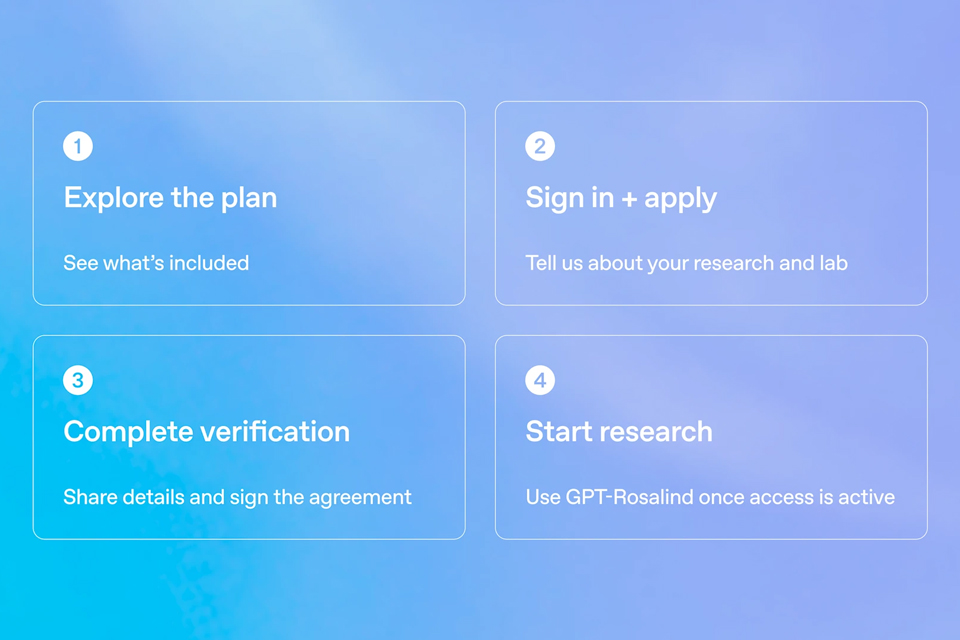
On October 15, OpenAI announced the Rosalind Academic Plan, giving approved US university labs free access to…
Neostellar Capital principal Evan Schlossman said CoreWeave's $103.7 billion in remaining performance obligati…
Supermicro Computer appointed Mark Long as chief financial officer, bringing an experienced technology finance…