What happened
Bank of America's Sebastian Raedler told clients that consensus hyperscaler capital expenditure expectations for the next 12 months have risen from $330 billion in early 2025 to approximately $1 trillion, while average AI token prices have fallen about 50% since the summer.
Why it matters
Raedler's note suggests that, as in earlier capital investment cycles, rising spending and increased competition at the AI model level could weigh on the financial returns from that infrastructure buildout, even if the technology keeps advancing and gaining adoption.
Summaries like this, in your inbox every morning.
Bank of America's note frames the current AI buildout as a capital investment cycle with precedents. Sebastian Raedler examined whether AI infrastructure spending could follow the pattern of earlier cycles, in which expanding capacity eventually placed pressure on profitability. The bank points to rising investment expectations, increased competition and declining prices for AI services as the shared features.
A key contrast in the note is the cloud computing market of the 2010s, where barriers to entry helped limit competition and supported industry profitability. In AI, competition has increased at the model level, including from Chinese developers offering open-weight models (models whose underlying weights are openly released). That difference matters because earlier cycles were often characterised by initially elevated profit margins, which encouraged additional investment and eventually contributed to excess capacity and reduced pricing power.
The bank also weighed whether lower AI service prices could generate enough additional demand to offset the decline in revenue per unit of usage. Whether that demand response is strong enough may determine how the cycle's financial returns play out, a question the note raises rather than resolves.
Pick your industry and the AI tools you use, and get news related to your work every day.
Free · 30 seconds with Google · unsubscribe anytimeWhat is AIToday? →
Ask AI anything about this article. The AI reads this article, earlier AIToday articles, and Wikipedia, and cites its sources. Q&As are published on this page for other readers too.
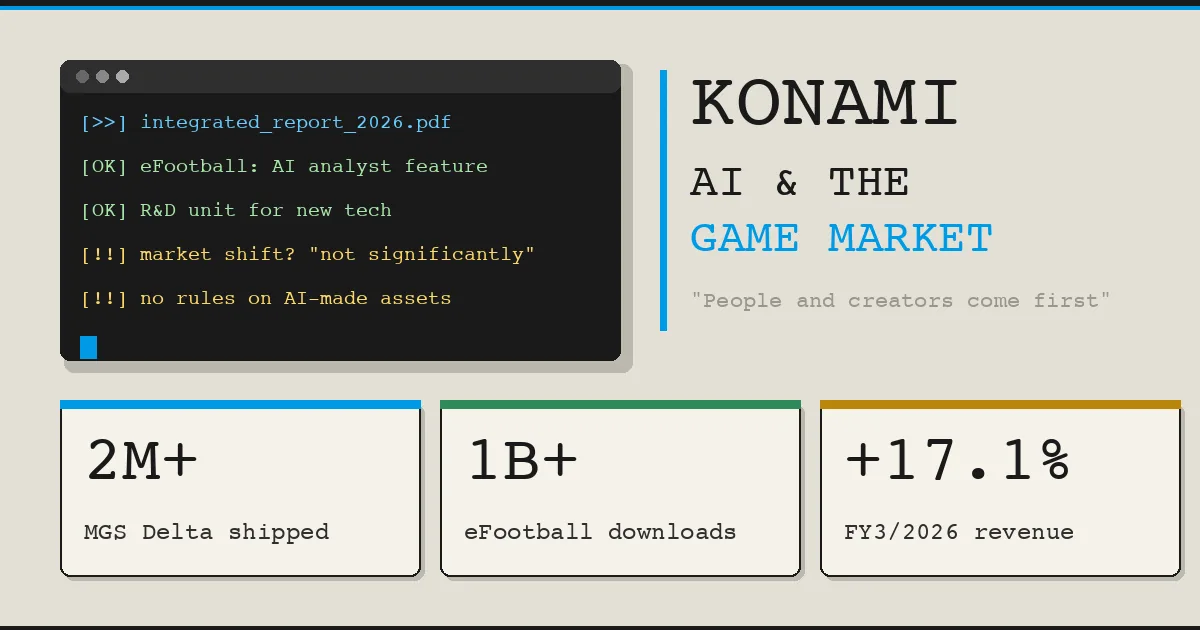
In the Integrated Report 2026, Konami digital chief Hideki Hayakawa said AI will not greatly change the game m…
Exa Enterprise AI began offering Claude Haiku 5.5 on its ExaBase AI corporate service, following Anthropic's r…

S&P Global added Visible Alpha data to its AI Data Portal, giving institutional clients AI-ready sell-side con…

A McDonald's customer in Chicago filed a class action claiming the chain uses AI to set menu prices, citing a…

Danaher announced a collaboration with NVIDIA to combine its instruments, automation and workflow software wit…

Booking Holdings is launching Vayo, an AI travel venture in Seattle led by Mike Fridgen, with plans to invest…