
What happened
German startup Q.ANT has rolled out its photonic processors — chips that compute with waves of light — to cloud company IONOS facilities as a pilot, and says more than 30 teams of engineers are now developing AI models built to run on photonic computing.
Why it matters
Photonic chips use light instead of electrons, which the company says allows them to perform complex calculations with less energy and minimal cooling, potentially easing the power costs that constrain AI data centers.
Summaries like this, every morning.
Q.ANT's pilot with IONOS marks one of the few instances of photonic processors running inside a data center, as most such chips have so far remained in labs. The company argues that light waves are inherently suited to nonlinear calculations — modeling a circle with two points instead of infinite data points — while GPUs remain superior for linear math. This complementary approach could reduce energy consumption and cooling costs, which are among the largest expenses for data centers. However, Q.ANT faces a chicken-and-egg challenge: developers need to adapt models to run on its hardware, but widespread adoption depends on cloud providers offering the chips. The pilot is intended to validate that photonic computing can withstand data-center environments, and Q.ANT says it could scale to 100,000 units if orders materialize, though supply-chain maturity may lag.
Pick your industry and the AI tools you use, and get news related to your work every day.
Free · 30 seconds with Google · unsubscribe anytimeWhat is AIToday? →
Ask AI anything about this article. The AI reads this article, earlier AIToday articles, and Wikipedia, and cites its sources. Q&As are published on this page for other readers too.
THA president Asako Nishiyama will join the first session of 未来共創CROSS on December 1, 2026, at NCB Hall in Fuk…

The Digital Agency said a public call for Japanese-made large language models for ガバメントAI 源内 in 令和9年度(2027年度)…

Meta Platforms and Alphabet look like discounted buys, with Meta trading at 20x forward earnings and Alphabet…

CME FedWatch shows a 100% chance of a rate hike on Dec

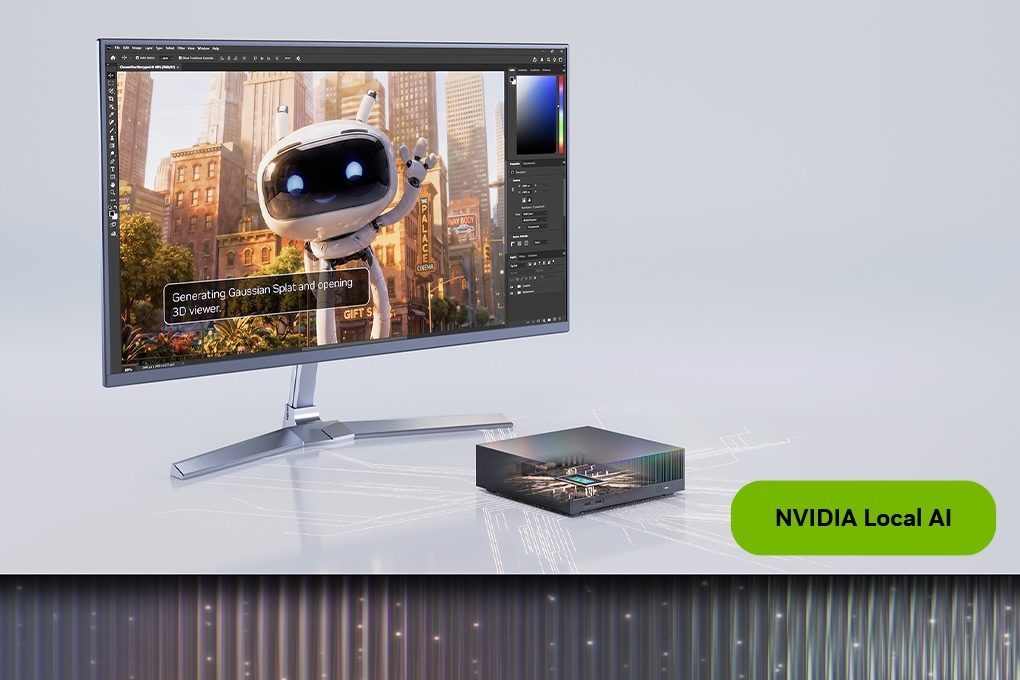
NVIDIA said on November 27 that its RTX Spark compact desktop is on sale from ASUS, Dell and MSI, with a 20-co…
Foreign investors net-sold NT$1.09 trillion (about $33.1 billion) of Taiwanese shares in November, beating Oct…


