
What happened
An investment analyst argues that Alphabet (trading as GOOGL/GOOG) is the top AI stock choice, citing its 98% return over the past 12 months—lower than some peers like Micron Technology (up 674%) and Advanced Micro Devices (up 280%), but backed by fundamental strength.
Why it matters
Unlike hardware-focused AI companies, Alphabet benefits from software and services—Google Gemini already has 900 million users embedded across Android, Google Workspace, Search, and YouTube. The company's Google Cloud segment (which houses AI revenue) grew 63% to $20 billion(約3.2兆円) in Q1 2026, and Apple is reportedly paying Alphabet $1 billion(約1600億円) annually to use Gemini in Siri, signaling long-term AI revenue potential after the semiconductor boom cools.
What to watch
Alphabet is highly profitable (earnings jumped 82% year-over-year to $5.11 per share in Q1 2026) with over $10 billion(約1.6兆円) in free cash flow that quarter, despite spending up to $190 billion(約30兆円) on AI infrastructure this year. The stock trades at a P/E ratio of 27, below the market average of 34.
Summaries like this, in your inbox every morning.
Alphabet's appeal as an AI investment rests on a structural advantage over hardware-focused competitors: its position as a software-and-services company gives it durable revenue streams independent of the semiconductor cycle. While Micron Technology and Advanced Micro Devices have posted headline-grabbing returns of 674% and 280% over the past year—well above Alphabet's 98%—those gains reflect the intense near-term competition for AI chip share. Alphabet, by contrast, operates downstream from that competition. Google Gemini's 900 million users provide an embedded customer base that will generate AI revenue for years regardless of when infrastructure buildout plateaus. The Apple deal—$1 billion(約1600億円) annually for Gemini in Siri—underscores how Alphabet's technology is becoming a critical input to competitors' own AI strategies, creating a reverse revenue flow that hardware makers cannot replicate. Financially, the company's position is solid: Q1 2026 saw Google Cloud revenue climb 63% to $20 billion(約3.2兆円), earnings jump 82% year-over-year to $5.11 per share, and free cash flow exceed $10 billion(約1.6兆円) in the quarter, all while absorbing a $190 billion(約30兆円) annual infrastructure spend. This profitability allows the company to fund AI buildout without financial distress, and the P/E ratio of 27—below the market average of 34—reflects an investor base that has not yet fully priced in the long-term AI monetization opportunity.
Pick your industry and the AI tools you use, and get news related to your work every day.
Free · 30 seconds with Google · unsubscribe anytimeWhat is AIToday? →
Ask AI anything about this article. The AI reads this article, earlier AIToday articles, and Wikipedia, and cites its sources. Q&As are published on this page for other readers too.
Wall Street ended down sharply, with worries about the AI trade and high oil prices weighing on the market
AI-related stocks faced heavy selling pressure on concerns over capital expenditure levels and slowing revenue…

A Seeking Alpha analyst published a piece titled "GE Vernova: AI's Next Bottleneck Is Electricity," arguing th…

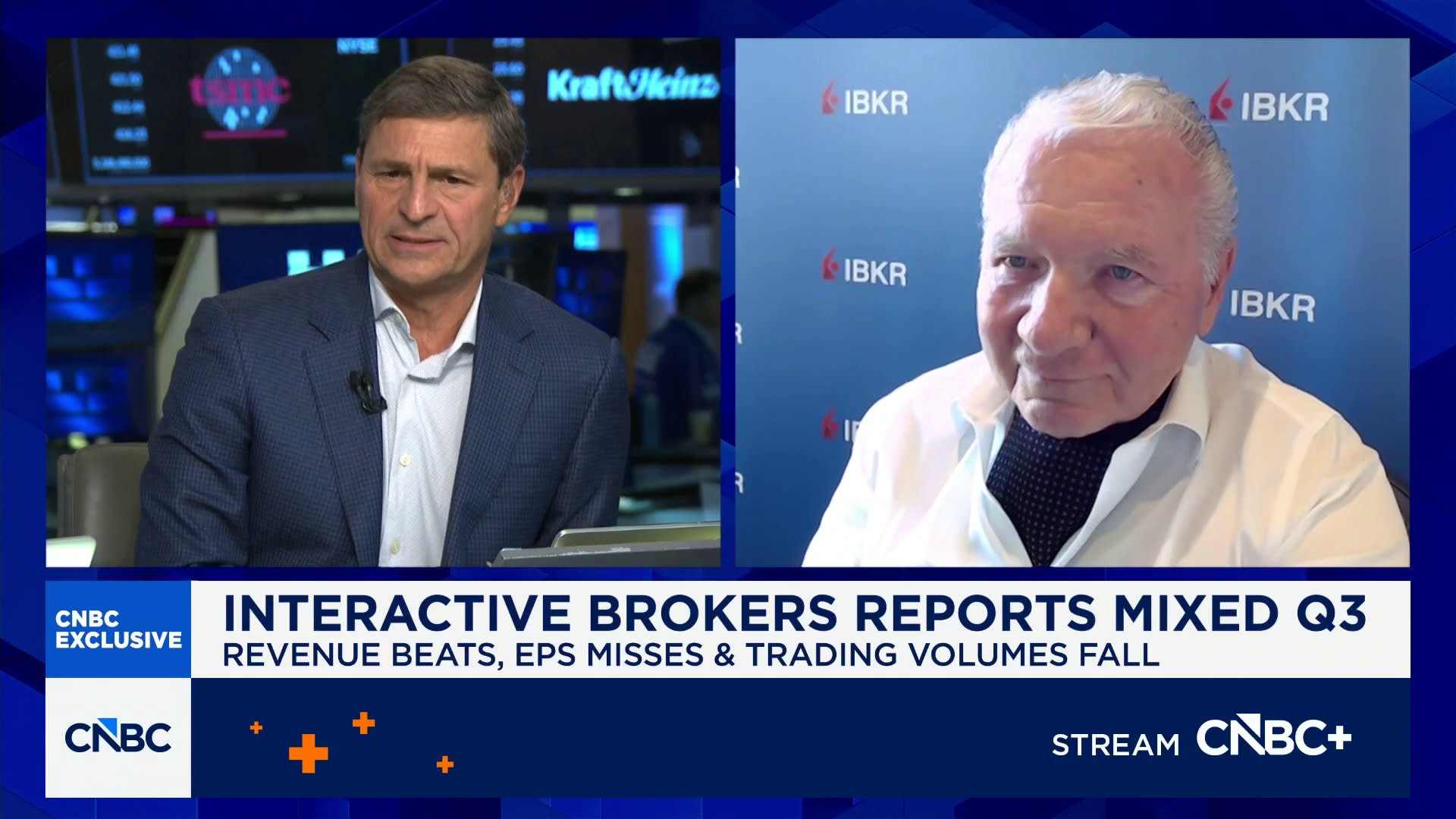
Interactive Brokers Chairman and Founder Thomas Peterffy appeared on CNBC's "Squawk on the Street" to discuss…
Charles Schwab CEO Rick Wurster said an AI agent should trade for you only if you set the rules and oversee th…
Interactive Brokers reported Q3 2026 earnings of $0.67 per share, in line with the Zacks Consensus Estimate, w…