What happened
TCS reports its Agentic Test Orchestrator in production for Banking, Financial Services, and Insurance (BFSI) clients reduced effort on a workload of about 100 test scenarios from roughly 200 hours to about 24 hours, an 88 percent reduction.
Why it matters
TCS says this shift moves its quality engineers from hand-building tests to reviewing and governing the work, freeing their time for risk analysis, exploratory testing, and release decisions.
WHO IT HITSThis lands on quality engineering and test automation teams at BFSI companies, who could shift from writing and maintaining test scripts to reviewing and governing AI-generated artifacts. It also affects platform and security engineers who need to provision isolated per-tenant environments for such workloads.
Summaries like this, every morning.
TCS's starting point was not slow test execution but the fragmented path from business requirements to trustworthy test evidence. Traditional automation improved execution speed, yet teams still had to create scenarios, convert them to scripts, maintain locators, and diagnose failures—and scripts could become stale when a linked user story changed. TCS concluded that a single generative AI prompt could not provide the control a multi-stage engineering workflow needs, so it decomposed testing into specialized agents with their own tools, validation rules, and context, coordinated by a deterministic supervisor.
The choice of Amazon Bedrock AgentCore followed three needs: a choice of models so each agent uses the one that fits its task, a runtime that scales with demand across many tenants without provisioning or tuning agent servers, and session-level isolation through a dedicated microVM per session. In production, TCS runs the orchestrator as a multi-tenant SaaS on AWS, with a shared control plane and per-tenant application planes that separate identity, data, and keys. All of this supports the four requirements TCS set: grounded context, coverage of both API and UI testing, strict tenant isolation, and a repeatable path from requirement ingestion to test evidence and reporting.
Pick your industry and the AI tools you use, and get news related to your work every day.
Free · 30 seconds with Google · unsubscribe anytimeWhat is AIToday? →
Ask AI anything about this article. The AI reads this article, earlier AIToday articles, and Wikipedia, and cites its sources. Q&As are published on this page for other readers too.
Schools are requesting that Google provide a choice to remove AI Overviews from search results, framing it as…

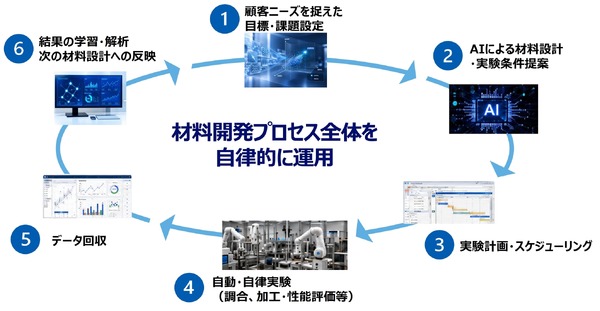
Asahi Kasei will open a "Smart Laboratory" in Fuji City that uses AI to automate materials development, aiming…
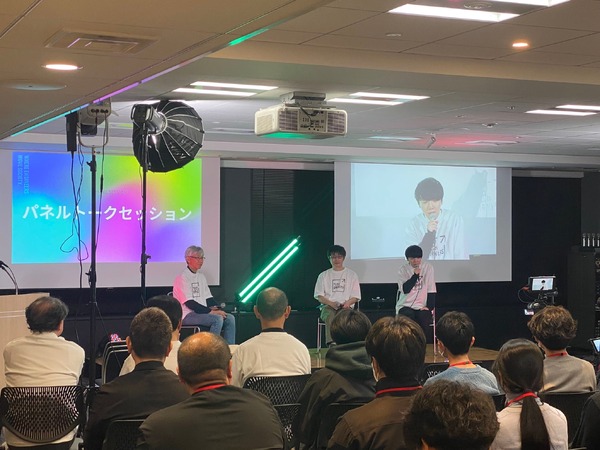
Toyota, Nissan, and Honda will hold the engineer-focused event TECH DRIVERS again in fiscal 2026, with AI as t…
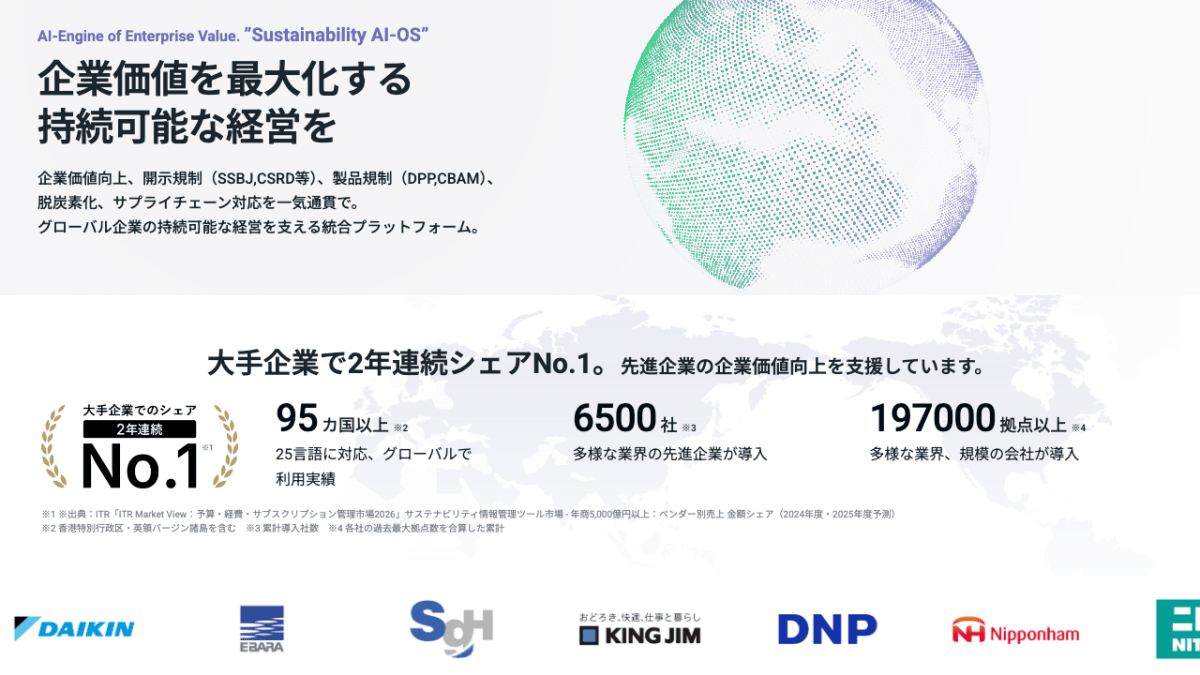
Booost, which uses AI to connect financial and non-financial data, raised a total of 1.75 billion yen in its S…
Aeon is building AEON Kawaguchi Higashi XD, a next-generation automated model center that introduces physical-…

Sumitomo Bakelite (住友ベークライト) acquired Kyocera's (京セラ) semiconductor materials business and set up a new compan…