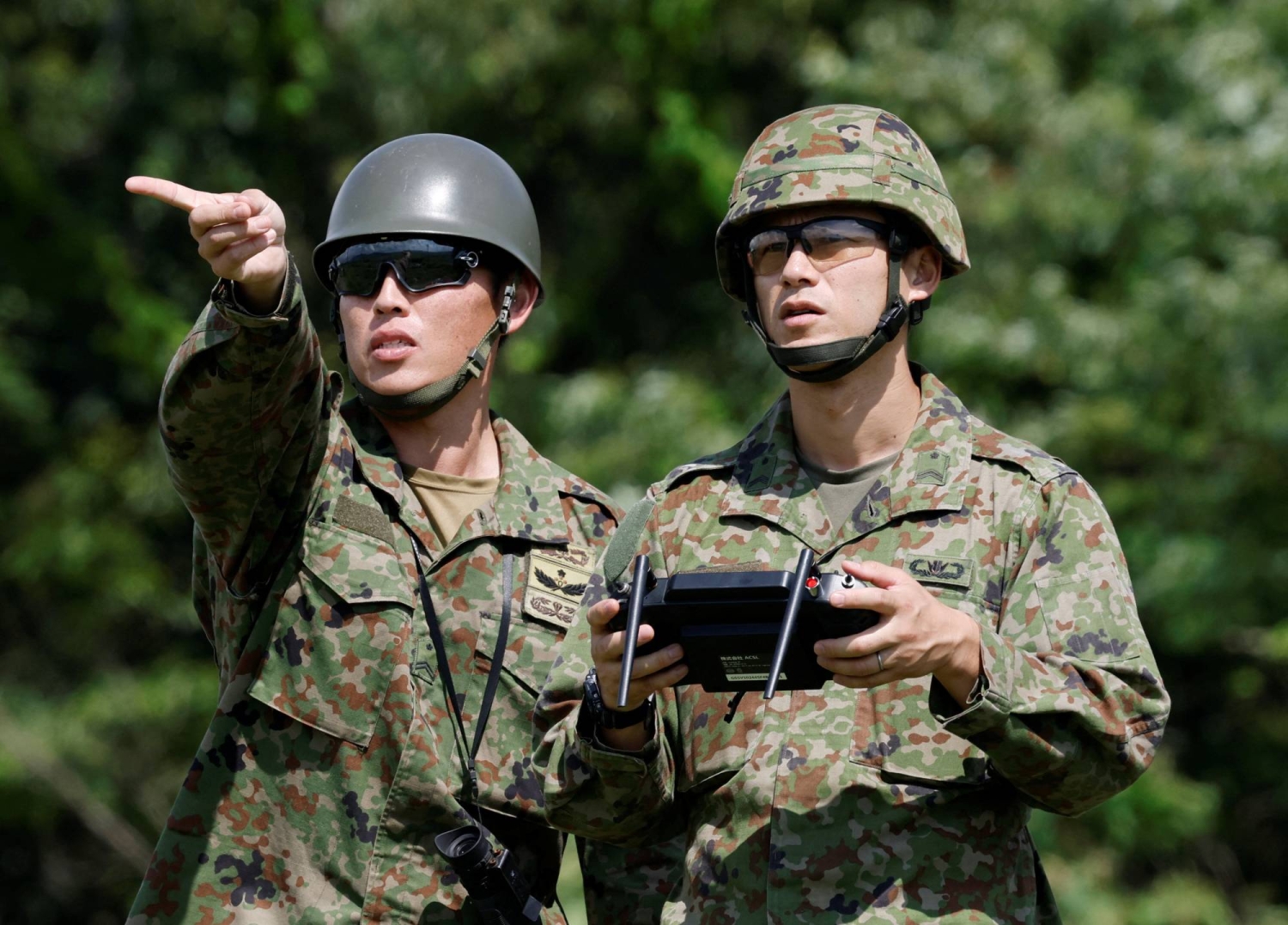
Japan is considering integrating domestically developed artificial intelligence into the Self-Defense Forces' command and control system, with Sakana AI's system being evaluated as a candidate.
The government plans to include this policy in a national security document update by year-end, aiming to accelerate and improve the accuracy of military decision-making while maintaining Japanese AI autonomy and strengthening coordination with U.S. forces.
The move reflects Japan's concern that the SDF is falling behind in decision-making speed compared to other countries that are rapidly adopting AI in military operations.
What happened
The Japanese government is considering incorporating domestically developed artificial intelligence into the Self-Defense Forces' command and control system, with a system from Tokyo-based startup Sakana AI being floated as a candidate model. The policy is expected to be included in a planned update to Japan's three key national security-related documents by year-end.
Why it matters
The move aims to speed up and improve the accuracy of SDF commanders' decision-making while maintaining AI sovereignty—a priority as countries around the world adapt to new warfare methods. The Defense Ministry has warned that the SDF risks falling behind in decision-making speed and accuracy, and could face gaps in Japan-U.S. cooperation if it does not modernize.
What to watch
The U.S. military has already adopted Palantir Technologies' Maven Smart System, which reduced the time between target detection and attack from several hours to a few minutes. Japan's plan would position domestic AI at the core of the SDF system while linking it with cutting-edge U.S. AI to beef up coordinated response capabilities between the two militaries.
The Japanese government is exploring a significant modernization of the Self-Defense Forces' military operations by integrating domestically developed artificial intelligence into the SDF's command and control system for the first time. The initiative, informed sources have revealed, is expected to be formalized in an update to Japan's three key national security-related documents by year-end. A system developed by Tokyo-based startup Sakana AI has emerged as a leading candidate for this role. The government's rationale centers on two strategic imperatives: accelerating and improving the accuracy of decision-making by SDF commanders, and maintaining what officials call "AI sovereignty"—the ability to control and operate the system without dependence on foreign technology.
The move reflects Japan's awareness that it is falling behind global military powers in adopting AI-equipped decision support systems. According to the Defense Ministry, many countries are already speeding up development in this area. The U.S. military has adopted Palantir Technologies' Maven Smart System, which has proven remarkably effective: it has reduced the time between target detection and attack from several hours to a few minutes. U.S. Defense Secretary Pete Hegseth underscored this shift in January, stating that he expects the U.S. military to "become an 'AI-first' warfighting force across all domains." By contrast, the Defense Ministry stressed in materials published Friday that the SDF faces a critical risk of falling behind in decision-making speed and accuracy, and warned of potential "gaps in Japan-U.S. cooperation" if the SDF does not upgrade its systems.
Japan's proposed approach is to position domestic AI at the core of the SDF's command and control system while simultaneously linking it with cutting-edge AI developed in the United States. This dual strategy is intended to maintain Japanese autonomy over core military decision-making while ensuring seamless coordination with the U.S. military, and to beef up the overall coordinated response capabilities of both forces as they confront evolving security challenges.
Japan's military has historically lagged behind other major powers in adopting advanced technologies for warfighting, and the SDF's slow adoption of AI reflects this broader pattern. The Defense Ministry's frank acknowledgment—that the force risks falling behind in speed and accuracy of decision-making—signals a shift in how Tokyo views military modernization as strategically urgent. The integration of domestic AI rather than simply importing foreign systems reflects a dual concern: maintaining technological autonomy while keeping pace with allies. By anchoring the SDF command system to Sakana AI technology while linking it to cutting-edge U.S. systems, Japan aims to avoid dependency on foreign AI while ensuring interoperability with its primary security partner. This framing also aligns with U.S. Defense Secretary Pete Hegseth's January statement that the U.S. military expects to become an "AI-first" warfighting force—a posture Japan appears determined not to fall behind on.
AI-summarized, only the topics you pick — one digest a day via Email, Slack, or Discord.
Free · takes 30 seconds · unsubscribe anytime
Ask AI anything about this article. Q&As are published on this page for other readers too.

The AI news that matters, in one minute each morning.
Sign up free
