What happened
On Nov 5, 2026, installing PyPI-stable transformers 5.22.1 failed with 'Transformers does not recognize this architecture' for model type dory, and stock llama-cpp-python rejected the official GGUF with 'unknown model architecture: 'dory'' despite a matching SHA-256.
Why it matters
The errors stem from inference engines not yet supporting the dory architecture, not from missing GPUs or memory, so copying the model card's instructions verbatim stops at the architecture check.
Summaries like this, every morning.
NVIDIA released Dory1.0-4B as a 'loop-type Transformer' that lets users switch the number of times the recurrent block loops between 1 and 4 times, trading inference compute for accuracy without retraining. The model card presents simple instructions: update transformers via pip, or use a special llama.cpp fork for GGUF. The author tried the simplest path first and hit a wall: both transformers and stock llama.cpp could read the files correctly but did not implement the dory architecture.
A local GPU test then confirmed that even the error message's own advice—reinstalling transformers from GitHub main (5.23.0.dev0)—still lacked dory support, so that workaround did not function as of Nov 5, 2026. Only the model card's second workaround, building the pinned fork of llama.cpp, succeeded, and even then, on a simple arithmetic problem, increasing loop count from 1 to 4 did not reduce output tokens and made generation take about 3.2 times longer. The author suggests the paper's reported token-reduction effect likely requires more complex reasoning tasks to appear.
Pick your industry and the AI tools you use, and get news related to your work every day.
Free · 30 seconds with Google · unsubscribe anytimeWhat is AIToday? →
Ask AI anything about this article. The AI reads this article, earlier AIToday articles, and Wikipedia, and cites its sources. Q&As are published on this page for other readers too.
JX Metals said it will build a new Ypinogue high-purity copper sulfate line at its Hitachi district in Ibaraki…
The Dow closed 1,833.06 points lower at 51,523.06 and the Nasdaq fell 1,421.51 points to 24,315.00

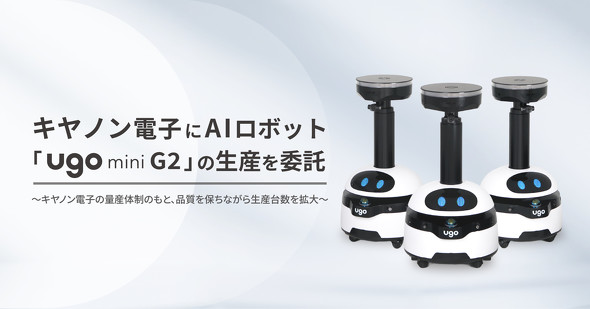
ugo said Canon Electronics began producing its ugo mini G2 inspection robot in October 2026 at the Misato site…
Sandisk reported fiscal Q1 2027 sales of US$11,031 million and net income of US$8,101 million, issued Q2 reven…
After Democrats took both chambers of Congress in the 2026 midterms, AI-linked names including CoreWeave, Tesl…

Barron's reports that the AI trade selloff is crushing industrial stocks, with Caterpillar's valuation cited a…