What happened
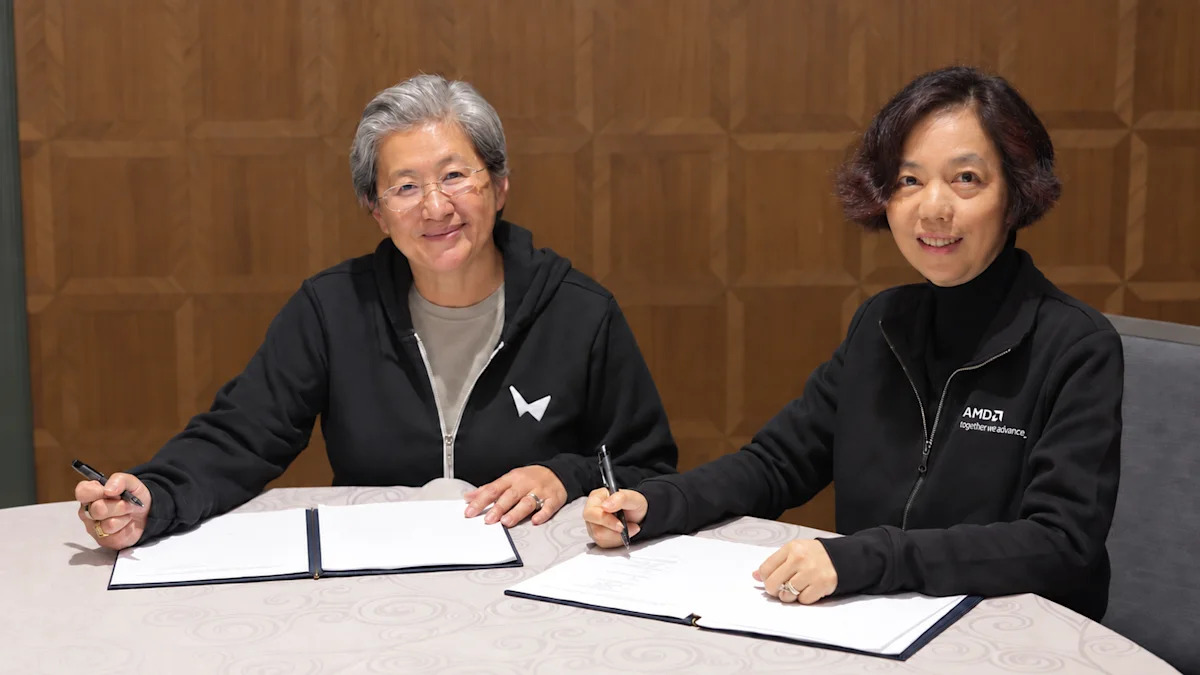
AMD agreed to acquire World Labs, a San Francisco AI lab focused on 3D environment software, for $8.2 billion. Dr. Fei-Fei Li, known as the "Godmother of AI," will join AMD as executive vice president and chief scientist, and the deal is expected to close by the end of 2026.
Why it matters
The chief scientist role reports directly to CEO Lisa Su, which analysts read as deepening AMD's insight into how AI models are evolving—strengthening its competitive position against NVIDIA and accelerating its broader AI platform ambitions.
What to watch
Citigroup's Atif Malik calls AMD his favorite growth compute semis pick in 2026, but the deal is structured as a talent and model-insight buy rather than a revenue play, so the payoff hinges on whether the acquired team sharpens AMD's end-to-end systems. Watch for deal close by the end of 2026.
WHO IT HITSThis lands on investors and analysts tracking AMD's AI strategy, as well as on semiconductor competitors watching how AI model talent is being absorbed. Job candidates in AI research may note that model builders at acquired labs are increasingly recruited into chip companies.
Summaries like this, in your inbox every morning.
The $8.2 billion deal, announced late in the afternoon, marks AMD's largest push to date into owning not just the chips but the model talent that runs on them. World Labs is a 2024-founded startup focused on 3D environment software, led by Dr. Fei-Fei Li, who was once chief scientist at Google Cloud. Li will now report directly to AMD CEO Lisa Su, a reporting line that underscores the pivotal role she is expected to play amid the AI boom.
The structure of the deal signals AMD's intent. Analyst Patrick Moorhead called it "a talent and model-insight buy, not a revenue play," noting that AMD gets the people building the models its future chips will have to run. Citigroup's Atif Malik echoed that framing, pointing to three motivations: acquiring more leading AI engineers, better positioning the company within physical AI, and building better end-to-end systems. Both analysts tie the move to AMD's intensifying competition with NVIDIA.
For a non-technical reader, the key is that AMD is not buying revenue or a product line—it is buying expertise. Malik maintains AMD as his favorite growth compute semis pick in 2026, but the payoff is not guaranteed: the value hinges on whether Li and her team can translate model insight into better chip design and an end-to-end platform. Whether that translates into real competitive gains against NVIDIA remains an open question.
Pick your industry and the AI tools you use, and get news related to your work every day.
Free · 30 seconds with Google · unsubscribe anytimeWhat is AIToday? →
Ask AI anything about this article. The AI reads this article, earlier AIToday articles, and Wikipedia, and cites its sources. Q&As are published on this page for other readers too.
Hewlett Packard Enterprise stock is down 5% at $55.87

The Motley Fool argues Amazon is the AI company of the two, since AWS was just 21% of first-half 2026 revenue…

Google Deepmind's Gemini 4 Argon scored 97.5 percent on ARC-AGI-3 at a cost of $4,800, second only to GPT-6 As…

Cammarata reinterprets InceptionV1's cat-car neuron as a V-shape detector, not two unrelated concepts

Microsoft's Surface Laptop Ultra, using Nvidia's RTX Spark platform, starts at $2,599 (up to $5,899)

Meta's new commercial terms, effective October 30th, appear to let it crawl and train AI on content from websi…


