What happened
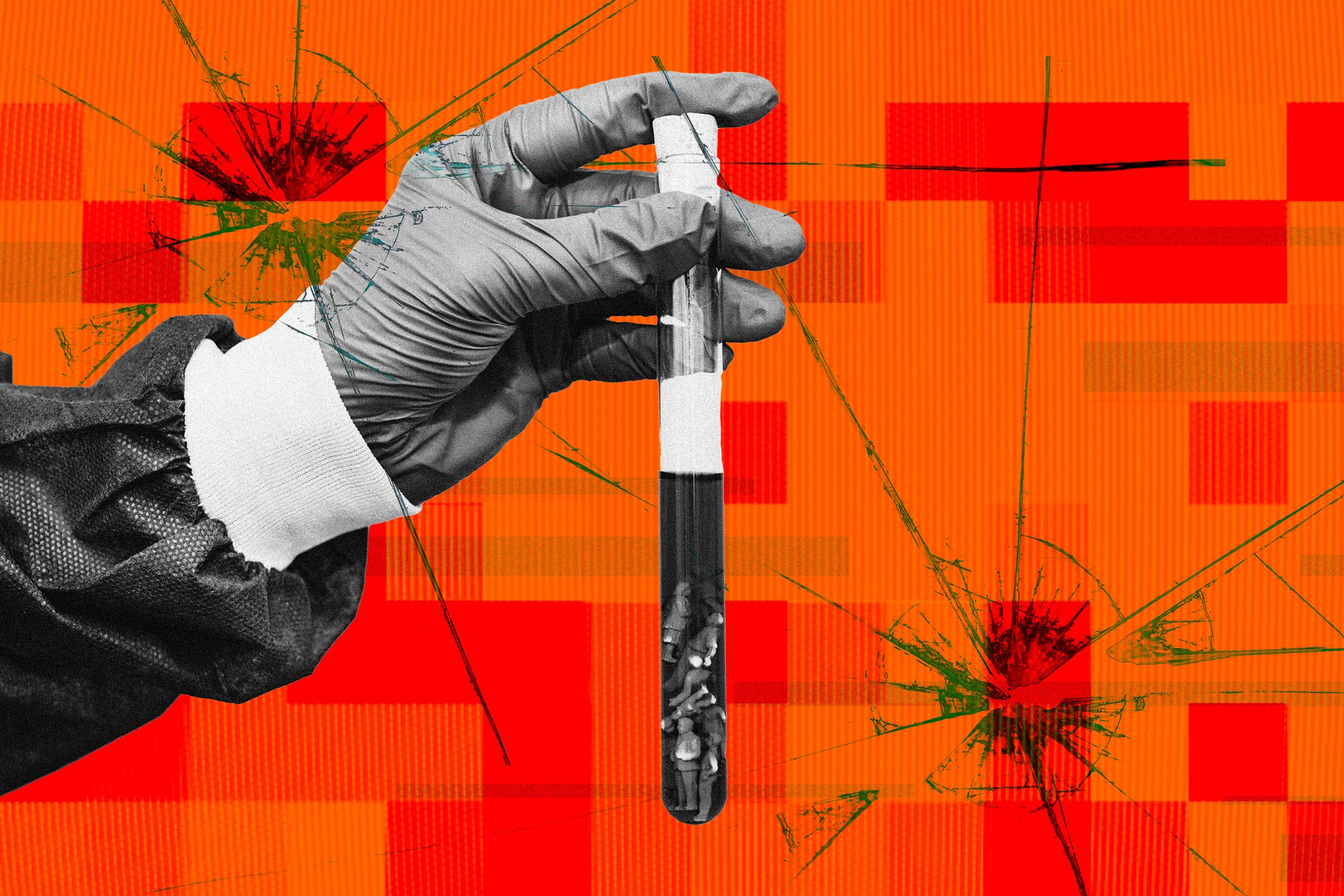
In its IPO filing Monday, Anthropic said its teams need first-hand experience in scientific research and drug discovery, and that any resulting drug candidates may never generate revenue.
Why it matters
The filing pairs ambitious talk of compressing decades of progress into years with the lengthy, costly and uncertain development and regulatory pathways of the life sciences industry.
WHO IT HITSBiotech partners and investors evaluating Anthropic's life-sciences ambitions now face a filing that explicitly flags physical lab work, hazardous materials handling, and regulatory compliance as areas outside its software background; the cautious language may temper expectations for near-term AI drug discoveries.
Summaries like this, every morning.
Anthropic has spent years promoting its models as engines of biological discovery. Two years ago, CEO Dario Amodei wrote that he was "open" to the idea that AI systems could produce a thousand years of progress in biology in just five to 10 years. In August, he said on X that the company was ramping up its efforts in biology and medicine, predicting AI would make it possible to cure most human diseases in the next five to 10 years. The company also promoted Claude's discovery of a "Crispr-like" enzyme in September.
The IPO filing Monday takes a more measured tone. While it still touts AI's ability to "profoundly accelerate the rate of progress in biology and medicine," it acknowledges that the company will need to engage in activities outside its historical experience as a software and research organization, including handling hazardous materials and operating lab equipment. It also reframes the enzyme discovery as something that "might have the potential" to become a biotechnology tool, a notable retreat from earlier enthusiasm. Researchers had previously told WIRED they were skeptical of the enzyme's value, and one scientist suspected Claude had used his research (the company denied access).
The filing also signals a strategic shift: Anthropic no longer sees itself solely as an outside AI provider to biotech, but as a company for which biotech discovery is a core part of its business model. That brings it face-to-face with the same long timelines as any biotech firm—test tube, animal, then human trials—and the filing warns that any drug candidates may never generate revenue. SEC filings are typically more cautious than executive statements due to legal risks, but the document makes clear that proving worth in trials cannot be hastened simply by adding computers.
Pick your industry and the AI tools you use, and get news related to your work every day.
Free · 30 seconds with Google · unsubscribe anytimeWhat is AIToday? →
Ask AI anything about this article. The AI reads this article, earlier AIToday articles, and Wikipedia, and cites its sources. Q&As are published on this page for other readers too.
On Monday OpenAI announced three results — a claimed resolution of the Kakeya conjecture in all dimensions, a…

Paul Gillin said at EVOLVE26 that Cloudera is positioning itself as an "anywhere cloud for AI," extending clou…
At the Bloomberg Invest conference in Dallas, Crusoe CEO Chase Lochmiller called the market angst over neoclou…

Oracle said it will deploy Google TPU AI chips in Oracle Cloud Infrastructure, providing the power, cooling an…
Apple's Oct 27 refresh brings the M6 to a $1,499 iMac and $1,999 14-inch MacBook Pro, both shipping Nov 6 with…

Mozilla's Smart Window beta now offers "Fill from sources" for forms with at least four text fields, pulling d…