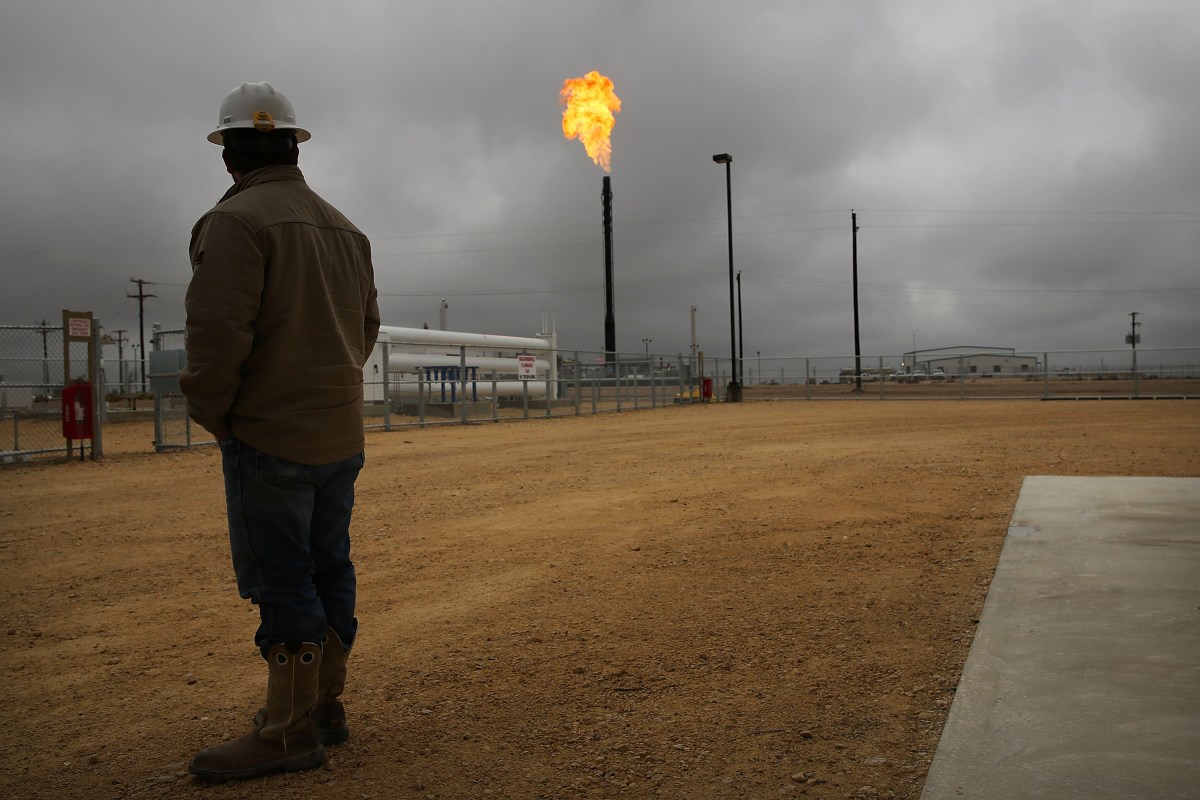
Amazon, Google, Meta, and Microsoft are building massive natural gas power plants to fuel their AI data centers, betting on low fuel costs.
But energy research firm Noreva forecasts that natural gas prices could rise above $10 per million BTUs in some U.S. regions—more than double current levels—as hyperscaler demand grows while supply growth slows and liquefied natural gas exports rise.
Since fuel makes up about half the cost of electricity from large power plants, such price spikes could substantially raise AI computation costs or force these companies to shift to the grid, driving broader electricity price increases.
What happened
Amazon, Google, Meta, and Microsoft have committed to building large natural gas power plants (ranging from gigawatt to 7.6-gigawatt scale) to run their AI data centers, betting on cheap fuel. But research firm Noreva warns that natural gas prices could rise above $10 per million BTUs in certain U.S. hubs, compared with today's $2 to $4.50 range, as hyperscaler demand collides with slower supply growth and rising liquefied natural gas exports.
Why it matters
Fuel represents about half the cost of electricity from a large power plant, so a doubling or tripling of natural gas prices could significantly increase the cost of running these 'bring your own power' data centers. That could drive up the cost of AI computation (token costs) or force hyperscalers back to the grid, raising electricity prices more broadly. The shift also exposes hyperscalers—companies with little experience in energy markets—to new financial and reputational risk as consumers increasingly worry about data centers' impact on utility bills.
What to watch
Noreva expects natural gas to surge in particular regions as West Texas pipelines connect to national and international markets, creating price differentials that could push some hubs above $10 per million BTUs for extended periods. Currently, futures contracts do not anticipate large price changes, so the timeline and magnitude of this forecast remain uncertain.
After years of investing in renewable energy sources, Amazon, Google, Meta, and Microsoft have pivoted sharply toward natural gas to power their massive AI data centers. Meta announced in March that it would build a 7.5-gigawatt natural gas power plant in Louisiana to supply its Hyperion data center. Within days, Microsoft and Google each disclosed plans to build gigawatt-scale natural gas plants in Texas, and Amazon followed with plans for a 7.6-gigawatt facility in the same state. The shift reflects the companies' calculation that cheap natural gas prices made on-site power generation economical.
But Noreva, an energy research firm, has published a forecast suggesting this bet may prove costly. The firm predicts that natural gas prices could triple in some U.S. regions over the coming years, rising above $10 per million BTUs—more than double the current range of $2 to $4.50 per million BTUs (the widely traded Henry Hub in Louisiana sits just under $3). Peter Gardett, Noreva's CEO, told TechCrunch that the energy markets have been "lulled into a sense that gas prices can't go up," but simple arithmetic reveals a much tighter market ahead.
The root causes are structural. For years, natural gas prices stayed stable because demand was relatively flat and new supply additions offset declining production at aging wells. That equilibrium is breaking. Gardett expects that energy companies will be able to add more supplies, but not at the pace of the past—and new wells are becoming more expensive to drill. Simultaneously, the domestic U.S. gas market is now connecting to the global market as liquefied natural gas exports rise. West Texas, where hyperscalers are concentrating their operations, is particularly exposed: historically, natural gas there was a byproduct of oil drilling, sold at local discounts because few pipelines existed to move it. New pipelines are now routing West Texas gas to export terminals, linking regional prices to global markets. As Gardett explained, that connection means even modest price swings near hyperscaler data centers will ripple elsewhere, creating regional differentials that could push some hubs above $10 per million BTUs for extended periods.
The financial implications are substantial. Fuel represents about half the cost of electricity from a large power plant, so doubling or tripling natural gas prices could dramatically increase the operating cost of these "bring your own power" data centers. That could raise token costs (the cost of AI computation), or it could force hyperscalers to abandon on-site generation and draw from the grid, driving broader electricity prices higher. At least one investor Gardett spoke with was "surprised" by how much natural gas price risk hyperscalers are willing to absorb. For now, futures markets do not anticipate big price moves, suggesting the bet remains "not an unreasonable" one—but Gardett is unconvinced it will pay off. Beyond the financial risk, hyperscalers face reputational exposure: 80% of consumers are already worried about data centers' impact on utility bills, mostly related to electricity. Higher natural gas bills could amplify that backlash. As Gardett wryly noted, the outcome means that "on future Alphabet earning calls, you will hear them talk about the correlation between natural gas pricing and Google results, which is strange, but that's where we are."
Hyperscalers have historically avoided large capital expenditures in physical infrastructure, but the data center boom required by AI has forced them into the energy market in an unfamiliar way. According to Noreva CEO Peter Gardett, they are "doing things that are not normal for an off-taker to do"—taking on natural gas price risk at scale. The strategy made sense when gas was cheap and stable, supported by years of relatively flat demand and steady supply growth that offset declining production at older wells.
However, the dynamics are shifting. West Texas, where hyperscalers are concentrating their operations, historically produced natural gas as a byproduct of oil drilling, sold at a discount because pipelines were limited. New pipelines now connect that region to national and international markets, which means West Texas natural gas will trade at market rates rather than local discounts. Simultaneously, Gardett notes that supply growth is slowing even as companies invest in new wells—because each new well is more expensive to drill. The collision of slower supply growth, rising global demand (via liquefied natural gas exports), and hyperscaler AI demand creates the conditions for regional price spikes. Noreva's forecast of prices above $10 per million BTUs in certain hubs, compared to today's $2–$4.50 range, would represent a material shock to operating costs.
AI-summarized, only the topics you pick — one digest a day via Email, Slack, or Discord.
Free · takes 30 seconds · unsubscribe anytime
Ask AI anything about this article. Q&As are published on this page for other readers too.
Comfort Systems USA, an engineering and construction contractor specializing in plumbing, HVAC, and electrical…
NVIDIA unveiled a roughly $500 billion compute financing plan to support AI infrastructure buildout, according…

OpenAI is previewing Ultrafast mode, powered by Cerebras infrastructure from a ten-billion-dollar partnership…

Kog, a French startup founded by Gaël Delalleau, is using deep GPU-level software optimization to accelerate A…

Meta released Glimmer, an open-weight AI model anyone can download and run on their own hardware, this week

As AI systems scale beyond single servers to rack-level, multi-rack, and pod-level deployments, the performanc…

The AI news that matters, in one minute each morning.
Sign up free