What happened
Gartner predicts over 40% of agentic AI projects will be canceled by the end of 2027. Yano Research Institute found only 3.3% of Japanese generative AI users are already using AI agents.
Why it matters
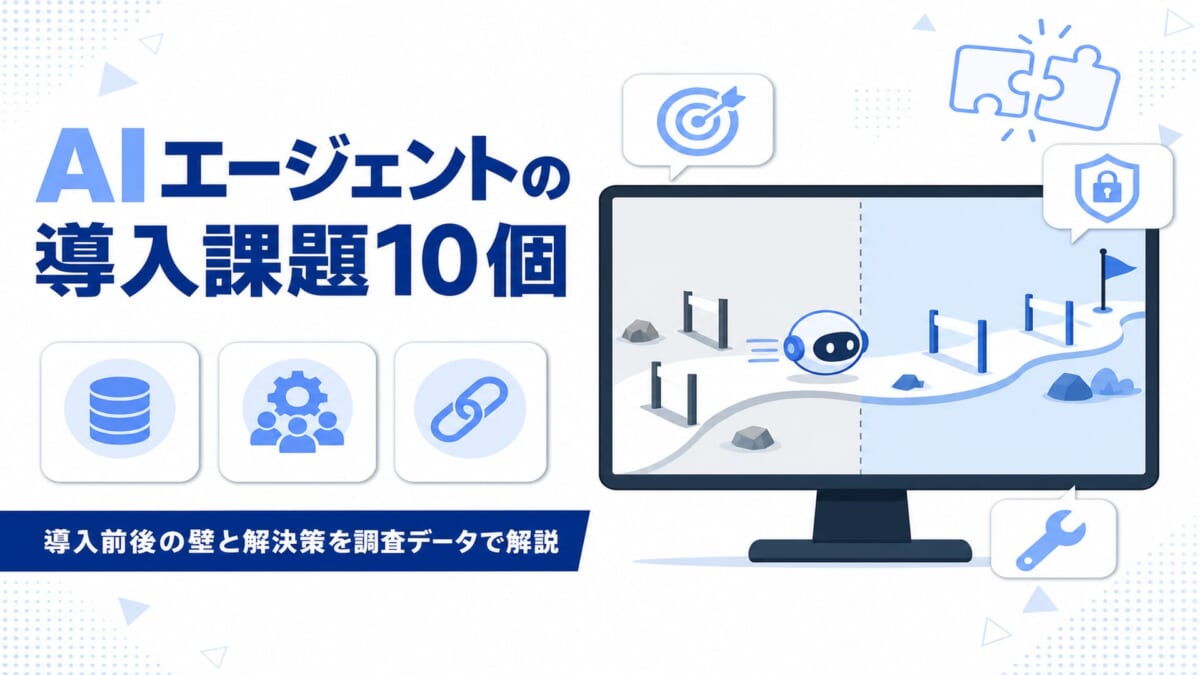
Most Japanese companies remain in the research or consideration stage, according to Yano's survey. The challenges differ by phase — purpose, data, and talent before adoption; integration, accuracy, and penetration after.
What to watch
Okta's survey found 34% of organizations apply security controls to AI equivalent to human access. Whether companies formalize agent governance before scaling will likely determine which projects survive.
WHO IT HITSJapanese corporate teams tasked with evaluating AI agents will likely find the most value in phase-specific planning data, particularly IT managers and DX promotion staff who must justify investments to executives using Gartner's cancellation forecast.
Summaries like this, in your inbox every morning.
The survey landscape reveals a sharp gap between interest and action. Yano Research Institute's 2025 survey found that while over 60% of Japanese companies express interest in AI agents, only 3.3% have moved to actual use, with 13.5% in consideration and 49.3% still gathering information. This gap suggests the barriers to adoption are substantial and not easily resolved by enthusiasm alone.
Grasys's survey (580 respondents at Google Cloud Next Tokyo '26) and JIPDEC's 2026 enterprise IT survey both point to a structural pattern: the obstacles companies face shift as they move from planning to operations. Before adoption, companies struggle to articulate what they want AI agents to do; after adoption, the difficulty becomes integrating agents with existing systems and keeping usage from concentrating among a few employees. Several Japanese companies have begun to address these challenges. Resonac Holdings standardized agents created on the front lines and rolled them out company-wide, reaching a 95% utilization rate about six months after introduction. Panasonic Connect tracked monthly unique user rates, reaching 61% for its ConnectAI assistant. GMO Internet Group combined tool subsidies with talent development, achieving a 71.4% business utilization rate.
Whether such success stories become the norm or the exception likely hinges on how companies handle governance. Okta's 2026 survey across seven countries found 58% of executives experienced AI-related security incidents in the past 12 months, yet only 34% of organizations applied the same security controls to AI as to human access. If that governance gap persists while agent deployments scale, Gartner's prediction of over 40% project cancellations by the end of 2027 may prove conservative — though the companies that build governance and measurement frameworks early could pull ahead of peers still stuck in the consideration stage.
Pick your industry and the AI tools you use, and get news related to your work every day.
Free · 30 seconds with Google · unsubscribe anytimeWhat is AIToday? →
Ask AI anything about this article. The AI reads this article, earlier AIToday articles, and Wikipedia, and cites its sources. Q&As are published on this page for other readers too.
Anthropic CEO Dario Amodei is reportedly targeting a pre-Thanksgiving IPO, even as Oura postpones its offering…

Huawei raised flagship prices by up to US$200, citing an average US$200 rise in per-unit manufacturing costs…

SpaceX stock rose 6.1% through 11 a.m

Airbnb CTO Ahmad Al-Dahle said about half of support tickets are now resolved purely by AI, 60% of code is AI-…

At Fortune's AIQ Summit, Booking Holdings CFO Ewout Steenbergen said hyperscalers spending hundreds of billion…
A Japanese edition of Machine Learning for High-Risk Applications (O'Reilly Japan, 2025) describes how Zillow'…