AIToday
RoboticsAI Business & IndustryTHE DECODERPublished: Aug 15, 2026, 19:00 JST5 min read

World Labs turns one robot task into thousands of simulated variants for training

World Labs turns one robot task into thousands of simulated variants for training

Key takeaway

  • World Labs has developed a system that transforms a single real-world robot task into thousands of simulated variations by changing lighting, object positions, and physical properties.

  • Control models trained entirely in simulation transferred successfully to real robots and performed multiple tasks without human intervention, demonstrating that simulation can accurately rank which model versions perform best—potentially eliminating the need for expensive real hardware testing during early development stages.

3 Key Points

  1. What happened

    World Labs developed a system that reconstructs a single real-world robot task into thousands of controlled variations by altering lighting, object position, physical properties, and camera angle. Control models trained entirely in simulation then transferred to real robots—including ALOHA (an open-source dual-arm platform from Stanford)—and ran for one hour across four additional robot platforms without human intervention, performing tasks like wrapping power cords and repositioning test tubes.

  2. Why it matters

    Robot deployment has been bottlenecked by the high cost and difficulty of collecting real-world training data. By validating that model rankings stay consistent between simulation and reality (tested on a two-handed cube handoff across different model types including GR00T N1.6 and π₀.₅), World Labs shows that simulation can replace expensive hardware tests for filtering weak model versions—letting teams reserve costly real robot testing for the most promising candidates.

  3. What to watch

    World Labs, founded in 2024 by AI researcher Fei-Fei Li, raised one billion dollars in venture capital to extend world models into robotics and science. The R2S2R engine is the first concrete application of that vision, though how well results transfer to more complex environments, other robot types, and less controlled everyday situations remains an open question.

In Depth

Read the full story

World Labs has developed a system called R2S2R that addresses a fundamental bottleneck in robot deployment: the need for vast amounts of diverse training data. Rather than requiring robots to learn from expensive, hard-to-control real-world experiences, the system captures a single real-world task—including the robots, sensors, environment, and task demonstrations—and reconstructs it as an interactive virtual world that behaves physically like the original.

The engine then generates thousands of controlled variations from that single task by systematically changing lighting conditions, object positions and counts, surrounding environment, physical properties like friction, and camera angles. To verify accuracy, World Labs runs the same action sequence in both simulation and reality side by side, comparing observations, object movements, and outcomes. The test tasks included rigid, movable, and deformable objects: cable routing, inserting an elastic cable end into a hole, and packing a box with both hands.

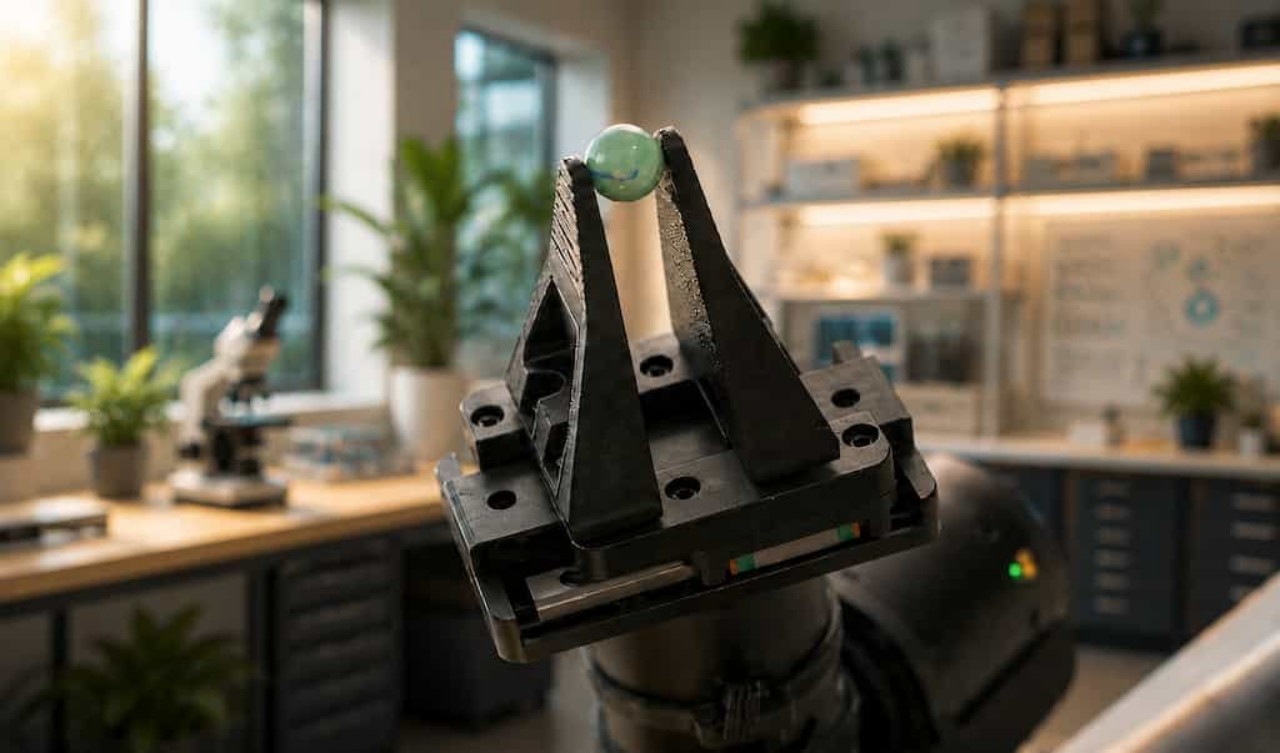
World Labs tested control models trained entirely in simulation on multiple robot platforms, including ALOHA, an open-source dual-arm design from Stanford that costs a fraction of commercial systems and has publicly available blueprints. According to the company, the models each ran for one hour across four additional robot platforms without any human intervention, performing tasks such as wrapping a power cord around a refrigerator with both hands and precisely repositioning test tubes or separating thin objects like markers and pencils from a dense jumble.

A critical validation came from testing whether simulation rankings of models match real-world performance. World Labs evaluated a two-handed cube handoff task using 2,000 simulated runs and 100 real runs per checkpoint across different model types, including GR00T N1.6 and π₀.₅, and across different training stages. The simulation reproduced both borderline cases where the robot barely grasped the cube by its edge and matching failed attempts. Across known and previously unseen cube positions, model rankings in simulation and reality remained largely consistent. This consistency suggests development teams can filter out weak model versions in simulation, reserving expensive hardware tests for the most promising candidates.

World Labs was founded in 2024 by AI researcher Fei-Fei Li with a mission to build models with spatial intelligence that understand the three-dimensional physical world. An early system generated walkable 3D environments from single photos. The company raised one billion dollars in venture capital to extend its world models into robotics and science, with the R2S2R engine now serving as the first concrete application of that vision in robotics. The company notes that its system is not tied to a specific control model or robot type, so a reconstructed world can be reused for new models and different robots. However, how well these results transfer to more complex environments, other robot types, and less controlled everyday situations remains an open question.

Context & Analysis

The core challenge World Labs identifies is not the difficulty of building robot control models but the sheer volume of diverse, real-world experience required for reliable deployment. Real-world data collection is expensive and inherently limited in the range of conditions it can cover—objects, lighting, failure states, and physical properties vary in ways that are costly to capture systematically. By combining generative world models with task-oriented simulation, World Labs addresses this bottleneck by taking a single recorded task and algorithmically generating thousands of controlled variations that a policy can use to learn generalization.

The company's approach differs from other simulation-focused methods in the field: it keeps simulation and policy separate, rather than tying predictions directly to control commands as World Action Models do, and it focuses on reconstructing physics-accurate virtual worlds rather than training purely from video as the Orca method does. The key validation is that simulation can serve a filtering function in robot development—weak models can be identified and discarded before expensive hardware time is spent, because model rankings in simulation correlate with rankings on real hardware. This finding parallels the autonomous driving industry, where Level 3 and Level 4 systems already train on a mix of real and simulated data.

World Labs frames scaling robot intelligence as a problem of scaling the worlds in which they learn. However, the company acknowledges that generalization to more complex environments, diverse robot types, and uncontrolled everyday situations remains an open question. The broader research community is also debating how world models should fit into robotics strategy, with multiple competing approaches and no yet-settled definition of what a world model fundamentally is.

FAQ

What robot platforms did World Labs test this system on?
One of the test platforms was ALOHA, an open-source dual-arm design from Stanford. The company also tested on four additional robot platforms, with models running for one hour on each without human intervention.
How does the simulation approach compare to real-world testing?
World Labs tested a two-handed cube handoff task, evaluating each checkpoint using 2,000 simulated runs and 100 real runs. The model rankings in simulation and reality stayed largely the same across different model types and training stages, including both known cube positions and previously unseen ones.
When was World Labs founded and how much funding has it raised?
World Labs was founded in 2024 by AI researcher Fei-Fei Li. The company raised one billion dollars in venture capital to extend its world models into robotics and science.

Get the latest Robotics news every morning

AI-summarized, only the topics you pick — one digest a day via Email, Slack, or Discord.

Free · takes 30 seconds · unsubscribe anytime

Ask AI

Ask AI anything about this article. Q&As are published on this page for other readers too.

Related Articles

Next articleObserve by Snowflake Launches Agent-Ready MCP Server and CLI

The AI news that matters, in one minute each morning.

Sign up free