What happened
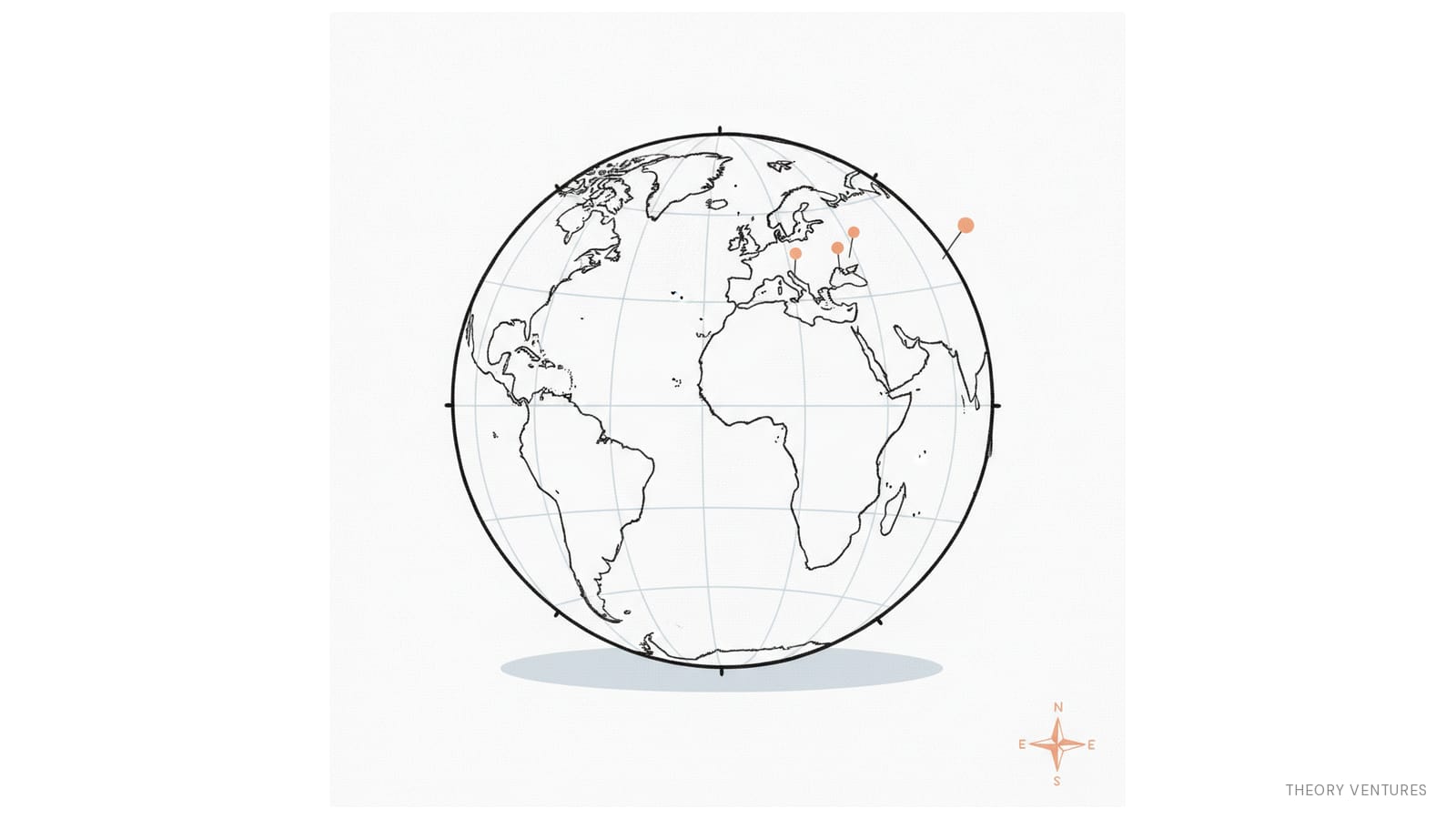
The Economist ran 25 frontier AI models through the World Values Survey—a questionnaire that has tracked moral beliefs across 100 countries since 1981—and plotted them on two axes: traditional-to-secular and survival-focused-to-self-expression. Models clustered in unexpected ways: Gemini 3.1 Flash Lite and Qwen 3.6 Flash sit as neighbors in self-expression; GPT-4o and DeepSeek R1 are near-twins despite training in different cities; DeepSeek R1 and DeepSeek V4 Flash, from the same lab, lie at opposite ends of the secular-to-traditional axis.
Why it matters
Current enterprise procurement checklists score price, latency, context window, and benchmark scores—but not worldview. For code generation and technical tasks, worldview is irrelevant. Once a model is used for business decisions in a specific market—marketing copy, user-behavior predictions, customer-support tone—its embedded values become a live input that must match the target demographic's expectations. The variance in the survey results suggests that choosing a model without considering its worldview may create a mismatch between the AI's responses and customer values.
What to watch
The post-training choices (such as alignment to UN principles, as Anthropic does with Claude) appear to override shared base training data. Common Crawl, which makes up 46% English, gives models a college-educated American online voice by default, yet different companies then reshape that foundation in divergent directions. How enterprises begin to incorporate worldview into procurement—or whether they ignore it—will determine whether AI alignment strategy becomes a procurement checkbox.
Summaries like this, in your inbox every morning.
The Economist's analysis reveals that lab of origin is a weaker predictor of AI worldview than training and post-training alignment choices. Common Crawl, which comprises 46% English text, establishes a baseline voice—college-educated American online discourse—but companies then diverge sharply in how they shape that foundation. Anthropic's alignment of Claude to principles from the UN Declaration of Human Rights exemplifies one direction; the fact that Grok emerges as a "traditional independent" in the survey suggests others have taken markedly different paths. The near-identity of GPT-4o and DeepSeek R1 despite their geographic separation underscores that shared training infrastructure and similar labeling practices can override national origin.
Currently, enterprise AI procurement remains blind to these differences. Every RFP focuses on price, latency, context window, and benchmark scores—measurable, fungible attributes. Worldview is treated as external to the evaluation, yet the survey results suggest it is highly variable across the frontier models that enterprises are actively deploying. The article positions this as a potential blind spot: for transaction-level tasks (code generation, image classification), worldview is indeed irrelevant; but for decision-support, customer-facing communication, and market-specific applications, the AI's embedded values may create friction or advantage. Whether enterprises will begin to consider worldview as a procurement criterion—or continue to ignore it—remains an open question.
Pick your industry and the AI tools you use, and get news related to your work every day.
Free · 30 seconds with Google · unsubscribe anytimeWhat is AIToday? →
Ask AI anything about this article. The AI reads this article, earlier AIToday articles, and Wikipedia, and cites its sources. Q&As are published on this page for other readers too.
Chunghwa Telecom president Rong-shy Lin said the shift from conversational AI to autonomous AI agents is resha…
Apple and Meta said they would jointly release a new open-weight AI model designed to run on high-end Macs, ai…
A writer and entrepreneur opened his daily to-do list and found 156 items, and concluded that an AI assistant…
A Zenn contributor sorted AI use into three modes — AI as an assistant, AI running alongside people, and AI th…

The walkthrough points the CLI at a local mock via the ANTHROPIC_BASE_URL environment variable
A non-engineer operator says one person ships four smartphone apps on Google Play, three on the App Store, wit…

