What happened
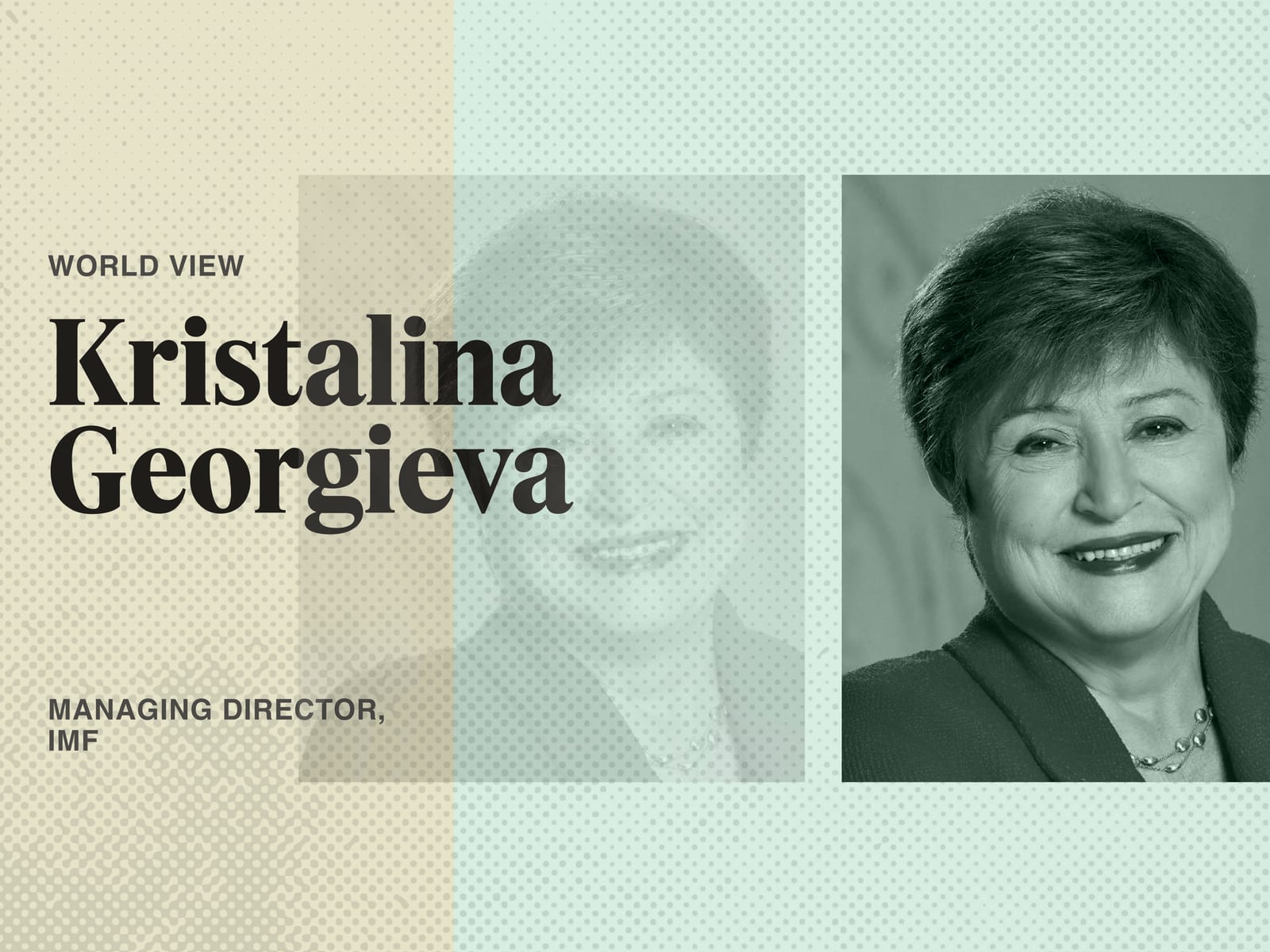
At Semafor's The Next 3 Billion on Sept. 22, IMF chief Kristalina Georgieva said the war's negative supply shock and AI's positive demand shock have so far balanced each other, holding the IMF's 2026 growth forecast at 3%.
Why it matters
She warned that resilience cannot be taken for granted, that higher refined-product prices could push inflation up and force central banks to raise rates, and that with advanced-economy debt at historic highs, the rising interest payments could suffocate governments' ability to help people with the high cost of living.
What to watch
Georgieva said an AI enthusiasm cooldown that pulls money out of massive investments could put the world 'in real trouble,' and she flagged both the risk of AI widening inequality in developing countries and a potential future crowding out of Treasury borrowing, though she said 'not yet.'
WHO IT HITSThe warning lands on finance ministers and central bankers in advanced economies carrying record debt, and on emerging-market borrowers whose hard-earned spread gains are being washed away as interest rates rise. It also matters to investors in AI-related companies and Asian supply-chain economies like Malaysia, Thailand and Singapore that Georgieva said are 'plugged into' the boom.
Summaries like this, in your inbox every morning.
Georgieva's remarks, made onstage at Semafor's The Next 3 Billion on Sept. 22, frame the current moment as two opposing forces that have cancelled each other out. The Middle East war is a negative supply shock pulling the economy down; AI investment is a positive demand shock pushing it up, which is why the IMF's 2026 growth forecast sits at 3%, exactly where it was 18 months ago, with the 2027 outlook actually improved.
She credits this to market adaptation — the United States, Norway and some African countries raising oil production rapidly, Saudi Arabia and the Emirates finding new routes to market, and China drawing on reserves rather than buying. But she treats that resilience as contingent, drawing a direct line from winter energy demand to refined-product prices, higher inflation, and central bank rate rises. The complication is record advanced-economy debt: higher rates mean higher interest payments, which she says suffocates governments' ability to help with the cost of living.
On AI, Georgieva's concern cuts two ways. The enthusiasm is grounded in profitable AI companies and an Asian supply chain that has globalized what might otherwise be a Silicon Valley bubble — a development she said both stabilizes and spreads the risk. Whether the balancing act holds depends on whether the energy shock ends before rates bite, and on whether the AI investment cycle keeps its funding. For heavily indebted emerging markets, she said rising rates are washing away hard-earned fiscal gains — 'the punishment for somebody else's sins.'
For example, today's edition would include:
AI-summarized, only the topics you pick: one digest a day via Email, LINE, or Slack.
Free · 30 seconds with Google · unsubscribe anytimeWhat is AIToday? →
Ask AI anything about this article. The AI reads this article, earlier AIToday articles, and Wikipedia, and cites its sources. Q&As are published on this page for other readers too.
Instinct, officially Spear Street Technology Inc., announced a $1 billion Series C joined by Sequoia Capital…

Modulate raised $25 million, led by Future Ventures with returning investors Hyperplane and Lakestar, bringing…

On theCUBE Pod, Dave Vellante said CoreWeave disclosed that 70% of its revenue came from its top three custome…

Google Cloud revenue hit $24.77 billion, up 82%
MGX, an Abu Dhabi-backed technology investor, is looking for data center assets in the Asia Pacific
Meta is launching the Meta Enterprise Platform, a new business unit selling the Muse agent, Meta Business Agen…