AIToday

Pangram raises $9M for AI content detection as slop floods the web

TechCrunch AI2h agoSend on LINE
Pangram raises $9M for AI content detection as slop floods the web

Key takeaway

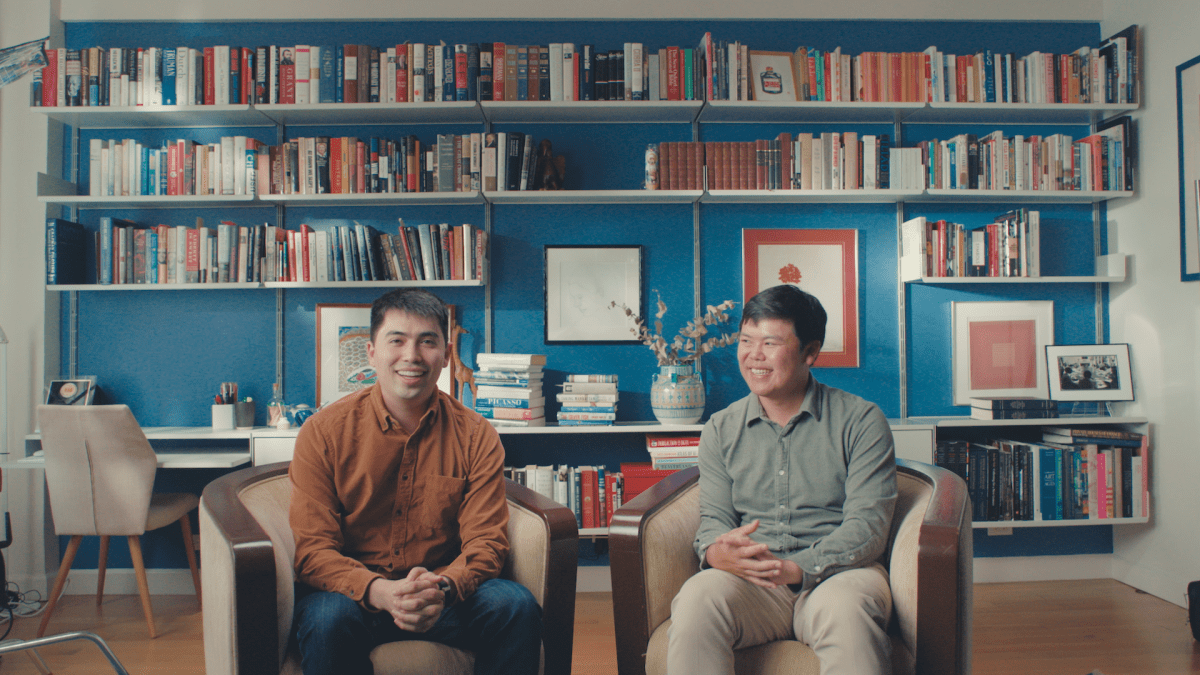
Pangram, an AI detection startup founded by Stanford graduates Max Spero and Bradley Emi, raised $9 million(約14億円) to tackle the flood of AI-generated content online. The company launched Pangram 4, a text detection model claiming over 99% accuracy at identifying AI-assisted or fully AI-written content, plus an AI image detector. As institutions from arXiv to law firms face consequences from unreviewed AI output, demand for detection tools is growing; Pangram competes with rivals like GPTZero and Originality.ai, and already counts Substack, Quora, and universities among its API customers.

Summaries like this, in your inbox every morning.

Sign up free →

3 Key Points

  • What happened

    New York-based AI detection startup Pangram raised $9 million(約14億円) led by Menlo Ventures, alongside the launch of Pangram 4 (a text detection model) and Pangram Image (an AI image detector available in research preview). The text model claims over 99% accuracy at finding AI-assisted writing and mixed human-AI content.

  • Why it matters

    As AI-generated content spreads across the internet—from SEO spam to academic papers to courtroom cases—institutions are starting to enforce rules against undisclosed AI use. arXiv introduced a one-year submission ban for papers with unreviewed LLM output, and lawyers have faced sanctions for using AI-generated citations. For publishers, platforms, recruiters, and schools, detection tools help distinguish trustworthy human-created content from AI slop.

  • What to watch

    Pangram offers a $20-per-month web subscription and Chrome extension that labels posts in real time on X, LinkedIn, Substack, Reddit, and Medium. The company also licenses its technology via API to Substack, Quora, schools, publishers, and recruiters. The image detector will be released more widely in the coming weeks.

In Depth

Pangram, founded about two years ago by Stanford AI and machine learning graduates Max Spero and Bradley Emi, tackles a problem that intensified after ChatGPT's launch: the difficulty of distinguishing human-generated content from AI-generated text and images. The startup just closed a $9 million(約14億円) funding round led by Menlo Ventures, with participation from Haystack, ScOp, Script Capital, and Cadenza, while simultaneously launching two new detection tools: Pangram 4 (a next-generation text detection model) and Pangram Image (an AI image detector).

Pangram's text detection model claims over 99% accuracy at identifying AI-assisted writing and mixed human-AI content, and can detect attempts to evade detection through AI humanizer programs. The model works by training on tens of millions of known human documents, then creating what Spero calls a "synthetic mirror" for each—replicating the topic, length, and tone but written by a frontier LLM. The detector learns the stylistic differences and choices that AI makes consistently, allowing it to identify AI-generated content with high confidence without relying on copy-paste metadata or hidden watermarks. Spero emphasized that the tool is designed not just to catch fully AI-written content, but to measure levels of AI assistance; he believes disclosure of AI use is what matters, not whether AI was involved at all.

The timing of Pangram's launch reflects real institutional pressure. arXiv introduced a new enforcement policy this year that can trigger a one-year submission ban for papers containing evidence that authors failed to review LLM output—such as hallucinated references or meta comments like "Would you like me to make any changes?" Similarly, lawyers have faced sanctions and fines for submitting fake citations generated by ChatGPT to courts. Canadian politician Rob Oliphant earned ridicule after reading an AI-generated prompt aloud in a speech to lawmakers. These incidents have sparked demand for detection tools across schools, universities, publishers, recruiters, and platforms seeking to verify content authenticity.

Users can access Pangram via a $20-per-month subscription on the web or through a Chrome extension that automatically labels posts in real time on X, LinkedIn, Substack, Reddit, and Medium, providing a feed health score showing the percentage breakdown of human versus AI content on their screen. The company also offers API access; Substack recently integrated Pangram's technology to show readers which newsletter authors use AI. Other API customers include Quora, schools and universities, publishers and agents, and recruiters. The AI image detector, which promises to spot AI-generated images across different AI models—unlike watermark-based checks from OpenAI or Google DeepMind that mostly detect their own output—is currently available only in research preview; Pangram plans to release it more widely in the coming weeks. The image model works by analyzing pixel-level distributions to learn subtle statistical differences between real photos and AI-generated images, and can even detect an AI image appearing inside a real-world photo. Pangram competes with other AI detection startups including Winston AI, Originality.ai, Copyleaks, and GPTZero, each building its own detector to capture the same growing demand.

Context & Analysis

Pangram's $9 million(約14億円) fundraise reflects a growing market need triggered by the explosive spread of AI-generated content online. Since ChatGPT's launch, the internet has flooded with AI-generated SEO spam, bot-written social media posts, and what co-founder Max Spero describes as "LLM-powered Russian disinformation campaigns and UAE-influenced campaigns on Twitter." The consequences are no longer confined to embarrassment: lawyers have faced sanctions and fines for submitting fake citations created by ChatGPT, and academic institutions like arXiv have begun enforcing penalties—including one-year submission bans—for papers containing evidence of unreviewed LLM output.

The company's detection approach differs from watermark-based systems offered by OpenAI or Google DeepMind. Instead, Pangram trains its machine learning model on tens of millions of known human documents, then creates synthetic counterparts written by frontier LLMs (keeping the same topic, length, and tone) to learn stylistic differences. For text, the model can distinguish between fully AI-generated content and mixed human-AI work, addressing Spero's belief that AI assistance is acceptable as long as disclosed. For images, the system analyzes pixel-level distributions to detect AI-generated imagery even when embedded within real-world photos.

Pangram faces competition from established players like GPTZero, Originality.ai, Copyleaks, and Winston AI, all pursuing similar demand. Yet Pangram's early adoption by high-profile platforms—Substack has integrated its technology to flag AI-written newsletters—and its reach into schools, universities, and recruiters suggest the market is bifurcating by use case rather than consolidating around a single winner.

FAQ

How much does Pangram cost and where can I use it?
Pangram offers a $20-per-month subscription on the web and a Chrome extension that automatically labels posts in real time on X, LinkedIn, Substack, Reddit, and Medium. The company also provides its technology via API to publishers, schools, recruiters, and platforms like Substack and Quora.
How accurate is Pangram's AI text detector?
Pangram says the text detection model is over 99% accurate at finding AI-assisted writing and mixed human-AI content. According to founder Max Spero, roughly one in 10,000 human documents are incorrectly labeled as AI with Pangram's model.
When will the AI image detector be available?
The AI image detection model is only available via research preview for now; Pangram plans to release it more widely in the coming weeks.

Get AI news like this every morning

AI-summarized, only the topics you pick — one digest a day via Email, Slack, or Discord.

Free · takes 30 seconds · unsubscribe anytime

Discussion

No discussion yet for this article

Stay ahead with AI news

Get curated AI news from 200+ sources delivered daily to your inbox. Free to use.

Get Started Free

Free · takes 30 seconds · unsubscribe anytime

