What happened
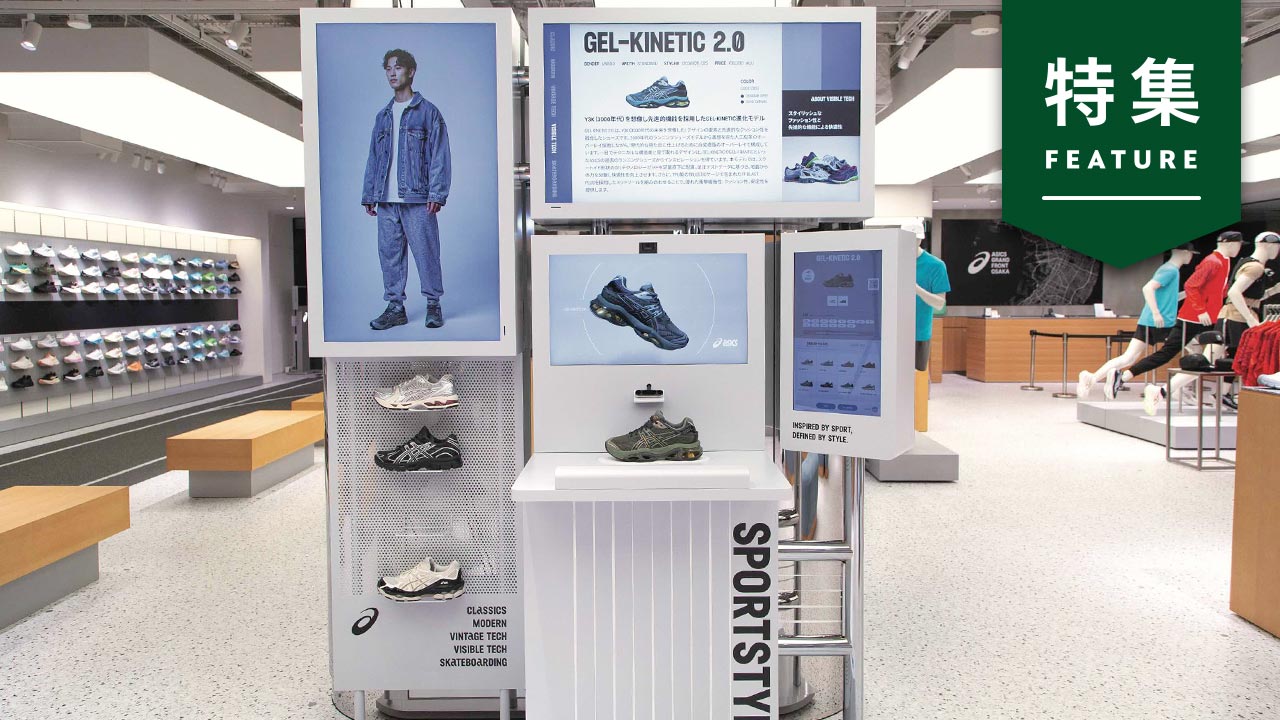
ASICS built a generative AI system that creates on-foot styling images of its shoes without a photo shoot or model, and is also using generative AI to explore design variations. In August 2026 it introduced the 3D ShoeSync Viewer at its directly operated store ASICS GRAND FRONT OSAKA, where an AI camera identifies a shoe placed on a fixture and shows its specs, technology, on-foot image and related models at once.
Why it matters
Customers can see what a shoe looks like when worn without the time and cost of a shoot or model, and the same AI is being applied to design work, so it appears to touch both storefront sales and product development.
What to watch
The value hinges on whether the AI camera correctly identifies products placed on the fixture and whether the generated on-foot images are convincing enough for shoppers. Watch how the viewer performs at ASICS GRAND FRONT OSAKA, its first directly operated store deployment.
WHO IT HITSRetail staff and store planners at branded shoe shops, who could show shoppers an on-foot look without staging a shoot, and apparel product designers who use generative AI for early design variations. Marketing and visual-merchandising teams that commission model photography are the roles most directly affected.
Summaries like this, in your inbox every morning.
ASICS's move sits at the meeting point of two jobs that normally need separate budgets: showing shoppers how a shoe looks on a foot, and generating enough design options for product teams to choose from. The 3D ShoeSync Viewer, installed at the directly operated ASICS GRAND FRONT OSAKA store in August 2026, handles the first by placing a shoe on a fixture and letting an AI camera identify it, then displaying specifications, technology, an on-foot image and related models together.
The article frames this against a broader shift it calls "vibe design," and places ASICS's example in a series that also looks at how the designer's role is changing and at design experimentation with Codex. Read that way, the store installation is one visible output of an approach the company is applying upstream as well, since it is also using generative AI to study design variations.
What the outcome hinges on is likely to be practical: whether the AI camera reliably recognizes whatever product is placed on the fixture, and whether the generated on-foot images are good enough that a shopper trusts them when deciding on a style, since these images stand in for an actual photo shoot.
For example, today's edition would include:
AI-summarized, only the topics you pick: one digest a day via Email, LINE, or Slack.
Free · 30 seconds with Google · unsubscribe anytimeWhat is AIToday? →
Ask AI anything about this article. The AI reads this article, earlier AIToday articles, and Wikipedia, and cites its sources. Q&As are published on this page for other readers too.
Applied Materials plans to invest US$5b in India over the next decade, building a 140 acre semiconductor resea…

The Motley Fool's comparison concluded ASML is the better buy over Qualcomm, citing its EUV machine monopoly a…

Microsoft launched a redesigned Copilot super app combining chat, coding tools, and a new Autopilot agentic fe…

Investor's Business Daily says AI memory chip stocks Micron Technology (MU), Sandisk (SNDK), SK Hynix (SKHY)…
Broadcom introduced Symantec CBX, a tool that uses attack-trained AI to trace and predict attacks

In a Sept. 27, 2026 Motley Fool video, Rick Orford compared GE Vernova and Bloom Energy as two routes to the A…