What happened
Bernstein analysts say AI is creating a memory bottleneck, with demand expanding from high-bandwidth memory (HBM) into conventional DRAM, NAND flash, and storage. They rate Samsung Electronics, SK hynix, Micron, SanDisk, Seagate, and Western Digital as Outperform, while Kioxia is rated Underperform.
Why it matters
Different AI workloads—training, inference, retrieval-augmented generation, and agentic AI—place different demands on memory. In inference, the "decode" stage is memory-bound and relies on a key-value (KV) cache, which could require more memory than model weights in large deployments, potentially limiting how many users an AI service can support.
What to watch
Emerging memory tiers, including CXL memory, Nvidia's "Storage Next" initiative, and CMX context storage, aim to balance performance, capacity, and cost. Bernstein notes that technical hurdles remain high for high-bandwidth flash, which seeks to combine HBM-like bandwidth with NAND's greater capacity and lower cost.
Summaries like this, in your inbox every morning.
The article highlights a shift in AI's memory demands, moving beyond the initial focus on high-bandwidth memory (HBM) to include conventional DRAM, NAND flash, and storage. This is driven by the different requirements of AI workloads—training, inference, retrieval-augmented generation, and agentic AI—each placing unique pressures on the memory stack. For instance, while training is compute-intensive and relies heavily on HBM, the decode stage of inference is memory-bound, with KV cache sizes growing with context length and concurrent users. This could limit service capacity, a key concern for AI providers.
The emergence of new memory tiers, such as CXL memory and Nvidia's "Storage Next," reflects an industry effort to manage performance, capacity, and cost. However, technical challenges remain, particularly for high-bandwidth flash, which aims to bridge the gap between HBM's bandwidth and NAND's capacity. Bernstein's ratings suggest confidence in established memory manufacturers, but the dynamic nature of AI workloads means investment opportunities will depend on how these technologies evolve.
Pick your industry and the AI tools you use, and get news related to your work every day.
Free · 30 seconds with Google · unsubscribe anytimeWhat is AIToday? →
Ask AI anything about this article. The AI reads this article, earlier AIToday articles, and Wikipedia, and cites its sources. Q&As are published on this page for other readers too.
Supermicro Computer appointed Mark Long as chief financial officer, bringing an experienced technology finance…
Holtek Semiconductor unveiled its 2026 product roadmap on October 15, focusing on four core areas: smart prote…
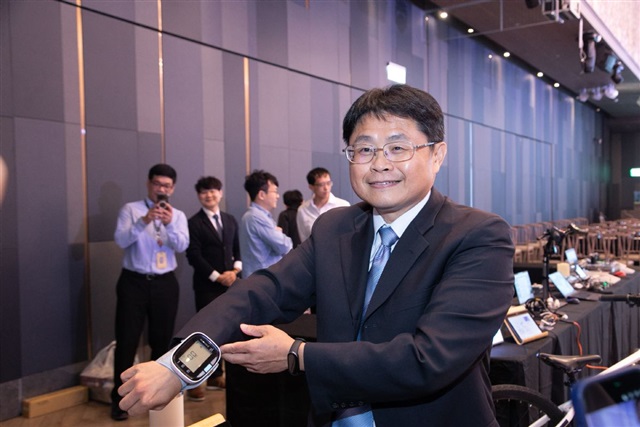
TSMC reported about NT$763.1b in Q3 net profit and confirmed that demand for advanced processors is running ah…

Nvidia-backed CoreWeave steadied Thursday after a sharp slump, as investors worried about the debt financing b…
Weathernews said on October 15 it implemented its own AI weather-forecasting model, AI-Nowcast, in its Weather…

TOPPAN Holdings and Keio University ran a quantum-computer and generative-AI proof-of-concept from February 1…