What happened
Testing OpenWorker with local Qwen2.5 models, the author saw the 7B, 14B and 32B finish the README brief task 1/5, 3/5 and 0/5 times respectively.
Why it matters
The approval gate refused unattended writes and blocked out-of-workspace writes as documented, so safety held, but agents still stalled on basic task sequencing.
Summaries like this, every morning.
The test was set up to separate two questions that are easy to conflate: whether the guardrails work, and whether the model underneath can do the job. On the first, OpenWorker behaved as its README describes. In ask mode with no terminal attached, a write was refused before execution and the audit database recorded the proposal, the denial and the reason. Turning approvals off let the same call run, still logged. And even with approvals bypassed, an attempt to write an absolute path outside the workspace was stopped by what the source calls a floor, with the denial appearing in the audit log rather than in the refused counter, which only counts declined approval cards. A detail worth noting for anyone pairing OpenWorker with Ollama: the tool switches to Ollama's native chat endpoint to set context length, because the OpenAI-compatible API has no field for it and the default on machines under 24GiB of VRAM is 4,096 tokens — less than the roughly 7,000 tokens of system prompt and tool definitions, which would otherwise be truncated. On the second question, the results ran against intuition. The 14B model succeeded three times with a clean list-files, read-both-notes, write-file sequence; the 32B, the largest the test machine could run, succeeded none of five times, typically by locking onto a guessed filename, finding nothing, and asking the user where the files were. The failures across models were procedural: narrating an action and ending the turn, forgetting to save, abandoning a search. Because every run was marked completed regardless, the author notes that unattended automation needs a check on the artifact itself.
Pick your industry and the AI tools you use, and get news related to your work every day.
Free · 30 seconds with Google · unsubscribe anytimeWhat is AIToday? →
Ask AI anything about this article. The AI reads this article, earlier AIToday articles, and Wikipedia, and cites its sources. Q&As are published on this page for other readers too.
Tricentis's Quality Transformation Report 2026 found 60% of companies globally and 65.6% in Japan deploy untes…
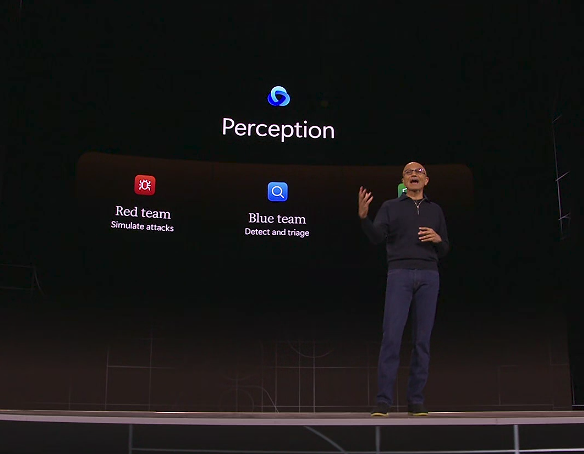
Microsoft introduced Copilot Workspaces, a collaborative space in its Frontier early-access program where Word…
Earlier in November, Meta chief AI officer Alexandr Wang shared an AI-generated clip on Instagram promoting Mu…
At a roundtable after his Microsoft Ignite keynote at San Francisco's Chase Center, Satya Nadella said he is "…
On Tuesday's earnings call, interim CEO Colette Kress said Nvidia remains committed to open source AI, citing…
AWS published guidance that routes workflow steps through three questions—can a rule check success, can a mode…