
Billionaire investor Stanley Druckenmiller sold SanDisk shares and bought Taiwan Semiconductor, Alphabet, and Amazon in Q2. All three are positioned to benefit from AI infrastructure spending.
Amazon and Alphabet each plan $200 billion in capital expenditures this year for data centers; TSMC supplies chips for that demand.
The article contends growth from these investments hasn't yet hit company finances, leaving room for gains.
What happened
Billionaire Stanley Druckenmiller's Duquesne Family Office sold some SanDisk stock in Q2 and bought shares in Taiwan Semiconductor, Alphabet, and Amazon. He increased his TSMC stake by 19%, making it Duquesne's second-largest holding; Amazon now occupies nearly 3% of the portfolio; Alphabet was a new addition at 2.75%.
Why it matters
The three AI stocks Druckenmiller bought are benefiting from the massive capital spending on AI infrastructure. Both Amazon and Alphabet plan to spend at least $200 billion on capital expenditures this year, primarily for new data centers to run AI workloads. Taiwan Semiconductor, as the world's largest logic chip producer, will capture demand from increased AI computing. The article states that the growth from these investments hasn't yet begun impacting the companies' finances, suggesting further upside.
What to watch
Portfolio filings like these become public no later than 45 days into each quarter via Form 13-F. Druckenmiller made these moves in Q2; the article notes the moves occurred at least a month and a half before publication, so the timing of when actual returns materialize from AI capex deployment will be important to monitor.
Ask the AI about this article →
Druckenmiller's trades reflect confidence in companies positioned to benefit from AI infrastructure expansion. Taiwan Semiconductor is the clearest play: as the world's largest logic chip producer, it will capture chip demand from any increase in AI computing. Amazon and Alphabet both sit at the heart of the cloud computing arms race—both announced plans to spend at least $200 billion on capital expenditures this year, primarily for data center construction and equipment to handle AI workloads. The article emphasizes that the financial impact of these massive investments has not yet begun to flow through the companies' earnings, which underpins why Druckenmiller might view them as undervalued on a forward basis. His shift from SanDisk—which had already posted strong gains—to these three positions suggests he is reallocating gains into stocks he views as better positioned for the next phase of AI-driven growth.
For example, today's edition would include:
AI-summarized, only the topics you pick — one digest a day via Email, Slack, or Discord.
Free · takes 30 seconds · unsubscribe anytimeWhat is AIToday? →
Ask AI anything about this article. Q&As are published on this page for other readers too.
Israeli startup DataAgent Ltd

Taoyuan is positioning itself as a northern hub for AI data centers (AIDC), citing the Tatan area and an LNG c…
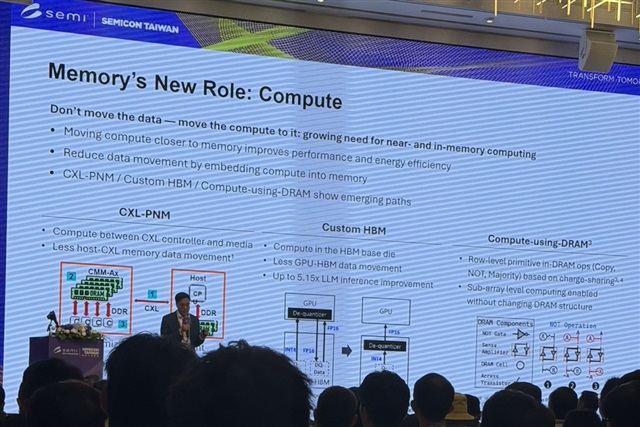
SK Hynix presented a custom HBM concept at SEMICON Taiwan 2026, where compute functions are placed in the base…
The U.S. Department of Defense announced on August 31 that it has deployed ChatGPT Mil, a customized version o…

Nvidia reported earnings that were both remarkable and boring, reflecting its focus on avoiding a consolidated…

Anthropic has agreed to a $35bn cloud-computing contract with Lambda, a Nvidia-backed cloud provider