
What happened
Snowflake created an internal semantic layer—a standardized data interface sitting between raw tables and downstream tools—to give AI agents and human analysts consistent definitions of metrics and dimensions. In July 2025 alone, over 400 distinct internal users ran more than 5,400 queries through the product data science agent using this layer; across all teams, over 5,600 employees ran over 320,000 queries using the broader semantic layer.
Why it matters
Without a shared semantic foundation, the same business question (e.g., "What is an active customer?") yields conflicting answers across different tables and metric definitions, forcing data science teams to manually validate every query. A semantic layer solves this by encoding business logic once—eliminating the bottleneck of context clarification and letting AI agents execute queries faster and at lower token cost. In AtScale's benchmark, adding semantic context raised text-to-SQL accuracy from 20% to more than 90% across 40 business questions.
What to watch
Snowflake's semantic views support materialization (pre-aggregation of metric and dimension combinations) to reduce query latency, and they integrate with Apache Ossie (incubating), a vendor-neutral open standard for semantic models, allowing portability across tools and platforms.
Summaries like this, in your inbox every morning.
Snowflake's challenge mirrors a universal data problem: as enterprises accumulate millions of data sources and petabytes of raw telemetry, the definitions of business concepts diverge across teams and tools. A single question—"What is an active customer?"—can be answered three different ways depending on which table and metric definition is consulted, forcing humans to manually validate every query before trusting the result. This context bottleneck is amplified when AI agents enter the picture, because new metrics and data sources are built faster than analysts can review them, widening the information gap between what an agent queries and what a dashboard shows.
Snowflake's approach—encoding business logic in a semantic layer that sits between raw tables and downstream consumers—standardizes the data flow. All tools (dashboards, BI interfaces, AI agents) see the same definitions of metrics, dimensions, and their relationships. The body emphasizes two specific gains: AI agents no longer waste time finding and sampling raw sources, and they consume fewer tokens when metrics are pre-aggregated. The July 2025 usage figures (5,400+ queries through one product agent; 320,000+ queries company-wide) suggest the layer has achieved internal adoption at scale, though the body does not state whether these figures represent growth from a prior period.
A secondary win is governance and interoperability. By versioning the semantic layer using dbt (data build tool) and applying continuous integration disciplines, Snowflake treats semantics like production code. The announcement that semantic views comply with Apache Ossie (an incubating vendor-neutral standard) signals an effort to prevent lock-in, positioning the semantic layer as a portable foundation rather than a proprietary API.
Pick your industry and the AI tools you use, and get news related to your work every day.
Free · 30 seconds with Google · unsubscribe anytimeWhat is AIToday? →
Ask AI anything about this article. The AI reads this article, earlier AIToday articles, and Wikipedia, and cites its sources. Q&As are published on this page for other readers too.
In early October 2026, venture capitalist Paul Kedrosky called Oracle financially exposed to an AI downturn, p…

Meta introduced Muse Wonder and Muse Wonder Full, calling them its most capable models for personal and profes…
Analysts frame Ciena as a prime AI infrastructure beneficiary, citing aggressive cloud provider and neo-scaler…

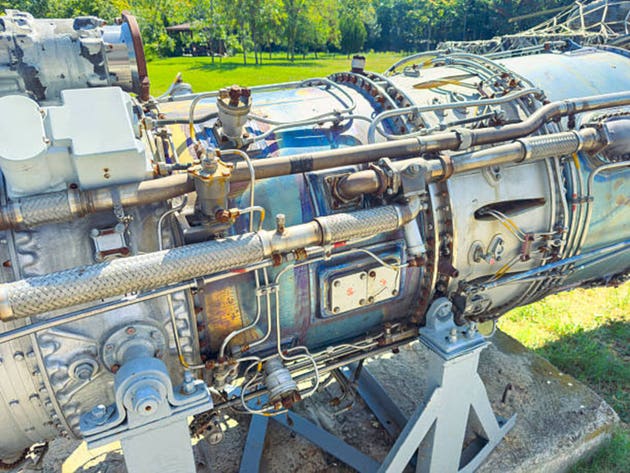
GE Aerospace, Shield AI and Poland's WZL-2 are planning a partnership for fighter maintenance
BofA analyst Tal Liani double-upgraded Salesforce to buy from underperform and set a price target of 285, as t…
Shield AI is taking GE Aerospace deeper into AI's most unusual battleground, according to Benzinga