What happened
A Fortune commentary proposes "Innovation Accounts" modeled on Trump Accounts, seeding adults with $5,000 in a tech-stock index; a $5 billion pilot could fund 1 million accounts.
Why it matters
The proposal argues that owning the index lets ordinary adults share in AI's gains, not just its disruptions — though the body notes such returns are not guaranteed.
Summaries like this, in your inbox every morning.
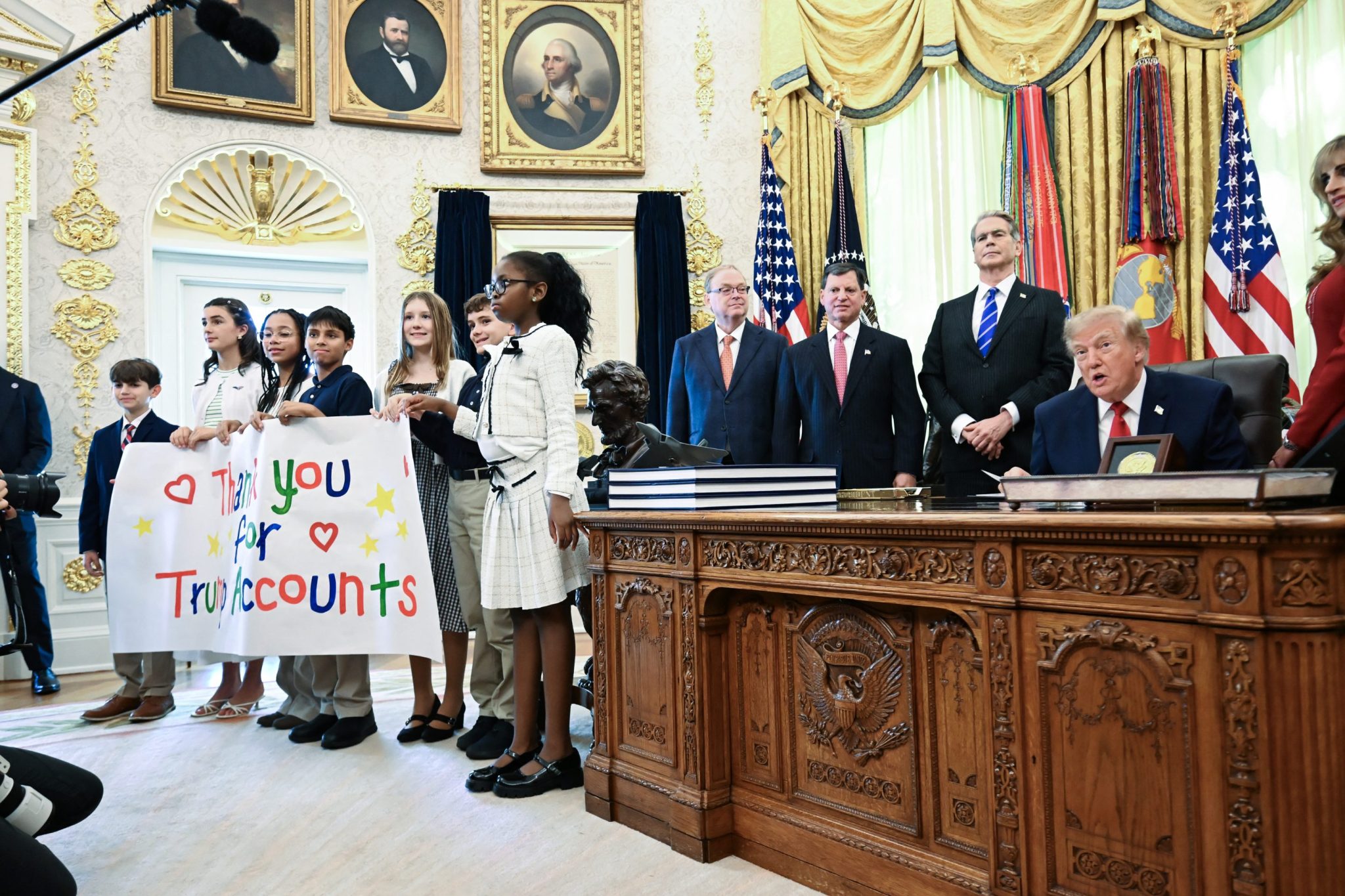
The commentary positions Innovation Accounts as an extension of something already law rather than a novel experiment. Trump Accounts, created under the One Big Beautiful Bill Act, give children born from 2025 through 2028 a $1,000 government-funded stake in the stock market, and Alaska's Permanent Fund has paid residents an annual dividend from oil wealth for decades. The proposal borrows that architecture and points it at adults, with a private-sector asset manager investing under government oversight and participants able to cash out gains at set intervals.
It also sits alongside a parallel debate over who should hold AI's upside. OpenAI has reportedly floated giving the government up to a 5% stake in the company and suggested other leading AI companies do the same, and both President Trump and progressive Democrats have floated public ownership stakes in AI companies. The commentary rejects that route on the grounds that governments make poor stock-pickers, arguing individuals should own the upside directly. The design question it flags as hardest is eligibility: a universal $1,000 for every adult over 18 would cost roughly $270 billion, while limiting it to households with wealth under $500,000 cuts that to $190 billion, and targeting by sector unemployment, income or geography would direct money first to the workers AI disrupts most.
The stated motivation is a gap in who benefits. The commentary notes that AI is fueling unprecedented growth and wealth creation, yet many citizens don't own that innovation and so miss out on its profits, and it warns the gap is likely to widen as AI scales. Its own framing concedes the limits: an extra $6,000 or $29,000 in gains over a decade won't replace a lost job, and the Nasdaq-100 isn't guaranteed to deliver 21% returns each year for a decade going forward. The pitch is therefore less a safety net than a balance-sheet buffer — capital to retrain, start a business, or navigate what comes next.
Pick your industry and the AI tools you use, and get news related to your work every day.
Free · 30 seconds with Google · unsubscribe anytimeWhat is AIToday? →
Ask AI anything about this article. The AI reads this article, earlier AIToday articles, and Wikipedia, and cites its sources. Q&As are published on this page for other readers too.
TSMC posted record third-quarter revenue of $46.7 billion, up 41% year over year, and guided fourth-quarter re…

A financial disclosure shows President Trump's third-party-managed brokerage accounts made over 500 trades in…
A Fortune commentary argues AI has made speed worthless since anyone can generate strategy, code, or creative…

Sterling plans to deploy BitRipple's LT3 GPU transport on AMD GPU platforms for its federal, public sector and…
Google and Unity Software announced Unity Spark, an AI game creation platform blending Google's AI research an…
Adam Back pointed to Anthropic's junk credit rating and argued that Bitcoin serves as the hurdle rate, using t…