
What happened
Apollo chief economist Torsten Slok reports that Philippine call center employment nearly doubled to 2 million from 2016 through 2025, rising every year. Meanwhile, unemployment in the Philippines fell from 9% to about 5% between 2021 and July 2026, and in India from around 7% to 6%.
Why it matters
Slok argues this contradicts the idea that AI is displacing white-collar workers, citing Jevons paradox: as AI makes call center work cheaper and faster, companies buy more of it. The Brookings Institution estimates 86% of customer service tasks have high automation potential, yet employment keeps growing.
What to watch
A 2023 study found an AI assistant boosted call center agent productivity by 14% per hour, suggesting AI may increase demand for these roles. Some experts, however, note AI still struggles with complex issues and that some companies value human interaction for brand reasons.
Summaries like this, in your inbox every morning.
The data from Apollo chief economist Torsten Slok highlights a paradox in the AI labor debate. While many expect AI to replace white-collar jobs, the Philippine call center industry has grown steadily, nearly doubling to 2 million employees from 2016 to 2025. Unemployment rates in both the Philippines and India have declined, suggesting that AI has not yet displaced offshore workers at scale. This aligns with historical patterns like Jevons paradox, where efficiency gains lead to increased demand rather than reduced consumption.
Some economists believe AI will continue to boost productivity and employment. A 2023 study found that AI tools increased call center agent productivity by 14% per hour, and earlier research showed AI translation boosted eBay exports. However, experts also point out limitations. AI may not handle complex issues well, and humans can experience cognitive overload. Some companies deliberately seek human agents for brand differentiation, offering a more personal touch.
The debate extends beyond call centers. A decade ago, AI pioneer Geoffrey Hinton predicted radiologists would be replaced, but the number of radiologists in the U.S. has actually risen by 10%. This suggests that AI might augment rather than replace human labor in many fields, but the long-term trajectory remains uncertain.
Pick your industry and the AI tools you use, and get news related to your work every day.
Free · 30 seconds with Google · unsubscribe anytimeWhat is AIToday? →
Ask AI anything about this article. The AI reads this article, earlier AIToday articles, and Wikipedia, and cites its sources. Q&As are published on this page for other readers too.
The Motley Fool argues Amazon is the AI company of the two, since AWS was just 21% of first-half 2026 revenue…

Hewlett Packard Enterprise stock is down 5% at $55.87

Cammarata reinterprets InceptionV1's cat-car neuron as a V-shape detector, not two unrelated concepts
Google Deepmind's Gemini 4 Argon scored 97.5 percent on ARC-AGI-3 at a cost of $4,800, second only to GPT-6 As…

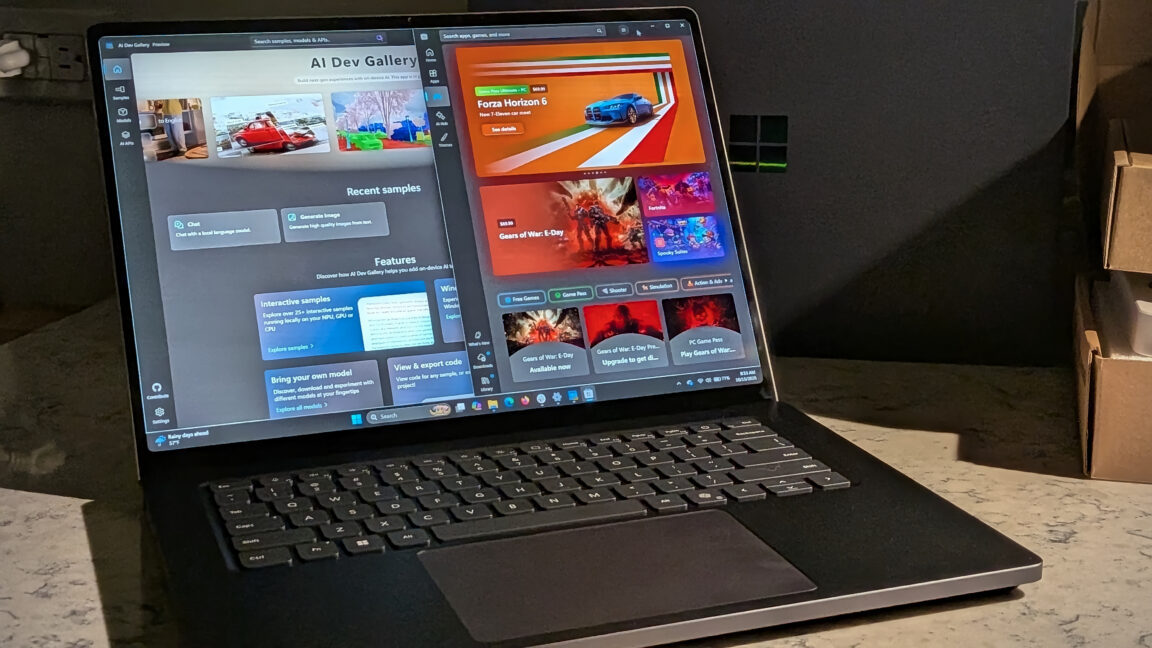
Microsoft's Surface Laptop Ultra, using Nvidia's RTX Spark platform, starts at $2,599 (up to $5,899)
Meta's new commercial terms, effective October 30th, appear to let it crawl and train AI on content from websi…