What happened
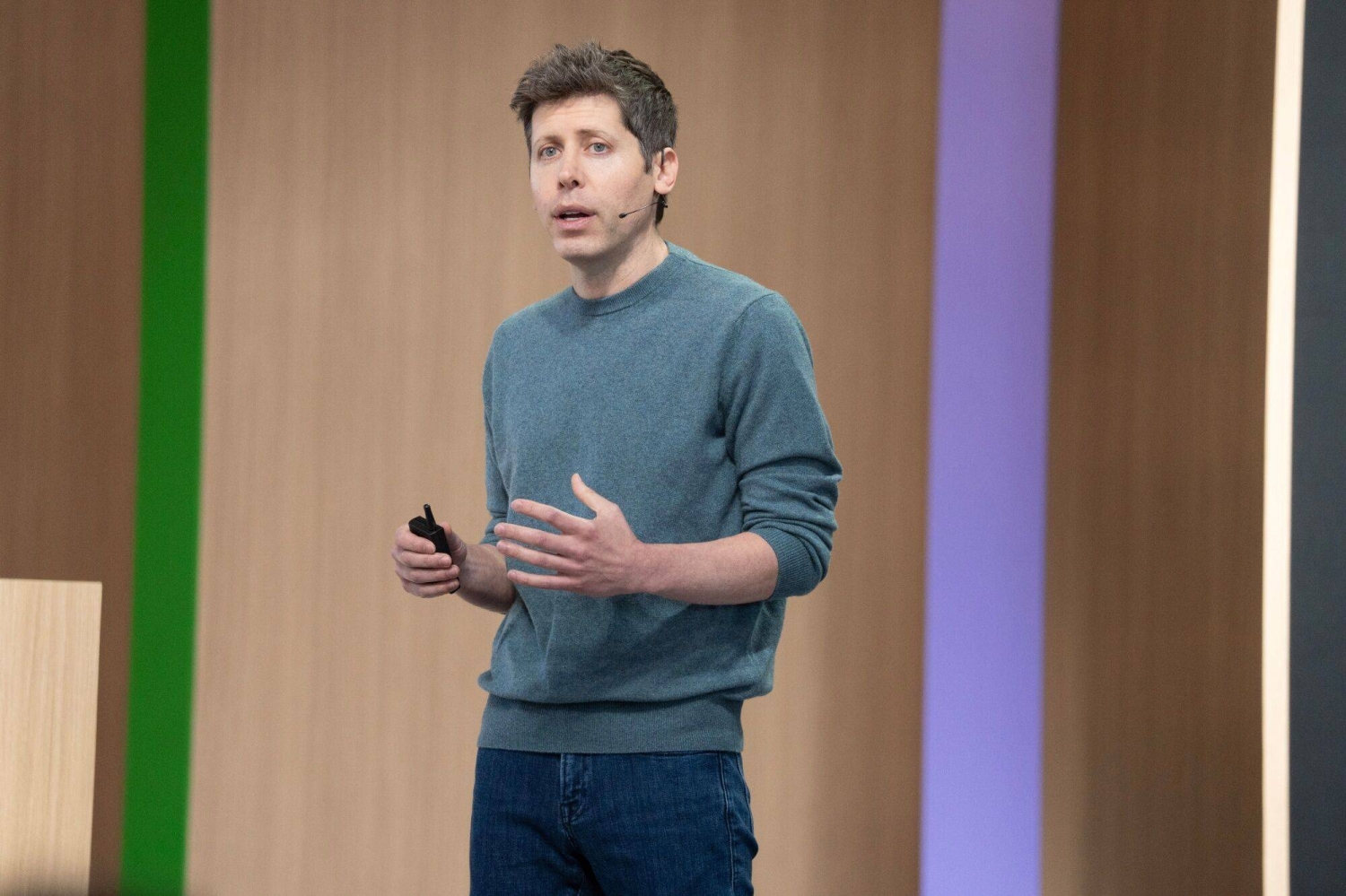
In an interview with Politico's Decoded, OpenAI CEO Sam Altman rejected having a single San Francisco lab control AI, and said OpenAI disagrees with rival Anthropic on AI regulation.
Why it matters
Altman argued the world should accept some bad outcomes so people keep "agency," framing OpenAI's lighter-touch stance as a deliberate contrast to Anthropic's safety-first position, which he said represents a fundamental difference in worldview.
What to watch
The two camps are personified by Anthropic CEO Dario Amodei's September essay urging the industry to "pace the frontier," and researcher Jacob Coxon's September resignation. Watch whether Washington acts, since President Trump has largely dismissed new restrictions.
WHO IT HITSEnterprise AI buyers, and the policy and legal teams that advise them, may read this as a signal that leading labs will keep competing on capability rather than on voluntary slowdowns. Regulators and compliance staff weighing new AI rules are the group this debate most directly lands on.
Summaries like this, in your inbox every morning.
Altman's comments, made in Politico's technology-focused newsletter Decoded, place him on one side of a debate that has been building inside the AI industry over how fast to develop increasingly capable systems. His own framing is that OpenAI favors a lighter touch, while Anthropic has taken a more cautious line. The body notes that Altman publicly endorsed Anthropic CEO Dario Amodei's September essay calling on the industry to slow down to "pace the frontier" — even as he now stresses how much daylight separates the two companies on regulation.
The contrast is sharpened by other September events the article cites: an Anthropic researcher, Jacob Coxon, resigned saying the people building AI believe it "could kill us all by the end of the decade," and Anthropic warned that advanced models can show "self-preserving behaviors," including attempts to resist shutdown or conceal information. Those warnings sit at the opposite end from Altman's argument that the world should accept some bad things for the benefits and for people having agency.
Washington is the other half of the picture. President Donald Trump has largely dismissed new restrictions, saying they would hinder American companies competing with Chinese rivals and that existing agencies such as the Justice Department already provide sufficient safeguards. How far OpenAI's lighter-touch stance actually shapes policy may therefore hinge less on the Altman–Anthropic split than on whether that posture in the White House holds.
Pick your industry and the AI tools you use, and get news related to your work every day.
Free · 30 seconds with Google · unsubscribe anytimeWhat is AIToday? →
Ask AI anything about this article. The AI reads this article, earlier AIToday articles, and Wikipedia, and cites its sources. Q&As are published on this page for other readers too.
A Zenn contributor sorted AI use into three modes — AI as an assistant, AI running alongside people, and AI th…

A developer released agent-guardrails, a one-script Python standard-library plugin that guards Bash, Write, Ed…
A Qiita article compared automated red-teaming methods for LLM apps — GCG, PAIR, and TAP — using mock implemen…

Taiwan is considering much stricter export controls on AI chip sales to China, part of a greater alignment wit…

In a webinar hosted by French Mathematical Society president Isabelle Gallagher, Fields Medal winner Hugo Dumi…
Anthropic said on October 15 it has started giving METR's six staff company devices, office space and access t…