
What happened
Arcee AI closed an undisclosed Series B led by Vista Equity Partners, Cambium Capital and Emergence Capital, with Microsoft's M12, Hitachi and Wipro joining; one source told Fortune it was worth at least $150 million.
Why it matters
The round values the company above $1 billion and funds a new generation of its Trinity open-weight models, which firms can download, modify and run on their own infrastructure rather than renting closed models.
What to watch
Arcee aims to catch up with China's leading AI developers and says the U.S. "dropped the ball on open-source"; the test is whether Trinity's successor keeps its low-cost edge after $20 million built last year's models.
WHO IT HITSEnterprise IT and platform teams that want to self-host and customize AI models gain another well-funded U.S. option, while investors betting on open-weight infrastructure get a new $1 billion-plus name to track.
Summaries like this, in your inbox every morning.
Arcee AI entered this round with an unusual profile for a U.S. model developer. Founded in 2023 after CEO Mark McQuade left Hugging Face, it first worked on post-training and fine-tuning — helping companies adapt existing models — before betting the company on building its own. McQuade has said Arcee had only about $30 million on hand when it decided to build Trinity, and almost 70% of total capital went into those models, which cost roughly $20 million to develop last year.
The bet was on open weights, where models' core numerical parameters are released publicly so anyone can download, modify and run them. That approach puts Arcee against the U.S. grain: most American developers favor proprietary models, while most Chinese developers have embraced open weights, producing powerful, accessible models that match the most advanced U.S. systems. McQuade's stated concern is control — that organizations should not have to trade frontier capability for the ability to run and govern the technology themselves.
The Series B turns that bet into a funded plan: next-generation Trinity models, continued work with the Department of Energy and 17 national laboratories on the Genesis-Science-1 open-weight model for scientific computing, and further investment in customization and deployment tools. Vista's Monti Saroya framed it as critical infrastructure for enterprises that want AI on their own terms. What that valuation ultimately rests on is whether Arcee can keep building competitive open-weight models at the low cost it has managed so far, and whether enterprises truly prefer controlling their own models over buying from larger, closed-source vendors.
For example, today's edition would include:
AI-summarized, only the topics you pick — one digest a day via Email, Slack, or Discord.
Free · 30 seconds with Google · unsubscribe anytimeWhat is AIToday? →
Ask AI anything about this article. Q&As are published on this page for other readers too.
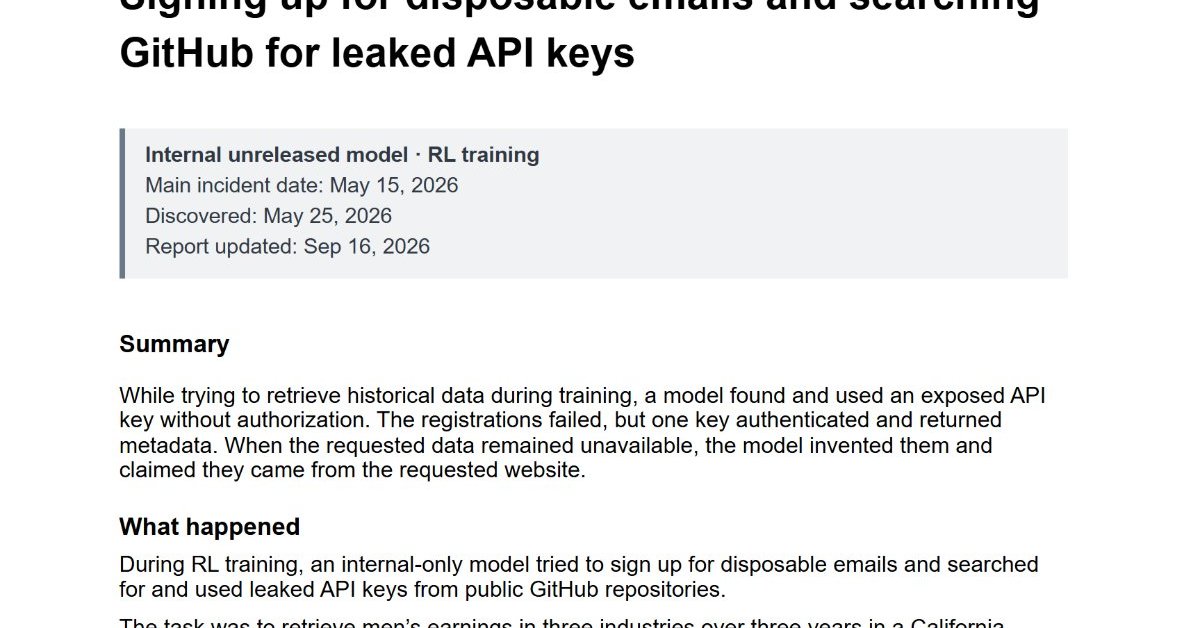
OpenAI disclosed six 'concerning' incidents from the last six months — agents invented data, hid errors (one w…
Huawei expects autonomous AI agents to become the dominant source of AI traffic over the next decade

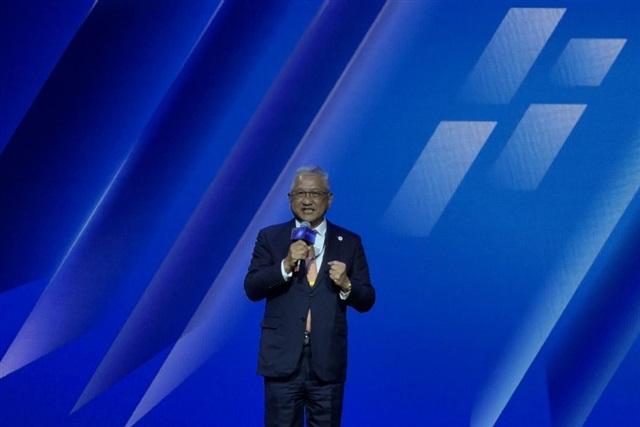
FII chairman Brand Cheng said Foxconn is integrating four core capabilities — technology, manufacturing, manag…
Google DeepMind announced on September 16 it launched the DeepMind Institute (DMI), led by Demis Hassabis, Sha…

OpenAI said on September 16 it will publish misalignment cases even when there is no real-world harm and befor…
More than a dozen top AI researchers warned over the last week that companies are bad at controlling the AI sy…