SpaceX's record $85.7 billion IPO in June has sparked a wave of investment and startup formation in the space industry, with global funding hitting an all-time high of $7.95 billion in the first quarter and 159 deals completed that period.
Investors and entrepreneurs say the listing has transformed space from a government-only domain into a startup market, opening opportunities in communications, drug development, orbital computing, and unconventional ventures like lunar hotels.
The effect mirrors Amazon's 1997 IPO, which preceded a flood of e-commerce startups, as SpaceX's cost reductions—cutting launch expenses by 95% since 2008—remove barriers for new entrants.
What happened
SpaceX raised about $85.7 billion in its June initial public offering at $135 per share—the largest IPO on record. The listing has catalyzed a wave of space startups and investment, with global funding for space companies reaching an all-time high $7.95 billion in the first quarter, nearly double the $3.93 billion from the previous quarter, and 159 deals completed in that period.
Why it matters
Investors and founders say SpaceX's IPO has transformed space from a government-dominated industry into a startup market ripe for disruption. The shift is opening opportunities across multiple sectors—not just rockets and satellites, but also solar panels for space, lunar hotels, communications, drug development, and orbital computing. SpaceX's reusable rockets have cut the cost of sending mass into space by 95% since 2008, removing barriers for new entrants.
What to watch
Keval Desai, founder of early-stage investment firm Shakti VC, predicts the impact could rival Amazon's 1997 IPO, which preceded a surge in e-commerce companies. Shakti expects to grow its space technology portfolio allocation from roughly 10% to between 25% and 30% over the next several years. Key challenges remain: limited talent pools with advanced space knowledge, international regulations, and scarce funding despite the recent surge.
SpaceX's blockbuster IPO in June raised about $85.7 billion at $135 per share, setting a record for the largest IPO. Although shares have since fallen to $110 as broader stocks faced a downward slide, the true significance lies in its catalytic effect on the space industry. Investment in space companies had already begun accelerating in anticipation of the listing: global funding for space companies reached an all-time high $7.95 billion in the first quarter, nearly double the $3.93 billion invested in the previous three months. Investors completed 159 transactions during that quarter, bringing the trailing 12-month total to a record 654 deals.
The IPO has shifted how investors and entrepreneurs perceive space—no longer a government-only domain but a startup market open for disruption. Startups are emerging across diverse sectors: Beyond Reach Labs is building expandable solar panels for space, Galactic Resource Utilization Space (GRU) is pursuing the first lunar hotel, and others are exploring communications, drug development, and orbital computing. Keval Desai, founder and partner at early-stage investment firm Shakti VC, told Fortune that SpaceX's IPO could have as big an impact as Amazon's 1997 listing. Before Amazon went public, only a handful of e-commerce IPOs existed; hundreds followed as investors and entrepreneurs began treating online retail as a major market. Similarly, Desai predicted, "The next decade in space is going to be full of startups. Not just the large companies and the governments, but startups, or the true Silicon Valley entrepreneurial ecosystem participating in the space commerce economy."
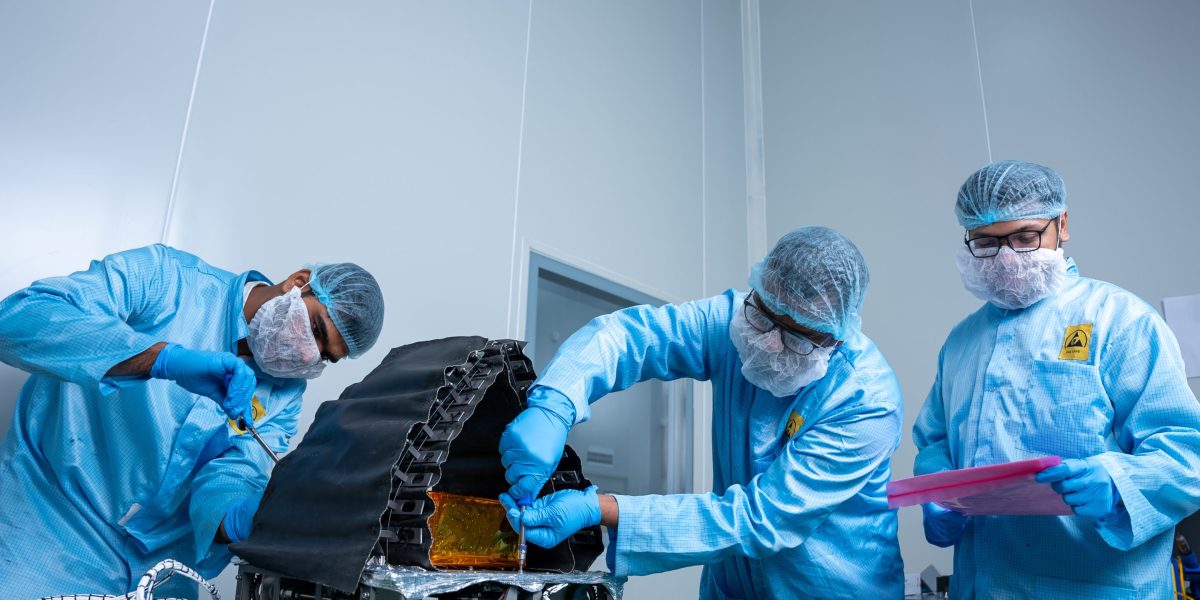
One key enabler is SpaceX's technology: reusable rockets have cut the cost of sending mass into space by 95% since 2008, opening opportunities for startups to enter a landscape previously out of reach. Shakti VC itself is doubling down on the sector—currently about 10% of its portfolio is in space technology, but the firm expects that share to grow to between 25% and 30% over the next several years. Among Shakti's space investments is Cosmoserve Space, an Indian startup founded by Chiranjeevi Phanindra, a former scientist at the Indian Space Research Organization. The company is building a robotic spacecraft designed to capture and remove space debris—thousands of dead or decommissioned satellites in Earth's orbit that threaten space operations. The robot features soft "petals" inspired by the Venus flytrap, designed to wrap around objects of varying shapes and sizes; Phanindra claims the system could remove debris 10 times cheaper than competing approaches. In July, Cosmoserve conducted its first space test, launching its robot aboard Vikram-1, India's first privately developed orbital launch vehicle created by startup Skyroot Aerospace. Although the robot's petals did not deploy as expected, Phanindra said the company "collected some very critical information in the extreme space conditions" that will guide product improvements. Cosmoserve, which began operating in August 2025, raised $3.17 million in pre-seed funding and recently closed a seed round. Phanindra told Fortune that investor sentiment has shifted: "People are now considering space as a less risky item or less risky domain compared to a year back because SpaceX has proven that space will give a lot of returns to investors." Challenges persist—advanced knowledge is scarce, international regulations are complex, and funding for space startups remains limited—but Desai argued that SpaceX's IPO has lasting impact and will ultimately open capital markets for entrepreneurs building the next billion-dollar businesses.
SpaceX's June IPO, which raised about $85.7 billion at $135 per share, has proven to be a watershed moment for the space industry beyond its record-breaking size. Investment had already begun to accelerate in anticipation of the listing, with global funding for space companies reaching an all-time high $7.95 billion in the first quarter—nearly double the $3.93 billion from the prior quarter. What experts view as the lasting achievement is the shift in investor and founder perception: space has transitioned from a government-dominated domain into a startup market ripe for disruption. This mindset change is particularly significant because SpaceX's reusable rocket technology has lowered barriers to entry; the company has cut the cost of sending mass into space by 95% since 2008, creating openings for smaller ventures to fill market gaps.
The startup activity now extends far beyond traditional aerospace. Investors are backing companies developing solar panels for space, lunar hotels, space debris removal, and orbital computing—domains that barely existed as commercial opportunities a few years ago. Keval Desai, a partner at early-stage investor Shakti VC, has drawn a parallel to Amazon's 1997 IPO, which preceded a flood of e-commerce startups despite only a handful of e-commerce IPOs existing before it. Shakti itself is shifting its allocation: currently about 10% of its portfolio is in space technology, but the firm expects that share to climb to between 25% and 30% over the next several years. One of its portfolio companies, Cosmoserve Space, an Indian startup founded by former Indian Space Research Organization scientist Chiranjeevi Phanindra, exemplifies the trend—it is developing a robotic spacecraft to capture space debris at 10 times lower cost than competing methods.
AI-summarized, only the topics you pick — one digest a day via Email, Slack, or Discord.
Free · takes 30 seconds · unsubscribe anytime
Ask AI anything about this article. Q&As are published on this page for other readers too.
As AI systems scale beyond single servers to rack-level, multi-rack, and pod-level deployments, the performanc…
Steve Eisman, the investor known for shorting subprime mortgages, told CNBC that OpenAI and Anthropic represen…

A Cloudera survey of over 1,500 IT architects found that 95% of enterprises have delayed or canceled AI initia…

Space Exploration Technologies Corp (SpaceX) has entered the top five of Robinhood's Investor Index (ranked No

IBM announced a partnership with OpenAI and a multi-year US$240 million agreement with Together AI to deploy N…

OpenAI's annualized revenue run rate has passed $40 billion, roughly doubling from late 2025, according to Blo…

The AI news that matters, in one minute each morning.
Sign up free